

New York State rewards travelers who look beyond the city limits. Beyond New York City, the state holds the largest protected wilderness in the contiguous United States, one of the world’s great waterfalls, a major wine region, and the birthplace of baseball. Here are the ten, with practical planning tips at the end.
1. The Adirondacks
Covering more than six million acres of protected wilderness in northern New York, the Adirondacks form the largest protected area in the contiguous United States. Hike one of the 46 High Peaks, paddle a quiet lake by canoe, or ride the gondola up Whiteface Mountain for big views without the climb. Lake Placid, host of the 1980 Winter Olympics, makes a natural base. Visit in late September for the state’s earliest peak fall color — and if you’re traveling in autumn, pair it with our guide to places to visit in New York in the fall.
2. Niagara Falls
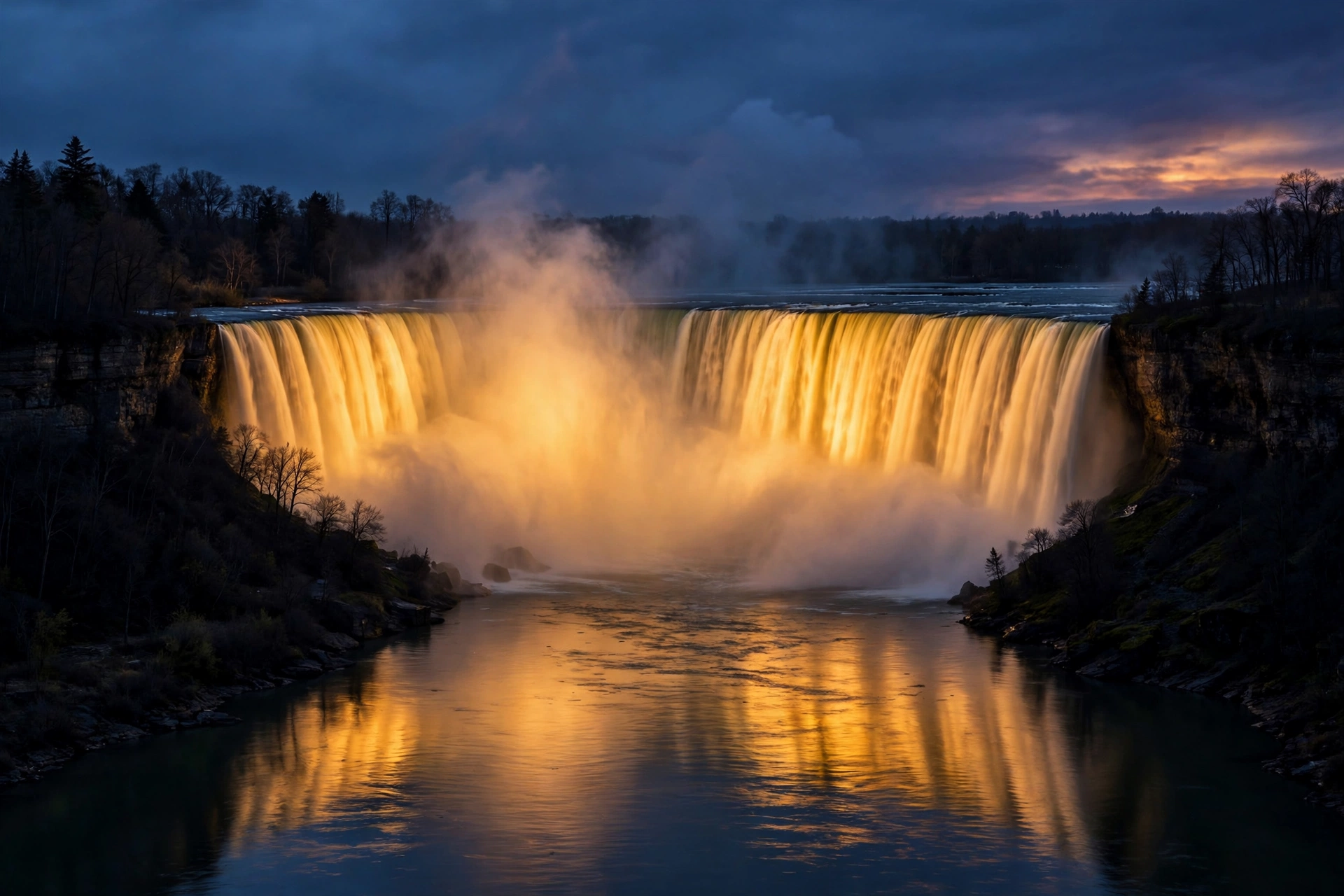
On the US–Canada border, three waterfalls — Horseshoe, American, and Bridal Veil — thunder into the Niagara Gorge. Ride the Maid of the Mist into the spray, stand on the Hurricane Deck at the Cave of the Winds, and stay after dark for the nightly illumination. Niagara Falls State Park, established in 1885 as the country’s oldest state park, has free main viewpoints. With a passport, cross the Rainbow Bridge for the Canadian side — and see our list of places to visit near Niagara-on-the-Lake for day-trip ideas.
3. The Catskills
Two hours northwest of New York City, the Catskill Mountains have been the city’s escape since the 19th century. Hike to Kaaterskill Falls, a two-tiered waterfall that draws photographers year-round, or visit Bethel Woods, the museum and concert venue on the site of the 1969 Woodstock festival. The region is also known for fly-fishing on clear mountain streams and a strong farm-to-table food scene. Summer and fall weekends fill fast, so book lodging well ahead.
4. The Finger Lakes
Eleven long, narrow lakes — Seneca and Cayuga the largest — give this region its name, and its vineyards give it its reputation as New York’s premier wine country, especially for Rieslings. Follow the wine trails around Seneca Lake, hike the gorge trail at Watkins Glen State Park, and stop at Taughannock Falls, whose main drop is taller than Niagara Falls. Plan transportation between tastings: a designated driver or guided tour keeps winery-hopping relaxed.
5. New York City
Beyond the landmarks — Central Park, Times Square, the Statue of Liberty, the Empire State Building — explore the neighborhoods: Chelsea’s galleries, West Village food halls, the Upper East Side’s museums. Catch a Broadway show, ride the Staten Island Ferry for a free harbor view, and tap your phone or card at the subway’s OMNY readers instead of fumbling for a MetroCard. For a neighborhood-level plan, see our guide to places to visit in Midtown New York.
6. The Thousand Islands
Where the St. Lawrence River meets Lake Ontario, more than 1,800 islands dot the water along the US–Canada border. Cruise from Alexandria Bay or Clayton to see Boldt Castle, the 120-room castle hotel magnate George Boldt built on Heart Island, and watch boats thread the narrow channels. Clayton’s Antique Boat Museum covers the region’s maritime history. Many island attractions and cruises run seasonally (roughly May through October), so check schedules before booking outside summer.
7. Saratoga Springs
This Victorian-era resort town earned its “Queen of the Spas” nickname from mineral springs that still bubble in public parks and bathhouses. Today it is best known for the Saratoga Race Course, one of the oldest thoroughbred tracks in the country, with racing from mid-July through Labor Day. Stroll Broadway’s shops, catch a concert at the Saratoga Performing Arts Center, and taste the springs — each has its own distinct flavor. During racing season, book tickets and hotels early.
8. The Hudson Valley
Running north from Manhattan along the Hudson River, this valley packs history, art, and scenery into an easy day trip or weekend. Tour the Vanderbilt Mansion in Hyde Park, take a guided tour of West Point, and walk Storm King’s 500 acres of outdoor sculpture. The valley’s cideries and farm stands make it a food destination too, and river towns like Beacon, Cold Spring, and Rhinebeck are full of antique shops and galleries. Much of the valley is reachable on Metro-North trains from Grand Central.
9. Letchworth State Park
Known as the “Grand Canyon of the East,” Letchworth follows the Genesee River through a gorge up to 600 feet deep. Three major waterfalls — Upper, Middle, and Lower — anchor miles of hiking trails, and hot air balloons drift over the gorge at dawn. The park is one of New York’s best camping and cabin destinations, and its mid-to-late-October fall color is spectacular. Book campsites well in advance for fall weekends.
10. Cooperstown (Baseball Hall of Fame)
This small village on Otsego Lake is a pilgrimage site for baseball fans: the National Baseball Hall of Fame and Museum tells the sport’s story in three floors of exhibits, from artifacts to the broadcast booth. Across the street, the Fenimore Art Museum and the Farmers’ Museum round out the visit, and the lake shore inspired James Fenimore Cooper’s novels. In peak summer, buy Hall of Fame tickets online and book lodging months ahead.
Planning Tips for Visiting New York State
Best time to go: Late spring through early fall suits hiking and outdoor trips; fall foliage peaks in the Adirondacks and Catskills in late September and October; winter is ski season in both ranges. Getting around: A car is the most practical way to explore the state — most destinations are hours apart, and transit outside New York City is limited (for the city itself, use the subway). Booking: Summer weekends and foliage season fill hotels and campgrounds fast across upstate New York — reserve ahead.
FAQ
How many days do I need to see New York State’s top attractions?
A week lets you cover New York City plus two or three upstate destinations without rushing. With only a long weekend, pair Niagara Falls with the Finger Lakes, or New York City with the Hudson Valley — both work well by car.
Is New York State a good winter destination?
Yes, if you like cold-weather activities. The Adirondacks and Catskills offer skiing and snowmobiling, Niagara Falls looks striking framed in ice, and New York City’s holiday season is famous. Just pack for real winter — upstate temperatures regularly drop well below freezing.
What is the most scenic part of New York State?
Opinions vary, but the Adirondack High Peaks, the Niagara Gorge, Letchworth’s gorge, and the Thousand Islands are the most photographed. For fall color, the Catskills and Hudson Valley are hard to beat.
Can I visit these places without a car?
New York City and the Hudson Valley are easy without a car (subway, Amtrak, Metro-North). For the Adirondacks, Finger Lakes, Thousand Islands, and Letchworth, a car is by far the most practical option — distances are long and transit is limited.
From the thunder of Niagara Falls to the quiet of an Adirondack lake, few states pack this range into one trip. Pick two or three that fit your travel style, slow down between them, and you’ll leave with a very different picture of New York than the postcards show.