

Scottsville summers are long, humid, and unforgiving — and that is exactly when an air conditioner decides to quit. If your system is blowing warm air, cycling constantly, or making noises it never used to make, this guide to air conditioning repair services in Scottsville will help you understand what is wrong, what a proper repair visit looks like, and how to choose the right technician.
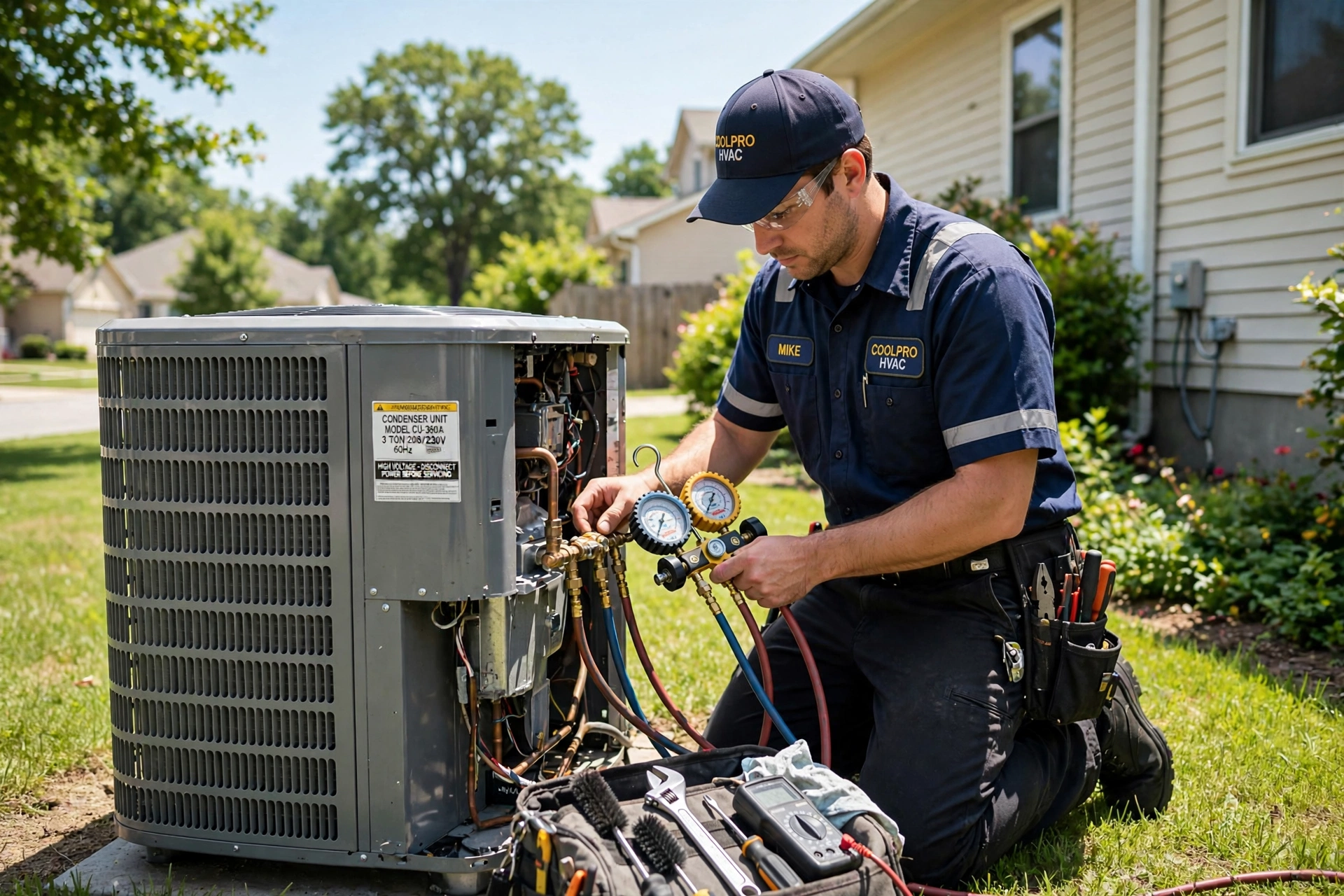
Signs your AC needs professional repair
Some symptoms are obvious; others creep up slowly. Call a technician if you notice: warm or weak airflow from vents, the system short-cycling (turning on and off every few minutes), ice forming on the refrigerant lines or evaporator coil, water pooling around the indoor unit, grinding or squealing noises, or a sudden spike in your electricity bill without a change in usage. A musty smell can also signal mold in the drain pan or ducts — worth addressing quickly in a humid climate like Scottsville’s.
What a proper repair visit looks like
A good technician does not just top up refrigerant and leave. Expect a systematic diagnosis: checking refrigerant pressures, inspecting the capacitor and contactor, testing the thermostat calibration, examining the condensate drain, and measuring temperature drop across the coil. Ask the technician to explain what failed and why — reputable companies are happy to show you the worn part. You should receive a written quote before any major work begins, with parts and labor itemized.
Common Scottsville AC problems
Local conditions shape the failures technicians see most. Long cooling seasons wear out capacitors and fan motors faster than in milder climates. High humidity overwhelms clogged condensate drains, causing water damage. And dust and pollen cake onto outdoor condenser coils, forcing the system to work harder — a simple coil cleaning can restore a surprising amount of efficiency. Annual pre-summer maintenance catches most of these before they become emergency calls.
How to choose an AC repair company in Scottsville
Start with the basics: licensed, insured, and willing to provide references. Look for companies that offer upfront flat-rate or clearly explained pricing rather than vague hourly billing. Check recent reviews for mentions of punctuality, cleanliness, and honest diagnostics — and be wary of any technician who pushes a full system replacement for a minor, fixable fault. A trustworthy company will tell you when a repair makes sense and when replacement is genuinely the better value, typically when the unit is over 12–15 years old and the repair costs more than a third of a new system.
Simple maintenance that prevents breakdowns
You can do a lot yourself: replace or clean the air filter every 1–3 months, keep vegetation at least two feet clear of the outdoor unit, pour a cup of vinegar down the condensate drain line each spring to prevent clogs, and keep supply vents open and unblocked. These small habits reduce strain on the whole system — the same principle behind any good home upkeep, whether it is structural work like mobile home leveling or routine services like professional home cleaning that keep a house running smoothly.
Emergency or routine? When to call right now
Some situations cannot wait for a convenient appointment. Call for emergency service if the system stops cooling entirely during a heatwave (especially with elderly residents, infants, or anyone with health conditions at home), if you smell burning or see smoke, if the breaker trips repeatedly when the AC runs, or if there is significant water leaking through ceilings. Strange-but-mild symptoms — slightly weak airflow, a new hum, higher bills — can usually wait a day or two for a scheduled visit, which also costs less than after-hours emergency rates.
What AC repairs typically cost
Prices vary by market, but national ranges give you a sanity check: a capacitor or contactor replacement often runs $150–$400; a condensate pump or drain repair $150–$350; a blower motor $400–$800; and a compressor replacement $1,200–$2,800 — at which point replacement of an older unit starts looking attractive. Refrigerant recharges depend heavily on the refrigerant type, with older R-22 systems far pricier than modern R-410A. Always get the quote in writing and ask whether the price includes both parts and labor.
Questions to ask before hiring
Before you agree to any work, ask: Are you licensed and insured in this state? Is there a diagnostic fee, and is it waived if I proceed with the repair? Will you provide a written, itemized quote? What warranty covers parts and labor? Can you show me the failed component? The answers — and how willingly they are given — tell you most of what you need to know about a company.
Seasonal maintenance checklist for Scottsville homes
Spring: schedule professional maintenance, replace filters, clear the condensate drain, and trim vegetation around the outdoor unit. Summer: check filters monthly, hose down the condenser coil gently, and keep an eye on energy bills for sudden jumps. Fall: cover the outdoor unit if recommended by your manufacturer, and consider a heating check before the first cold snap. A system that gets annual professional attention lasts years longer than a neglected one — and breaks down far less often in August.
Repair or replace? A quick framework
Use the age-times-cost rule: multiply the repair quote by the unit’s age in years. If the result exceeds the cost of a new system, replacement usually wins. Also consider efficiency — a modern 16+ SEER unit can cut cooling costs noticeably compared to a 10–15-year-old system, which matters when Scottsville heat runs the AC six months a year. Either way, get the diagnosis in writing and sleep on any quote over a few hundred dollars.
The goal is simple: a cool, quiet house and no surprise breakdowns in August. With the right technician and a little preventive care, that is entirely achievable.