
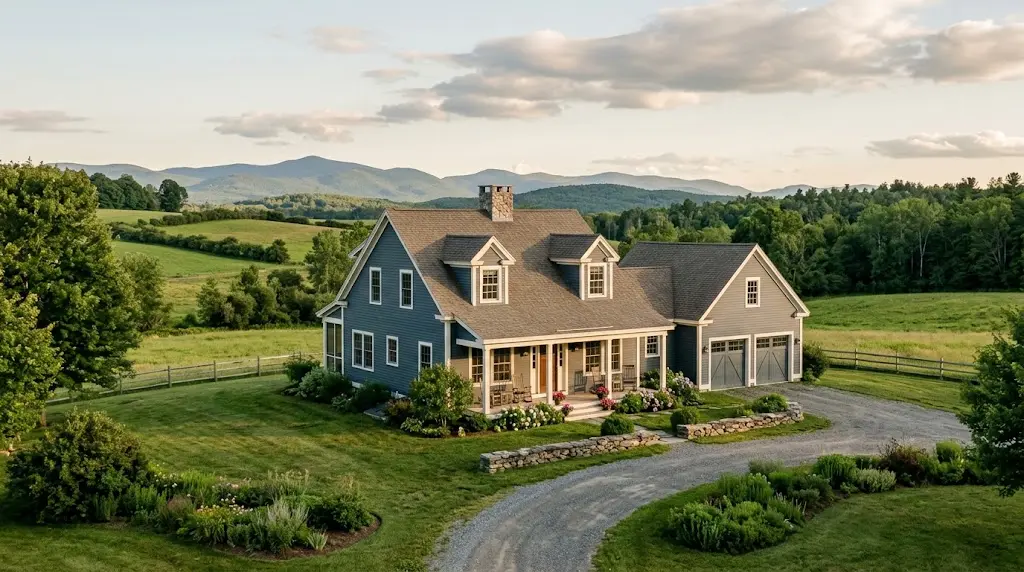
This guide explains what buyers should know about IPJ Real Estate, Vermont real estate opportunities, Middlebury and Addison County property, investment considerations, and the due diligence that should happen before purchasing a Vermont property.
What Is IPJ Real Estate VT?
IPJ Real Estate is a Vermont real estate agency located at 34 Main Street in Middlebury. The company describes itself as a full-service real estate firm serving clients and customers in Addison County and beyond. Its current property search allows users to filter listings by town, property type, and price range.
The available property categories include:
- Residential homes
- Condominiums
- Multifamily properties
- Land and acreage
- Commercial properties
- Luxury homes
The agency’s listed service area includes communities such as Middlebury, Brandon, Bridport, Bristol, Cornwall, Ferrisburgh, Goshen, New Haven, Orwell, Ripton, Salisbury, Shoreham, Vergennes, Weybridge, and other Vermont communities.
Why Consider Vermont Real Estate?
Vermont appeals to a wide range of buyers because the state combines small-town communities, rural land, mountain scenery, historic properties, outdoor recreation, and access to regional employment and educational centers.
However, Vermont should not be treated as one single real estate market. A property in Middlebury can have very different characteristics from a vacation property near a ski destination or a rural parcel in another part of the state.
That makes local real estate research particularly important. Buyers should compare recent sales, active inventory, property condition, taxes, insurance, utilities, access, and future plans before deciding what a property is actually worth to them.
Vermont Real Estate Market: What Buyers Should Know
Current market data provides a more useful starting point than broad claims that Vermont property prices are always rising.
The Vermont Association of REALTORS®’ June 2026 market snapshot reported a $430,000 median sales price for single-family residential and condominium properties. It also reported 725 closed sales, 1,303 new listings, and 2,661 active listings for June 2026. Compared with June 2025, the median sales price was down 2.1%, while closed sales, new listings, and active inventory were higher.
These figures demonstrate why buyers should look at current market conditions instead of relying on outdated statements about guaranteed appreciation. Market conditions can differ substantially between towns and property types.
Middlebury Vermont Real Estate
Middlebury is an important market for anyone researching IPJ Real Estate VT. The town offers a combination of residential neighborhoods, a historic downtown, local businesses, educational institutions, and access to surrounding rural communities.
IPJ Real Estate’s current website allows buyers to search Middlebury properties by price and property type, including homes, condominiums, multifamily properties, land, and commercial listings.
For buyers considering Middlebury, it is useful to evaluate more than the property’s asking price. Consider proximity to employment, schools, shopping, healthcare, transportation, recreation, and other services that affect everyday living.
Addison County Real Estate Opportunities
Addison County offers a broader range of property choices than a single-town search. Buyers may find village homes, rural residences, farms, acreage, condominiums, multifamily properties, and land for future development.
IPJ Real Estate’s search system currently includes numerous Addison County communities, giving buyers the ability to compare locations instead of limiting their search to one town.
This wider search can be particularly useful for buyers who have a fixed budget but are flexible about location. A buyer who cannot find the right property in Middlebury, for example, may find a better combination of land, home size, or price by expanding the search to nearby communities.
Types of Vermont Property You Can Consider
1. Single-Family Homes
Single-family homes are suitable for buyers looking for a primary residence, second home, or potentially a long-term rental property. Vermont’s housing stock includes traditional homes, historic properties, farmhouses, rural residences, and newer construction.
Before purchasing, look beyond the number of bedrooms and bathrooms. Heating systems, insulation, roof condition, foundation, water supply, septic systems, driveway access, and maintenance requirements can have a significant effect on ownership costs.
2. Condominiums
Condos can appeal to buyers who prefer less exterior maintenance or want a property near town amenities. However, buyers should carefully review association fees, bylaws, reserve funds, insurance responsibilities, rental restrictions, and upcoming assessments.
3. Multifamily Properties
Multifamily properties can provide an opportunity to combine property ownership with rental income. Investors should calculate expected rent, vacancy, maintenance, insurance, taxes, utilities, management costs, and financing expenses before determining whether the numbers work.
4. Land and Acreage
Vermont land can be attractive to buyers seeking privacy, recreation, farming opportunities, future construction, or long-term ownership.
But undeveloped land requires additional due diligence. Check zoning, road access, easements, utility availability, wetlands, conservation restrictions, soil conditions, water supply, wastewater options, and development requirements before purchasing.
5. Commercial Real Estate
Commercial property is another potential category for investors and business owners. Commercial transactions require a different analysis involving leases, operating expenses, zoning, building condition, environmental considerations, financing, and the property’s income-producing potential.
Is Vermont Real Estate a Good Investment?
There is no universal answer to whether Vermont real estate is a good investment. The answer depends on the specific property, location, purchase price, financing structure, intended use, and expected holding period.
A good investment analysis should consider:
- Purchase price
- Down payment and financing costs
- Property taxes
- Insurance
- Maintenance and repairs
- Utilities
- Potential rental income
- Vacancy assumptions
- Property management costs
- Potential resale value
- Local regulations
For broader context, PostTrek also covers real estate opportunities in other U.S. markets. Readers can compare the Vermont market with Tidioute, Pennsylvania real estate, Lostine, Oregon real estate, and Hugoton real estate.
Vermont Vacation and Short-Term Rental Properties
Some buyers consider Vermont property because they want a second home that can also generate short-term rental income. Tourist-oriented locations can attract visitors interested in skiing, hiking, lakes, fall foliage, and other seasonal activities.
However, a property should never be purchased solely on the assumption that short-term rental income will cover its costs. Rental demand can change by season, location, property type, and economic conditions.
More importantly, Vermont has specific tax and safety requirements for short-term rentals.
Vermont Short-Term Rental Taxes
The Vermont Department of Taxes states that operators of qualifying short-term rentals must collect a 3% short-term rental surcharge. This is in addition to the 9% Rooms Tax and any applicable 1% Local Option Tax. The rules apply to qualifying furnished accommodations rented for fewer than 30 consecutive days and for more than 14 days per calendar year.
Rental income also has tax implications, and owners should review the current requirements before operating a property as a short-term rental.
Short-Term Rental Safety Requirements
Vermont’s Division of Fire Safety states that short-term rentals are subject to applicable health and safety requirements. Depending on occupancy and property configuration, requirements can include smoke alarms, carbon monoxide alarms, means of escape, electrical safety measures, and other fire and building safety provisions.
Local municipal rules may also apply, so investors should confirm requirements for the specific town before purchasing a property for short-term rental use.
Best Vermont Locations Depend on Your Goal
The best Vermont location depends on what you want from the property.
For Primary Residence
Primary-home buyers should prioritize everyday convenience. Consider employment, schools, healthcare, grocery shopping, transportation, community services, and commute times.
For a Second Home
Second-home buyers may prioritize scenery, recreation, privacy, accessibility, and proximity to attractions. Seasonal accessibility and winter maintenance can become important factors.
For Rental Investment
Rental investors should focus on tenant demand, rental rates, vacancy, operating costs, taxes, insurance, property management, and applicable regulations.
For Land Investment
Land buyers should investigate development potential rather than assuming that every parcel can be built on. Zoning, road access, utilities, wetlands, septic feasibility, and conservation restrictions can materially affect land value.
What to Look for During a Vermont Property Search
A property listing is only the beginning of the research process. Once you identify a potential purchase, evaluate the property from both a financial and practical perspective.
Property Condition
Older Vermont properties can have unique maintenance requirements. Have qualified professionals evaluate the roof, foundation, heating system, electrical system, plumbing, insulation, windows, and other major components.
Heating Costs
Heating can be an important ownership expense in Vermont. Ask about the property’s heating system, fuel type, recent consumption, maintenance history, and efficiency.
Water and Septic Systems
Rural homes may depend on private wells and septic systems. Buyers should understand how these systems work and investigate their condition before completing a purchase.
Road Access
Some rural properties use private roads or shared driveways. Determine who is responsible for maintenance, snow removal, repairs, and other shared costs.