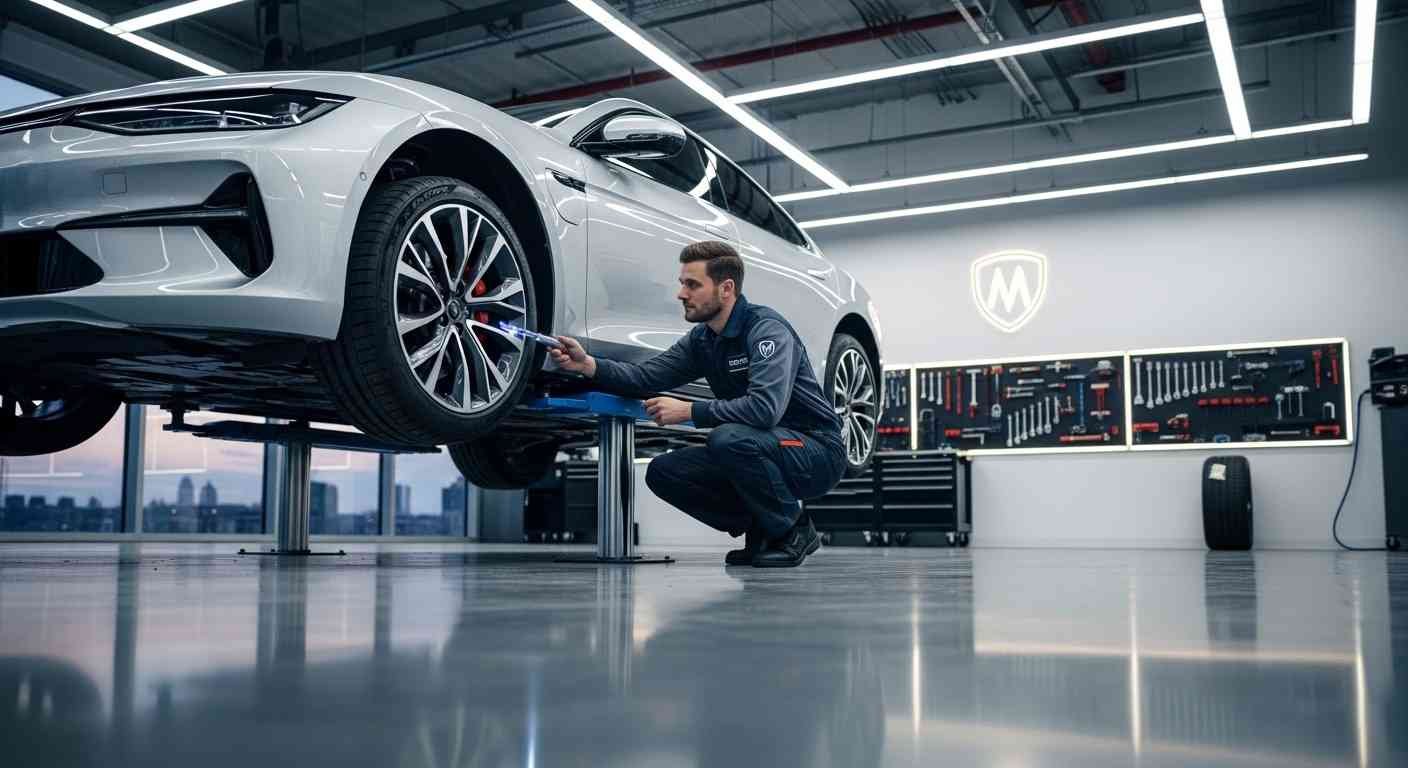
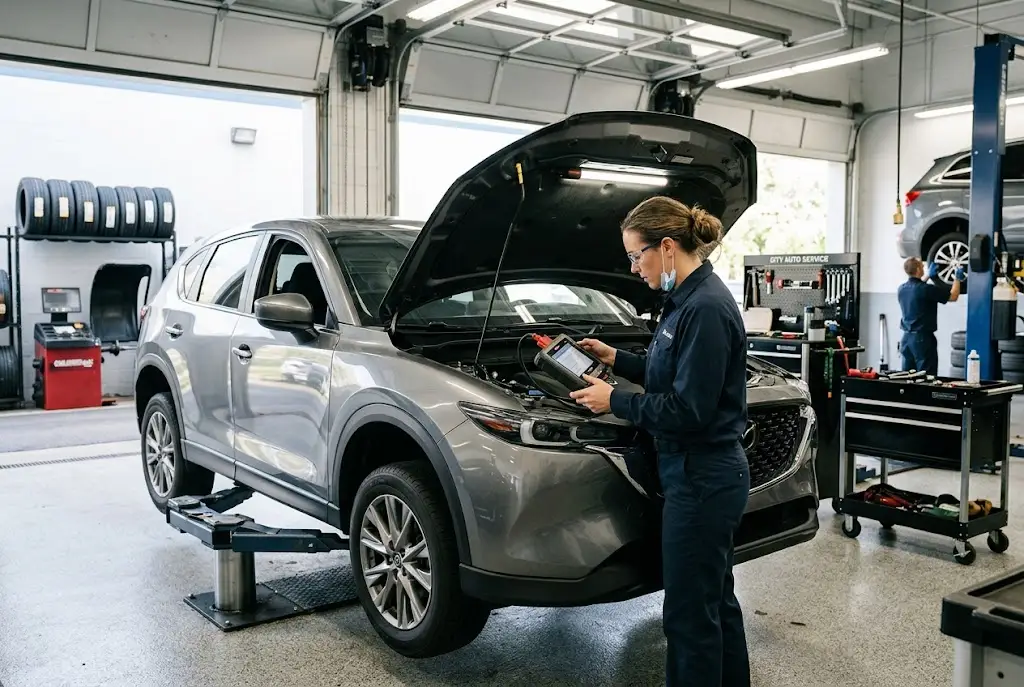
A trustworthy auto service experience should make it easier to understand what your vehicle needs, why it needs it, and which repairs should be handled first. That combination of technical work and clear communication is what can turn a routine visit into a long-term maintenance relationship.
Why Regular Auto Service Matters
Vehicles experience constant wear. Tires lose tread, fluids become contaminated, brake components wear down, batteries age, and suspension parts can gradually develop play or damage.
Some problems are obvious. Others develop slowly and may not produce a warning until the underlying issue becomes more serious.
The National Highway Traffic Safety Administration recommends following the vehicle manufacturer’s maintenance recommendations and points to routine tasks such as oil changes, battery checks, tire care, and other inspections as important parts of preventive maintenance. NHTSA’s maintenance guidance also emphasizes checking tire pressure using the vehicle manufacturer’s recommended pressure rather than the maximum pressure printed on the tire. :contentReference[oaicite:0]{index=0}
That is why a good automotive service provider should focus on preventive care as well as repairs.
What to Expect From a Professional Auto Service Shop
A professional shop should provide more than a quick diagnosis and a repair bill. Drivers should expect a process that includes inspection, explanation, repair recommendations, and appropriate follow-up.
Depending on the vehicle and the problem, that process may include:
- Initial vehicle inspection
- Computerized diagnostic testing
- Fluid and filter checks
- Brake inspection
- Tire and wheel inspection
- Battery and charging-system testing
- Suspension and steering inspection
- Heating and air-conditioning diagnosis
- Electrical troubleshooting
- Scheduled maintenance
- Repair verification after the work is completed
The exact scope depends on the vehicle, its age, mileage, maintenance history, and the symptoms reported by the driver.
1. Routine Maintenance Should Come First
Preventive maintenance is generally easier to manage than unexpected major repairs. A vehicle that receives regular inspections gives technicians a better opportunity to identify developing problems before they become larger concerns.
Routine maintenance may include oil and filter service, fluid checks, tire inspections, battery testing, filter replacement, brake inspections, and other items listed in the manufacturer’s maintenance schedule.
There is no universal service interval that applies to every car. The correct schedule depends on the manufacturer, engine, drivetrain, mileage, age, driving conditions, and vehicle configuration.
Drivers should therefore use the owner’s manual or manufacturer maintenance schedule as the starting point rather than relying on a generic mileage rule.
2. Oil and Fluid Service
Engine oil plays a critical role in lubrication and heat management. Over time, oil can degrade and become contaminated, which is why manufacturers specify replacement intervals and approved oil grades.
Other fluids also deserve attention. Depending on the vehicle, technicians may inspect engine coolant, brake fluid, transmission fluid, power-steering fluid where applicable, and windshield washer fluid.
NHTSA’s vehicle-maintenance guidance recommends changing oil according to the owner’s manual and checking relevant fluids as part of routine maintenance. :contentReference[oaicite:1]{index=1}
A professional technician should not simply top off a fluid without considering why its level may have dropped. A recurring low level could point to a leak or another mechanical problem.
3. Brake Inspection and Repair
Brakes are among the most important systems on any vehicle. Brake pads, rotors, calipers, brake fluid, hoses, and related components all contribute to braking performance.
Warning signs that deserve prompt attention can include:
- Squealing or grinding noises
- Vehicle vibration during braking
- A soft or unusually low brake pedal
- Pulling to one side while braking
- Longer stopping distances
- Brake warning lights
A technician should inspect the system rather than automatically replacing a particular component based only on a symptom.
Professional automotive certification programs also recognize brake systems as a major area of technician expertise. ASE’s automobile and light-truck certification series includes a dedicated A5 test covering brakes. :contentReference[oaicite:2]{index=2}
4. Tire Care and Wheel Inspection
Tires are the vehicle’s only direct contact with the road, making their condition important for handling, braking, and overall safety.
A proper tire inspection should consider inflation pressure, tread condition, uneven wear, visible damage, age, and the condition of the wheels.
NHTSA recommends checking tire pressure regularly and using the pressure specified by the vehicle manufacturer. It also advises drivers to inspect tread and look for uneven wear or other signs of damage. :contentReference[oaicite:3]{index=3}
Uneven tire wear can sometimes indicate an alignment, suspension, inflation, or other vehicle problem. Simply replacing the tire without investigating the underlying cause may allow the same wear pattern to return.
PostTrek also covers the importance of choosing the correct tire size, which is another important consideration when maintaining safe and predictable vehicle performance.
5. Battery and Electrical Diagnostics
A weak battery can create starting problems, especially when temperatures are extreme or the battery is approaching the end of its useful life.
But not every no-start problem is caused by the battery itself. A technician may need to check the battery, charging system, starter, electrical connections, and other components.
Signs that may justify an electrical inspection include:
- Slow engine cranking
- Repeated dead-battery incidents
- Dim or flickering lights
- Electrical accessories behaving unusually
- Warning lights
- Charging-system problems
A proper diagnosis is important because replacing the battery will not solve a charging-system fault or a parasitic electrical drain.
6. Suspension and Steering Service
Suspension and steering components influence ride quality, handling, tire wear, and vehicle control.
Components can include shocks or struts, control arms, bushings, ball joints, tie rods, steering components, springs, and wheel bearings, depending on the vehicle.
Drivers should consider an inspection if they notice:
- Excessive bouncing
- Clunking noises over bumps
- Uneven tire wear
- Steering-wheel vibration
- Vehicle pulling to one side
- Loose or unusual steering response
Because several different faults can produce similar symptoms, diagnosis should come before replacing parts.
7. Heating and Air-Conditioning Service
A vehicle’s climate-control system is another area where professional diagnosis can save time and prevent unnecessary parts replacement.
Poor cooling can result from several different issues, including airflow restrictions, electrical faults, leaks, compressor problems, or other system defects.
Similarly, poor heating may involve coolant circulation, controls, airflow, or other components.
ASE’s automotive certification structure includes heating and air-conditioning as a dedicated technical area, reflecting the specialized knowledge required to diagnose these systems. :contentReference[oaicite:4]{index=4}
8. Diagnostic Service Can Prevent Guesswork
Modern vehicles contain numerous electronic control systems and sensors. A warning light may therefore indicate a problem that cannot be accurately identified through visual inspection alone.
Diagnostic equipment can help technicians retrieve fault information and narrow down possible causes. However, reading a diagnostic trouble code is not the same as identifying the failed component.
For example, a code can point toward a particular sensor circuit without proving that the sensor itself is defective. A technician may need to perform additional electrical, mechanical, or data-related tests before recommending a repair.
This distinction matters because good diagnosis should reduce unnecessary parts replacement.
9. What Makes an Auto Service Provider Trustworthy?
The word “trust” is easy to use in automotive marketing, but drivers should look for practical signs of professionalism.
Clear Explanations
A technician or service advisor should be able to explain the problem in language a normal driver can understand.
Transparent Recommendations
Customers should know which repairs are urgent, which can be scheduled later, and which are simply recommendations based on normal maintenance.
Useful Documentation
Invoices and service records should clearly identify the work performed and relevant parts or services.
Appropriate Diagnostics
A professional shop should use suitable inspection and diagnostic procedures rather than relying entirely on assumptions.
Qualified Technicians
Industry credentials can provide another useful signal when evaluating a repair facility. ASE describes its certifications as national, industry-wide credentials for automotive service professionals and offers tests covering areas such as engine repair, brakes, electrical systems, HVAC, suspension, and steering. :contentReference[oaicite:5]{index=5}
10. Ask for a Maintenance Plan, Not Just a Repair
If a vehicle has a recurring issue or is approaching a major maintenance milestone, it can be useful to ask what should be inspected next.
A simple maintenance plan can help organize upcoming work based on mileage, age, vehicle condition, and manufacturer recommendations.
For example, a technician may identify an immediate brake concern while also noting that the vehicle is approaching another scheduled maintenance interval. Handling both pieces of information together can help the owner plan rather than react to every problem separately.
How to Prepare for an Auto Service Appointment
Drivers can make the diagnostic process easier by providing accurate information.
- Describe the symptom clearly. Explain what you noticed and when it happens.
- Mention unusual sounds. Describe whether the sound occurs during starting, braking, turning, acceleration, or bumps.
- Note warning lights. Tell the technician which warning light appeared and whether it remains on.
- Share recent repairs. Previous work may help identify related issues.
- Provide maintenance records. Service history can help determine what has already been replaced or inspected.
- Ask for priorities. If several issues are identified, ask which ones should be handled first.
Questions to Ask Before Approving Repairs
Good communication can make an automotive repair experience much easier to manage.
Consider asking:
- What caused the problem?
- Is the repair urgent?
- What happens if I wait?
- Was the problem confirmed through testing?
- Which parts need replacement?
- Are there different repair options?
- What maintenance should be planned next?
- What is included in the quoted price?
- Is there a warranty on the repair or parts?
These questions do not require technical knowledge. They simply help the customer understand the decision before authorizing work.
Preventive Maintenance vs. Emergency Repairs
Preventive maintenance is generally planned. Emergency repair is usually reactive.
For example, replacing worn brake components during a scheduled inspection is different from dealing with a vehicle after braking performance has already deteriorated.
The goal of preventive care is not to eliminate every unexpected repair. Mechanical components can still fail. Instead, regular inspections give owners a better chance of identifying wear before it develops into a more serious problem.
AAA’s current maintenance guidance similarly emphasizes scheduled care for oil, tires, brakes, batteries, and other systems as a way to help prevent small problems from becoming larger repairs. :contentReference[oaicite:6]{index=6}
Why Service Records Are Worth Keeping
Maintenance records provide a useful history of what has already been done to a vehicle.
They can help the next technician understand previous repairs and help the owner avoid unnecessarily repeating services that were recently completed.
Records can also be useful when selling a vehicle because they provide evidence that maintenance was performed.
Keep invoices, inspection reports, tire information, major repair documentation, and other relevant records in one place. Digital copies can make the information easier to access.
Choosing an Auto Service Provider for Long-Term Care
The best shop is not necessarily the one advertising the cheapest repair. A better long-term choice is a provider that combines reasonable pricing with accurate diagnosis, clear communication, competent workmanship, and consistent documentation.
If you are comparing service providers, look at:
- Technician qualifications
- Diagnostic capabilities
- Service transparency
- Warranty policies
- Customer communication
- Maintenance recommendations
- Service documentation
- Experience with your vehicle type
PostTrek’s automotive coverage also includes other vehicle-care topics, such as professional auto service and reliable car care and maintenance. These related resources can help readers understand different aspects of choosing and maintaining a vehicle service relationship.
What About Electric and Hybrid Vehicles?
Vehicle service is also changing as electric and hybrid models become more common.
These vehicles still require tires, brakes, steering, suspension, cooling systems, and other forms of maintenance, but their powertrains introduce additional technical considerations.
Owners of electrified vehicles should therefore confirm that a service provider has the equipment, training, and experience required for the specific vehicle before authorizing work.
PostTrek’s article on how EVs are changing urban transportation provides additional context on the broader shift toward electrified vehicles.
When Should You Stop Driving and Seek Help?
Some symptoms should not be treated as routine maintenance reminders.
Drivers should use caution and seek professional assistance when a vehicle develops symptoms such as severe brake problems, significant steering loss, major fluid leaks, overheating, smoke, or other conditions that may affect safe control of the vehicle.
If the vehicle cannot be safely driven to a repair facility, roadside assistance or towing may be the safer option.
Frequently Asked Questions
What services does Tito’s Auto Service provide?
The exact services, pricing, location, and current capabilities of a business should be confirmed directly with Tito’s Auto Service. In general, a professional auto service provider may handle preventive maintenance, diagnostics, brakes, tires, fluids, batteries, suspension, electrical systems, and other vehicle repairs depending on its equipment and technician expertise.
How often should a car be serviced?
Service intervals vary by vehicle. Follow the manufacturer’s maintenance schedule and consider mileage, age, driving conditions, and the vehicle’s service history.
What should be checked during routine car maintenance?
Depending on the vehicle and service interval, routine maintenance can include oil and filter service, fluid checks, tire inspection, brake inspection, battery testing, filters, belts, hoses, lights, and other manufacturer-specified items.
How do I know if an auto repair is urgent?
Ask the technician what could happen if the repair is delayed. Safety-related problems involving brakes, steering, severe tire damage, overheating, or significant leaks generally deserve prompt attention.
Should I choose an ASE-certified technician?
ASE certification can be a useful credential to consider when evaluating automotive professionals. ASE offers certifications covering many major vehicle systems, including brakes, electrical systems, suspension and steering, HVAC, engine performance, and other areas. :contentReference[oaicite:7]{index=7}
How can I reduce unexpected car repair costs?
Follow the manufacturer’s maintenance schedule, monitor warning signs, inspect tires and fluids regularly, keep service records, and address small problems before they become larger issues.
Final Thoughts
Reliable vehicle care is built on more than replacing parts when something fails. Regular maintenance, accurate diagnosis, qualified technicians, clear explanations, and good service records all contribute to a better ownership experience.
Tito’s Auto Service can be considered within that broader approach to professional vehicle care, but drivers should verify the shop’s current services, credentials, pricing, warranty terms, and location directly before booking work.
For any automotive service provider, the most important question is not simply how quickly a repair can be completed. It is whether the underlying problem has been properly identified and whether the recommended work makes sense for the vehicle’s condition and maintenance needs.
A proactive maintenance relationship can help drivers stay ahead of routine wear, understand repair priorities, and keep their vehicles operating safely and reliably for the long term.