
Searching for the best places to visit in Morocco on Tripadvisor usually means looking for destinations that combine memorable sights, authentic culture, historic architecture, food, scenery, and experiences worth adding to a Morocco itinerary.
Morocco offers an unusually broad mix of travel experiences. You can explore the colorful medina of Marrakech in the morning, wander the historic streets of Fez, photograph the blue-painted lanes of Chefchaouen, watch the sunset over the Sahara near Merzouga, or relax beside the Atlantic in Essaouira.
The country’s appeal extends beyond its famous cities. Ancient Roman ruins, fortified villages, mountain landscapes, coastal towns, traditional souks, palaces, gardens, and desert landscapes create a destination that can support anything from a short city break to a two-week road trip.
Below is a practical guide to some of the best places to visit in Morocco, including what makes each destination worth seeing and how to fit them into a larger itinerary.
Best Places to Visit in Morocco
1. Marrakech
Marrakech is one of the most popular places to visit in Morocco and an excellent starting point for first-time visitors.
The city combines a historic medina with gardens, palaces, souks, restaurants, riads, and modern neighborhoods. The famous Jemaa el-Fnaa square provides one of the city’s most recognizable experiences, while the surrounding medina is filled with traditional shops, architecture, food stalls, and craft workshops.
Other major attractions include the Majorelle Garden, El Badi Palace, Bahia Palace, Koutoubia Mosque, and the Menara area. The Moroccan National Tourist Office specifically highlights Jemaa el-Fnaa, Majorelle Garden, El Badi Palace, Koutoubia, and the Menara basin among Marrakech’s popular attractions.
Best for: First-time visitors, shopping, architecture, food, gardens, nightlife, and Moroccan culture.
2. Fez
Fez is one of Morocco’s most important historic cities and is particularly rewarding for travelers interested in traditional architecture, craftsmanship, religion, and history.
The centerpiece is Fez el-Bali, the historic medina with its maze-like streets, traditional shops, workshops, gates, mosques, and historic buildings. The Moroccan National Tourist Office describes Fez as an imperial city with a long multicultural history and identifies its medina as a UNESCO-recognized site.
Highlights include Bab Boujloud, the tanneries, Al Quaraouiyine, traditional madrasas, and the many craft workshops found throughout the medina.
Best for: History, architecture, traditional crafts, food, photography, and cultural immersion.
3. Chefchaouen
Chefchaouen is famous for its blue-painted streets and mountain setting. Located in northern Morocco, it offers a slower and more intimate atmosphere than the country’s larger imperial cities.
The Old Medina is the main attraction, with narrow lanes, blue-washed buildings, small shops, cafés, and traditional architecture. The Kasbah sits within the old quarter and includes gardens and a museum.
The surrounding Rif Mountains also make Chefchaouen appealing to travelers who want walking and nature experiences. Morocco’s tourism authority highlights the city’s medina, Kasbah, Akchour Waterfalls, and nearby Talassemtane National Park.
Best for: Photography, couples, walking, architecture, mountain scenery, and relaxed cultural travel.
4. Merzouga and the Sahara Desert
If your idea of Morocco includes golden sand dunes and a night beneath the stars, Merzouga belongs near the top of your itinerary.
Merzouga provides access to the Sahara and is known for its dramatic dunes, desert camps, camel experiences, sunrise and sunset landscapes, and opportunities to experience Saharan culture.
The Moroccan National Tourist Office describes the Merzouga area as a gateway to the Sahara and highlights dune hikes, bivouac stays, camel experiences, and sunrise and sunset scenery.
A typical desert experience involves traveling to the dunes in the afternoon, watching sunset, spending the night at a desert camp, and returning after sunrise.
Best for: Desert scenery, adventure, photography, couples, camping, and unique travel experiences.
5. Essaouira
Essaouira is a historic Atlantic coastal city known for its fortified medina, sea views, fishing port, art scene, and relaxed atmosphere.
The city’s old medina is surrounded by historic walls and includes narrow streets, traditional shops, cafés, galleries, and seafood restaurants. The Skala ramparts provide excellent views over the Atlantic, while the harbor offers a glimpse into the city’s longstanding maritime character.
Morocco’s tourism office describes Essaouira as a coastal destination combining its medina, ramparts, port, arts, and Atlantic atmosphere. Its medina has also been recognized by UNESCO as World Heritage.
Best for: Beaches, seafood, history, photography, art, and relaxed coastal travel.
6. Rabat
Rabat, Morocco’s capital, offers a combination of historic monuments, modern city life, gardens, coastal scenery, and cultural attractions.
Important places to explore include the Kasbah of the Udayas, Hassan Tower, Chellah, the historic medina, and the waterfront.
Rabat’s historic and modern areas form part of a UNESCO World Heritage property, reflecting the city’s layered development and architectural heritage.
Best for: History, architecture, museums, city breaks, and travelers who want a balance between old and modern Morocco.
7. Aït Ben Haddou
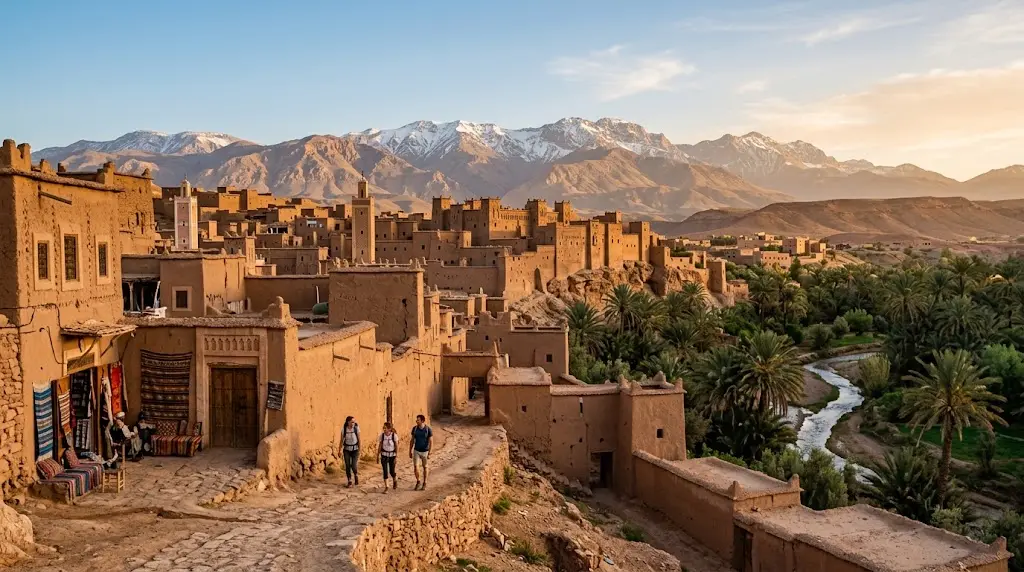
Aït Ben Haddou is one of Morocco’s most recognizable fortified settlements. The historic ksar consists of earthen buildings clustered together in a dramatic landscape south of the High Atlas.
Its architecture and setting make it one of the most memorable stops between Marrakech and the desert regions. UNESCO lists the Ksar of Aït-Ben-Haddou as a World Heritage property.
Walking through its narrow passages and viewing the settlement from surrounding viewpoints gives travelers a better sense of how the historic community was structured.
Best for: History, architecture, photography, road trips, and cultural sightseeing.
8. Ouarzazate
Ouarzazate is often associated with Morocco’s southern landscapes and serves as an important stop on routes connecting Marrakech with Aït Ben Haddou and the desert.
The surrounding region features dramatic mountains, valleys, kasbahs, and dry landscapes. Ouarzazate is particularly useful as a base or overnight stop for travelers exploring southern Morocco.
Best for: Road trips, landscapes, kasbahs, film-related tourism, and southern Morocco itineraries.
9. Meknes
Meknes is one of Morocco’s historic imperial cities and can be included in a northern Morocco itinerary alongside Fez and nearby Volubilis.
The city is known for monumental gates, historic walls, palaces, granaries, and its medina. The Historic City of Meknes is included on UNESCO’s World Heritage List.
Its location also makes it practical for travelers interested in combining urban heritage with the archaeological site of Volubilis.
Best for: History, architecture, imperial heritage, and cultural itineraries.
10. Volubilis
Volubilis offers a different perspective on Moroccan history. Instead of medieval medinas and Islamic architecture, visitors encounter the remains of an ancient Roman city.
The archaeological site contains Roman-era streets, columns, public buildings, and mosaic floors. UNESCO recognizes the Archaeological Site of Volubilis as a World Heritage property.
Volubilis works especially well as a day trip from Meknes or as part of a broader cultural route through northern Morocco.
Best for: Archaeology, Roman history, photography, and cultural sightseeing.
11. Casablanca
Casablanca is Morocco’s largest city and economic center. While many visitors associate Morocco primarily with ancient medinas and desert landscapes, Casablanca provides a more modern urban perspective.
The city’s most famous landmark is the Hassan II Mosque, positioned beside the Atlantic Ocean. Casablanca is also useful as an arrival or departure point for travelers who want to combine Morocco’s major cities.
The Moroccan National Tourist Office describes Casablanca as an economic center where modern infrastructure sits alongside Arab-Muslim heritage and colonial-era influences.
Best for: Architecture, modern Morocco, business travel, city breaks, and coastal urban experiences.
12. Tangier
Tangier occupies a strategic position in northern Morocco overlooking the meeting point of the Mediterranean and Atlantic regions.
The city combines a historic medina, Kasbah, cafés, markets, coastal viewpoints, and a cosmopolitan atmosphere. Its location also makes it a useful gateway for travelers arriving from southern Europe.
Tangier can be paired with Chefchaouen and Tetouan for a northern Morocco itinerary.
Best for: Coastal scenery, history, city exploration, and northern Morocco road trips.
13. Agadir and Taghazout
For travelers who want to balance Morocco’s historic cities with beaches, Agadir and nearby Taghazout are strong options.
Agadir offers a broad beachfront, modern accommodation, restaurants, and a more resort-oriented atmosphere. Taghazout is particularly associated with surfing and coastal outdoor activities.
Morocco’s tourism authority places Agadir-Taghazout among its destinations for beaches, sports, and leisure activities.
Best for: Beaches, surfing, relaxation, outdoor activities, and longer stays.
14. Ifrane
Ifrane provides a striking contrast to Morocco’s desert and coastal landscapes. Located in the Middle Atlas region, it is known for its cooler mountain environment, green surroundings, and distinctive architecture.
Ifrane can be incorporated into a route between Fez and the Middle Atlas before continuing toward Midelt and the desert.
Best for: Mountain scenery, nature, cooler weather, and road trips.
15. Dades Valley and Todra Gorge
The Dades Valley and Todra Gorge are excellent choices for travelers who want dramatic landscapes rather than city sightseeing.
The region features rocky valleys, dramatic cliffs, traditional villages, palm-filled oases, and winding roads. It is often incorporated into southern Morocco routes between the desert and Ouarzazate.
Best for: Hiking, photography, road trips, landscapes, and outdoor adventure.
Best Morocco Destinations by Travel Style
| Travel Style | Places to Consider |
|---|---|
| First-time Morocco trip | Marrakech, Fez, Chefchaouen, Merzouga |
| History and culture | Fez, Meknes, Rabat, Volubilis, Marrakech |
| Desert experience | Merzouga, Ouarzazate, Dades Valley |
| Beach vacation | Essaouira, Agadir, Taghazout |
| Photography | Chefchaouen, Marrakech, Aït Ben Haddou, Merzouga |
| Mountain scenery | Chefchaouen, Ifrane, Atlas Mountains, Dades Valley |
| Architecture | Fez, Marrakech, Rabat, Meknes, Aït Ben Haddou |
| Relaxed itinerary | Essaouira, Chefchaouen, Agadir |
Best Morocco Itinerary for First-Time Visitors
If you have around 7 days in Morocco, avoid trying to cover every destination. A focused itinerary will give you more time to experience each place.
7-Day Morocco Itinerary
- Day 1: Marrakech
- Day 2: Marrakech
- Day 3: Travel toward Aït Ben Haddou and Ouarzazate
- Day 4: Continue toward Merzouga
- Day 5: Sahara Desert experience
- Day 6: Travel toward Fez
- Day 7: Fez
This itinerary involves significant travel, so travelers who prefer a slower pace should reduce the number of destinations.
10-Day Morocco Itinerary
With ten days, you can create a more balanced route:
- Marrakech — 2 nights
- Aït Ben Haddou/Ouarzazate — 1 night
- Dades Valley or Todra Gorge — 1 night
- Merzouga — 1 night
- Fez — 2 nights
- Chefchaouen — 1 to 2 nights
- Rabat or Casablanca — 1 night
The exact route should depend on whether your priority is cities, desert scenery, beaches, hiking, or historical sites.
How Many Days Do You Need in Morocco?
A 5-day Morocco trip works best when concentrated around one region, such as Marrakech and nearby attractions.
A 7-day trip can combine Marrakech with southern Morocco or northern destinations, although travel times can be substantial.
A 10-14 day itinerary gives you considerably more flexibility and makes it easier to combine imperial cities, the Sahara, mountain landscapes, and the Atlantic coast.
Best Time to Visit Morocco
Morocco can be visited throughout the year, but the best period depends heavily on where you are going.
Spring and autumn are often attractive for multi-destination itineraries because temperatures can be more comfortable for sightseeing than during the hottest part of summer.
Winter can be pleasant in many cities, while mountain destinations may be considerably colder. The Sahara can also experience cold nights despite warm daytime temperatures.
Summer can be hot, particularly inland and in desert regions. Coastal destinations such as Essaouira and parts of the Atlantic coast can provide a different climate experience.
How to Choose Between Marrakech, Fez and Chefchaouen
If you have limited time, choosing between Morocco’s famous cities can be difficult.
Choose Marrakech if you want a lively combination of souks, gardens, architecture, restaurants, riads, and nightlife.
Choose Fez if historic medinas, traditional crafts, architecture, and cultural heritage are your main interests.
Choose Chefchaouen if you prefer a smaller mountain city with distinctive blue streets, walking, photography, and a slower pace.
Many travelers can reasonably include all three on a longer trip, but each offers a different side of Morocco.
Is Morocco Good for a Road Trip?
Morocco can work very well as a road-trip destination, particularly if your itinerary includes the Atlas Mountains, Aït Ben Haddou, Ouarzazate, Dades Valley, Todra Gorge, and Merzouga.
However, distances can be longer than they appear on a map, and mountain roads can require additional travel time. Build flexibility into the schedule rather than planning every day around tight arrival times.
For travelers who do not want to drive, trains, buses, private transfers, and organized tours can connect many of the major destinations.
Moroccan Experiences Worth Adding to Your Trip
The best Morocco itinerary is not only about checking destinations off a list. Leave room for experiences that help you understand the country.
- Stay in a traditional riad.
- Explore a historic medina on foot.
- Try Moroccan tagine and couscous.
- Visit traditional craft workshops.
- Spend a night in a Sahara desert camp.
- Watch sunrise or sunset over the dunes.
- Explore an ancient kasbah.
- Visit a Moroccan market or souk.
- Spend time along the Atlantic coast.
- Take a guided walking tour in a historic city.
Morocco’s official tourism material emphasizes the country’s medinas, traditional craftsmanship, gastronomy, history, nature, and cultural experiences as central parts of exploring the destination.
Practical Tips for Visiting Morocco
- Plan around travel time: Morocco is larger and more geographically diverse than a short city break might suggest.
- Wear comfortable shoes: Historic medinas involve considerable walking on uneven surfaces.
- Dress respectfully: Especially when visiting religious or traditional areas.
- Carry water: This becomes particularly important during desert and summer excursions.
- Book desert accommodation carefully: Compare the location, transport arrangements, camp facilities, and included activities.
- Allow time for food: Moroccan cuisine is an important part of the travel experience.
- Use local guides where useful: A knowledgeable guide can add context to complicated medinas and historic monuments.
- Keep some flexibility: Weather and road conditions can affect longer routes.
Frequently Asked Questions
What are the best places to visit in Morocco according to Tripadvisor?
Popular Morocco destinations commonly sought by travelers include Marrakech, Fez, Chefchaouen, Merzouga, Essaouira, Rabat, Aït Ben Haddou, Casablanca, Meknes, and Tangier. The right combination depends on whether your priority is history, beaches, desert scenery, architecture, food, or outdoor activities.
What is the number one place to visit in Morocco?
Marrakech is one of Morocco’s most internationally recognized destinations, but there is no single destination that fits every traveler. Marrakech, Fez, Chefchaouen, Merzouga, and Essaouira provide distinctly different experiences.
Is Marrakech or Fez better for a first visit?
Marrakech offers a lively mix of markets, gardens, architecture, restaurants, and entertainment, while Fez provides a deeper focus on historic medina culture, craftsmanship, and traditional architecture. Your choice should depend on the type of experience you want.
Is Chefchaouen worth visiting?
Yes, particularly if you enjoy photography, walking, mountain scenery, traditional architecture, and smaller historic cities. The blue-painted medina and surrounding Rif Mountains give Chefchaouen a distinctive character.
Is the Sahara Desert worth adding to a Morocco itinerary?
For travelers interested in desert landscapes, it can be one of the most distinctive parts of a Morocco trip. Merzouga provides access to dunes, desert camps, camel experiences, and sunrise and sunset views.
How many days are enough for Morocco?
Five to seven days can work for a focused itinerary, while 10 to 14 days provides much more opportunity to combine cities, the desert, mountains, and the coast without rushing every stop.
Final Thoughts
The best places to visit in Morocco are not limited to one famous city. Marrakech delivers colorful souks and historic architecture, Fez offers one of the country’s richest traditional urban experiences, Chefchaouen brings blue-painted mountain streets, Merzouga opens the door to the Sahara, and Essaouira combines history with the Atlantic coast.
Beyond these headline destinations, places such as Aït Ben Haddou, Volubilis, Meknes, Rabat, Ouarzazate, the Dades Valley, and Todra Gorge can add history and variety to a longer trip.
Rather than trying to visit every destination on a Tripadvisor-style list, build your Morocco itinerary around the experiences that matter most to you. A carefully paced route can turn a collection of famous attractions into a much more memorable journey through Morocco.