
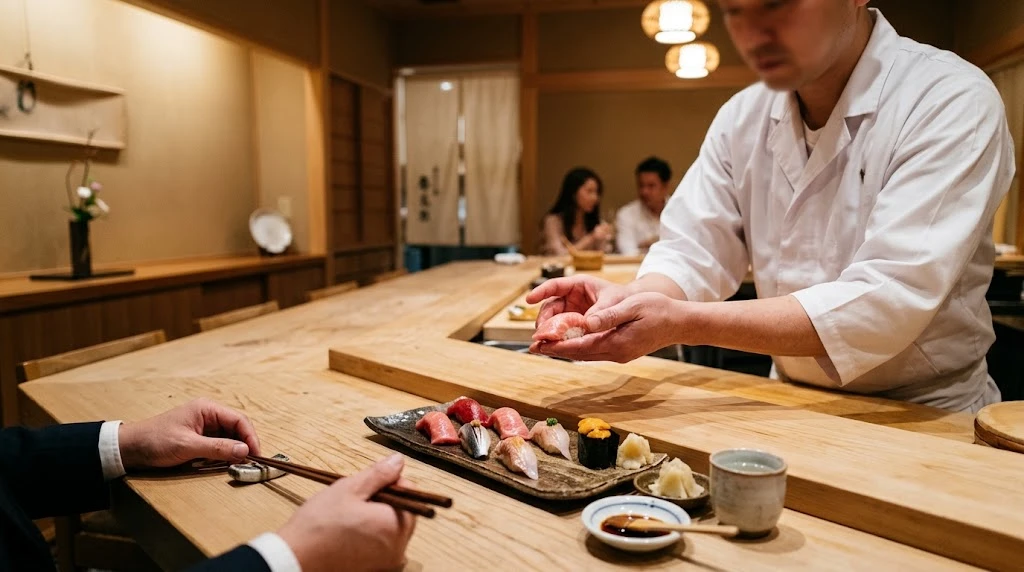
For travelers planning a luxury food experience in Tokyo, Harutaka offers more than a simple sushi dinner. It is an opportunity to experience the precision, pacing, seasonality, and intimate service associated with high-end Japanese sushi culture.
What Makes Harutaka Restaurant Tokyo Special?
Harutaka stands out because its experience is centered on the sushi counter rather than a large dining room or extensive à la carte menu.
The restaurant’s Tabelog listing describes it as presenting the essence of Edomae sushi through skilled craftsmanship. The setting features a refined hinoki-wood counter where guests can watch the chef prepare the food directly in front of them.
This counter format creates a direct relationship between chef and diner. Each piece can be prepared and served at the appropriate moment, allowing the meal to develop as a sequence rather than arriving as a collection of unrelated dishes.
Where Is Harutaka in Tokyo?
Harutaka is located at:
6F, 8-3-1 Ginza, Chuo-ku, Tokyo 104-0061, JapanThe restaurant is in Ginza, one of Tokyo’s most internationally recognized luxury shopping, dining, and entertainment districts. ViaMichelin lists Harutaka at the same Ginza address and identifies its cuisine as sushi.
The location also makes Harutaka convenient for visitors who want to combine a premium sushi meal with an evening exploring Ginza.
Who Is Chef Harutaka Takahashi?
Chef Harutaka Takahashi is central to the restaurant’s identity.
According to the Michelin Guide’s profile, Takahashi’s career included experience at the renowned Sukiyabashi Jiro, after which he developed his own approach to sushi at Harutaka. Michelin describes the restaurant’s sushi progression in terms of rhythm, temperature, sweetness, acidity, and texture.
This background helps explain why Harutaka is often discussed alongside Tokyo’s highest-level sushi restaurants.
The restaurant is not simply built around expensive ingredients. Its appeal comes from how those ingredients are handled, seasoned, cut, warmed or chilled, and presented throughout the meal.
What Is Edomae Sushi?
To understand Harutaka, it helps to understand Edomae sushi.
Edomae sushi originated in the Tokyo area and traditionally emphasizes seafood from nearby waters, careful preparation, and techniques developed to preserve and enhance ingredients.
Modern high-end Edomae sushi may include seafood sourced from different regions of Japan, but the philosophy of precision remains important.
At a restaurant such as Harutaka, the focus is therefore not only on the fish itself. Rice temperature, seasoning, knife work, aging, preparation, and timing can all influence the final result.
Harutaka’s Omakase Experience
The restaurant is associated with an omakase-style dining experience, meaning the chef determines the progression of the meal rather than asking diners to choose every individual piece of sushi.
Tabelog’s menu information identifies the meal format as omakase course only. Its listing also notes that seafood selection can change according to season, including examples of tuna sourced from different Japanese regions at different times of year.
This seasonal approach is important because Japanese sushi culture places significant value on ingredient condition and seasonality.
What Does Omakase Mean?
The Japanese expression omakase can be understood as entrusting the selection to the chef.
Instead of deciding in advance that you want a particular sequence of sushi, you allow the chef to determine what best represents the available ingredients and the restaurant’s style.
At a high-end sushi counter, this creates an evolving meal. The chef can adjust the progression based on the seafood available, the balance of flavors, the pace of service, and the preferences communicated by the guest.
What Can You Expect to Eat at Harutaka?
The exact progression can change, which is part of the nature of an omakase experience. Rather than publishing a fixed list of every piece served at every meal, diners should expect seasonal seafood and sushi selected by the chef.
Historical menu information specifically identifies premium tuna preparations, including chutoro, while the restaurant’s broader reputation is centered on Edomae sushi and seasonal seafood.
A typical high-end sushi progression may include a combination of:
- Seasonal appetizers
- Fresh or carefully matured seafood
- Premium tuna cuts
- Shellfish
- White fish
- Fatty fish
- Uni when available
- Ikura or other roe
- Seasonal specialties
- Hand-formed nigiri
- Soup or a finishing dish
The precise selection should be confirmed directly with the restaurant because an omakase menu is intentionally subject to change.
The Importance of Sushi Rice
At an elite sushi restaurant, the rice is just as important as the topping.
Sushi rice, or shari, provides the structural and flavor foundation for nigiri. Its temperature, texture, seasoning, moisture, and firmness can significantly affect how the seafood tastes.
Michelin’s description of Harutaka specifically draws attention to the harmony of sweetness, acidity, and temperature throughout the sushi experience.
This illustrates an important point: great sushi is not simply raw fish placed on rice. It is an interaction between rice, seafood, seasoning, temperature, texture, and timing.
Seasonality at Harutaka
Seasonality is a fundamental part of Japanese cuisine.
Fish can change considerably throughout the year based on factors such as location, water temperature, migration patterns, spawning cycles, and fat content.
A restaurant that works with seasonal ingredients can therefore create a different dining experience depending on when a guest visits.
Tabelog’s information for Harutaka specifically notes seasonal tuna sourcing, including Sado in summer and Aomori in winter.
This seasonal mindset is one reason diners should avoid expecting a fixed menu when visiting a restaurant built around omakase.
Why the Sushi Counter Matters
The counter is an essential part of the experience.
Instead of receiving a large tray of sushi, guests can watch the chef prepare each piece. This creates a sense of immediacy and allows the timing of the meal to remain under the chef’s control.
Tabelog describes Harutaka’s setting as a refined environment centered around a hinoki counter where guests can observe the chef’s hands at work.
For sushi enthusiasts, this visual component can be almost as interesting as the food itself.
Harutaka’s Intimate Atmosphere
Harutaka is not designed as a large, casual restaurant.
Its relatively intimate counter setting allows the experience to focus on the chef, the ingredients, and the interaction between the kitchen and guests.
This type of restaurant is particularly suited to diners who enjoy quiet observation and careful attention to detail.
The atmosphere is sophisticated without needing excessive decoration. The food preparation itself becomes part of the performance.
Harutaka and Michelin Recognition
Harutaka has a significant history with the Michelin Guide.
The Michelin Guide’s Tokyo 2017 announcement listed Harutaka among the new one-star sushi restaurants that year.
By the 2024 Tokyo selection, Michelin announced that Harutaka had reached three stars. The guide described the restaurant as part of Tokyo’s exceptional sushi scene and included it among the city’s highest culinary distinctions.
Current 2026 restaurant information continues to list Harutaka as a three-Michelin-star restaurant, although travelers should always verify the latest official Michelin listing before making a reservation or using the distinction in trip planning.
Harutaka and Tabelog Recognition
Michelin is not the only major source of recognition for Harutaka.
Tabelog currently lists Harutaka as a 2026 Tabelog Award Silver winner and notes that the restaurant was selected for Tabelog Sushi TOKYO’s 2025 “Tabelog 100.”
The listing currently displays a 4.35 rating from hundreds of reviews, while the restaurant is positioned in the very high price category.
These accolades do not guarantee that every diner will have the same experience, but they demonstrate the restaurant’s established reputation among Tokyo’s sushi establishments.
How Expensive Is Harutaka?
Harutaka is firmly positioned in the luxury dining category.
Current Tabelog information places the restaurant in the ¥80,000–¥99,999 price range.
Prices can change, and the final cost may depend on the course, beverages, tax, and other charges. Travelers should confirm the current price directly before visiting.
This is therefore not a restaurant to approach as an inexpensive sushi stop. It is better understood as a destination dining experience.
How to Prepare for an Omakase Dinner
A little preparation can make a high-end sushi experience more enjoyable.
Arrive on Time
Counter-service omakase restaurants often work on carefully planned schedules. Arriving late can disrupt the progression of the meal and the experience of other guests.
Communicate Dietary Restrictions Early
If you cannot eat particular ingredients, inform the restaurant as early as possible. A high-end omakase restaurant may be able to accommodate certain requests, but this should never be assumed.
Keep Fragrances Subtle
Strong perfumes can interfere with the delicate aromas of seafood and rice. A restrained fragrance is generally more appropriate for an intimate sushi counter.
Ask Questions
If you are unfamiliar with a particular fish or preparation, asking the chef or staff is part of the experience.
Focus on the Progression
Rather than evaluating each piece in isolation, notice how the meal changes from one preparation to the next.
What Is the Difference Between Omakase and À La Carte Sushi?
| Feature | Omakase | À La Carte |
|---|---|---|
| Selection | Chef chooses the progression | Diner selects individual items |
| Seasonality | Often strongly emphasized | Diner can choose from available options |
| Experience | Structured progression | More flexible ordering |
| Interaction | Often highly connected to chef’s presentation | More focused on individual selections |
| Price | Usually presented as a course or set experience | Can vary according to individual orders |
Harutaka’s listed meal format is omakase course only, making it much closer to the first model.
Why Ginza Is the Perfect Setting for Harutaka
Ginza has long been associated with luxury retail, sophisticated dining, traditional Japanese craftsmanship, and high-end hospitality.
For international travelers, eating at Harutaka can therefore become part of a larger Ginza experience rather than a standalone restaurant visit.
You can spend the afternoon exploring department stores, galleries, boutiques, and surrounding neighborhoods before transitioning into an intimate sushi dinner.
The restaurant’s Ginza address places it in one of Tokyo’s most convenient areas for a premium evening itinerary.
Harutaka for International Visitors
International diners may find the restaurant especially appealing because it offers a concentrated introduction to high-level Japanese sushi craftsmanship.
However, visitors should understand that an omakase meal is not simply a tourist attraction. The restaurant’s format is designed around the culinary rhythm of the counter.
Learning a few basic Japanese sushi terms can improve the experience, but English-speaking visitors should not feel obligated to become sushi experts before arriving.
Useful Sushi Terms to Know
- Nigiri: Hand-formed sushi consisting of seasoned rice and a topping.
- Omakase: A dining format in which the chef determines the selection.
- Edomae: A Tokyo-associated sushi tradition emphasizing preparation, technique, and seafood.
- Shari: Seasoned sushi rice.
- Neta: The topping or ingredient placed on sushi rice.
- Chutoro: A medium-fatty portion of tuna.
- Uni: Sea urchin roe.
- Shime: A preparation or preservation technique, depending on context.
What Makes High-End Sushi Different?
The difference between ordinary sushi and high-end Edomae sushi is often found in details that are easy to overlook.
These can include:
- Ingredient sourcing
- Seasonality
- Knife technique
- Fish maturation
- Rice preparation
- Vinegar balance
- Temperature control
- Portion size
- Timing
- Chef-diner interaction
At the highest level, the goal is not simply to maximize the amount of seafood on the plate. The goal is to create a precise balance between every component.
Why Temperature Matters in Sushi
Temperature can influence aroma, texture, fat perception, and the way flavors develop in the mouth.
Michelin’s description of Harutaka specifically references temperature alongside sweetness, acidity, and texture when discussing the rhythm of its sushi.
This is one reason sushi served directly from the counter can feel different from sushi that has been sitting on a plate for an extended period.
Why Fish Maturation Can Matter
Not every fish is necessarily served immediately after being caught.
Depending on the species and preparation, controlled maturation can alter texture and concentrate or change certain flavors.
This requires expertise because maturation must be carefully managed. The technique is part of the broader craft that distinguishes serious Edomae sushi from simple raw-fish preparation.
Harutaka’s Place in Tokyo’s Sushi Culture
Tokyo is home to an extraordinary range of sushi restaurants, from neighborhood counters to globally famous Michelin-starred destinations.
Harutaka belongs firmly within the high-end segment of that landscape.
Its combination of chef-driven omakase, Edomae technique, intimate counter seating, seasonal seafood, and major culinary recognition makes it a destination for diners who want a focused sushi experience.
The Michelin Guide’s Tokyo selections repeatedly demonstrate the depth of the city’s sushi culture, with numerous establishments recognized across different levels of dining.
Is Harutaka Worth Visiting?
For travelers who specifically enjoy high-end sushi and are comfortable with luxury-dining prices, Harutaka can be a compelling choice.
The strongest reasons to consider it include:
- Three-Michelin-star recognition in current 2026 listings
- Chef Harutaka Takahashi’s sushi background
- Edomae sushi craftsmanship
- Omakase-focused dining
- Seasonal seafood
- Intimate counter seating
- Strong Tabelog recognition
- Ginza location
It may not be the right choice for someone looking for a casual sushi lunch, a large à la carte menu, or an inexpensive meal.
Tips for Planning Your Visit
- Check the current reservation procedure before your Tokyo trip.
- Confirm the current price and course format.
- Verify the restaurant’s latest opening schedule.
- Tell the restaurant about dietary restrictions in advance.
- Arrive punctually for the scheduled seating.
- Keep strong perfumes to a minimum.
- Ask about unfamiliar seasonal ingredients.
- Budget for beverages and additional charges where applicable.
- Verify the current Michelin status if awards are important to your itinerary.
Final Thoughts
Harutaka Restaurant Tokyo represents the kind of dining experience that makes Tokyo famous among serious food travelers. Its focus is not on a huge menu or casual convenience, but on a carefully controlled sushi progression built around seasonal ingredients, precise preparation, skilled craftsmanship, and direct chef interaction.
The restaurant’s Ginza location, Edomae sushi identity, omakase format, and recognition from Michelin and Tabelog make it one of the city’s most notable destinations for luxury sushi.
For a traveler who wants to understand why Japanese sushi can be considered a form of culinary craftsmanship rather than simply a meal, Harutaka offers an especially focused introduction.
Because restaurant schedules, menus, prices, awards, and reservation procedures can change, always confirm the latest information directly before visiting.