
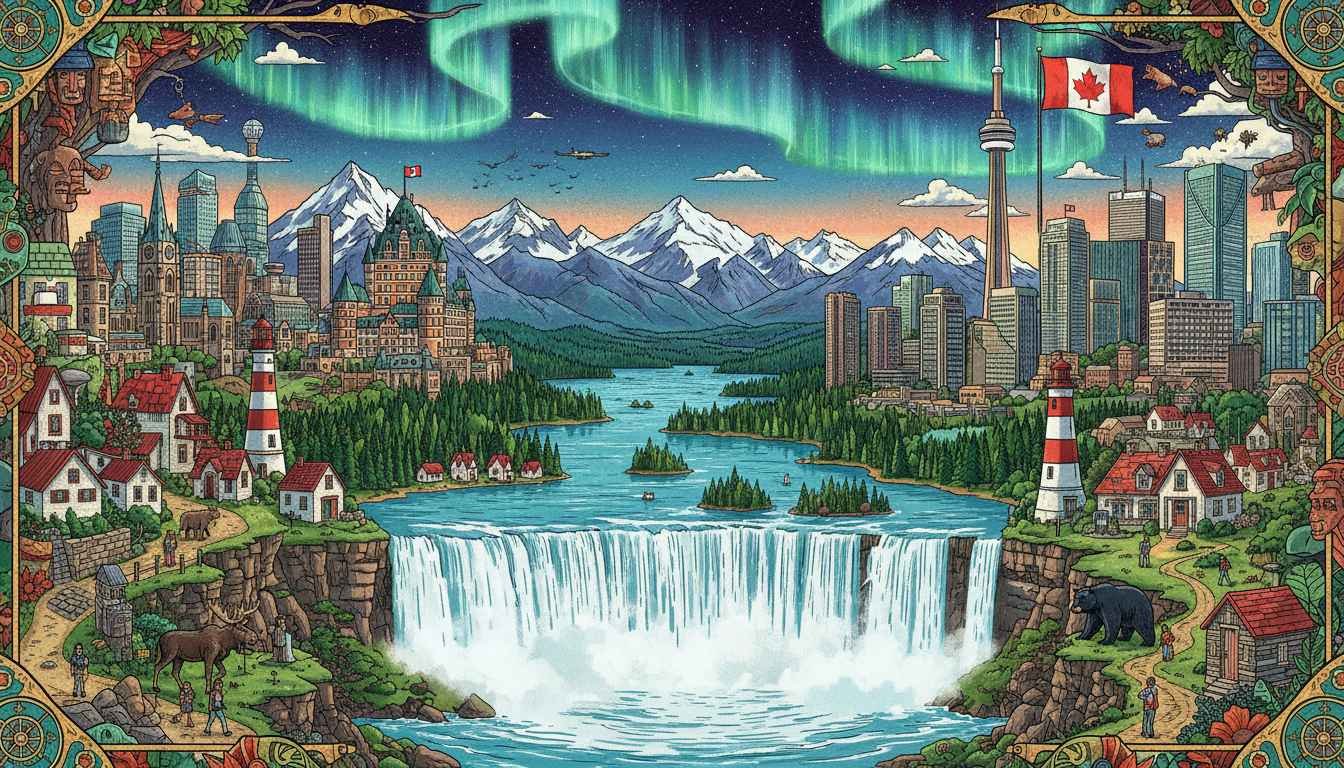
Canada is the world’s second-largest country, and its highlights span mountains, prairies, Atlantic fishing villages and French-speaking cities. No single trip covers everything, so the smart approach is to pick a region — or a theme — and explore it well. These are the places that best show Canada’s range, from west to east.
Western Canada: Banff and Vancouver
Banff National Park in the Rocky Mountains is Canada’s most famous natural destination, and for good reason. Lake Louise and Moraine Lake, with their turquoise water and mountain backdrops, are the signature sights, while the town of Banff itself offers hot springs, the Banff Gondola up Sulphur Mountain and easy hiking trails. Come in summer for hiking and lake access, or in winter for skiing at Lake Louise and Sunshine Village.
Vancouver, on the Pacific coast, pairs city life with easy nature. Stanley Park’s seawall is one of the great urban walks in North America, Granville Island’s public market is a food lover’s stop, and the Capilano Suspension Bridge and Grouse Mountain are a short trip from downtown. The city’s mild climate and multicultural food scene make it a good base for first-time visitors to western Canada.
Central Canada: Toronto, Ottawa and Niagara Falls
Toronto is Canada’s largest city and its most diverse, with neighbourhoods such as Kensington Market and the Distillery District offering food, art and street life. The CN Tower and the Royal Ontario Museum are the classic sights, and the Toronto Islands, a short ferry ride away, give car-free beaches and skyline views.
Niagara Falls, about 90 minutes from Toronto, is the country’s most visited natural attraction. The falls are impressive from both the Canadian and American sides, but the Canadian side has the fuller Horseshoe Falls view and the town’s Clifton Hill attractions. Ottawa, the capital, is quieter but worth a day for Parliament Hill, the Rideau Canal and the National Gallery of Canada. For a smaller Ontario experience, the lakeside city of Burlington, Ontario offers waterfront trails and the Royal Botanical Gardens between Toronto and Niagara.
Eastern Canada: Montreal, Quebec City and the Maritimes
Montreal blends French heritage with a modern, festival-driven city culture. Old Montreal’s cobblestones and the Notre-Dame Basilica are the historic core, while Mount Royal park gives a city panorama and the neighbourhoods of Le Plateau and Mile End are the places for food and nightlife. Quebec City, about three hours away, is the most European-feeling city in North America, with its walled old town, the Château Frontenac and the Plains of Abraham.
Further east, the Maritime provinces move at a slower pace. Nova Scotia’s Cabot Trail winds around Cape Breton Island with coastal cliffs and fishing villages, Peggy’s Cove lighthouse is the classic photo stop, and the Bay of Fundy in New Brunswick has the world’s highest tides. These are the places for seafood, lighthouses and long coastal drives.
The Prairies: Winnipeg and the Heartland
Between Ontario and the Rockies lie the Prairies, often skipped by first-time visitors but worth a stop. Winnipeg, Manitoba’s capital, has the Canadian Museum for Human Rights at The Forks, a historic meeting place where the Red and Assiniboine rivers join. The surrounding grasslands and the vast skies of Saskatchewan give a sense of the country’s scale that the mountain and coastal highlights cannot, and the region’s festivals and food scenes — from Winnipeg’s Folklorama to Saskatoon’s farmers’ markets — are genuinely local.
The North: Northern Lights and Wilderness
For something genuinely different, the northern territories offer the aurora borealis, vast wilderness and Indigenous cultures that shape the region. Yellowknife in the Northwest Territories and Whitehorse in Yukon are the main aurora-viewing bases in winter, with guided tours that take visitors away from city lights. Summer in the north brings midnight sun, canoeing and hiking under long daylight hours. This is remote travel — distances are large and services are fewer — but the payoff is scenery and silence that the south cannot match.
Planning a Canada Trip
Distances are the biggest planning factor: Toronto to Vancouver is a five-hour flight, so pick one or two regions per trip. Late spring through early autumn is the best window for most sightseeing, though winter is the season for skiing and aurora viewing. If you are travelling in spring specifically, our guide to the best places to visit in spring in Canada covers the seasonal highlights in detail, from tulip season in Ottawa to shoulder-season hiking in the Rockies.
FAQ: Visiting Canada
What are the must-see places in Canada for a first trip?
For a first visit, combine one western highlight (Banff or Vancouver) with one eastern city (Toronto, Montreal or Quebec City). Add Niagara Falls if you are in Ontario.
When is the best time to visit Canada?
Late spring through early autumn suits most sightseeing, with warm weather and open trails. Winter is best for skiing and northern lights, but some mountain roads and attractions have limited access.
Is Canada suitable for families?
Yes. National parks, city museums, beaches and family attractions such as the Toronto Islands and Quebec City’s old town work well for children, and most major sights are accessible.
Do I need a car?
A car helps enormously outside the big cities, especially in the Rockies and the Maritimes. In Toronto, Montreal and Vancouver, public transport and walking cover the main sights.
From Rocky Mountain lakes to Atlantic lighthouses, Canada rewards travellers who give each region its due. Choose your corner of the country, travel at a pace that lets you enjoy it, and the scale of the place will take care of the rest.