Santiago de Compostela, the capital of Galicia in north-west Spain, has drawn travellers for more than a thousand years as the finishing point of the Camino de Santiago pilgrimage. But you do not need to walk hundreds of kilometres to enjoy it. Its old town is compact, walkable and full of stone arcades, quiet squares and excellent food, and the surrounding Galician countryside makes for easy day trips. Here is what to see.
The Cathedral and the Old Town
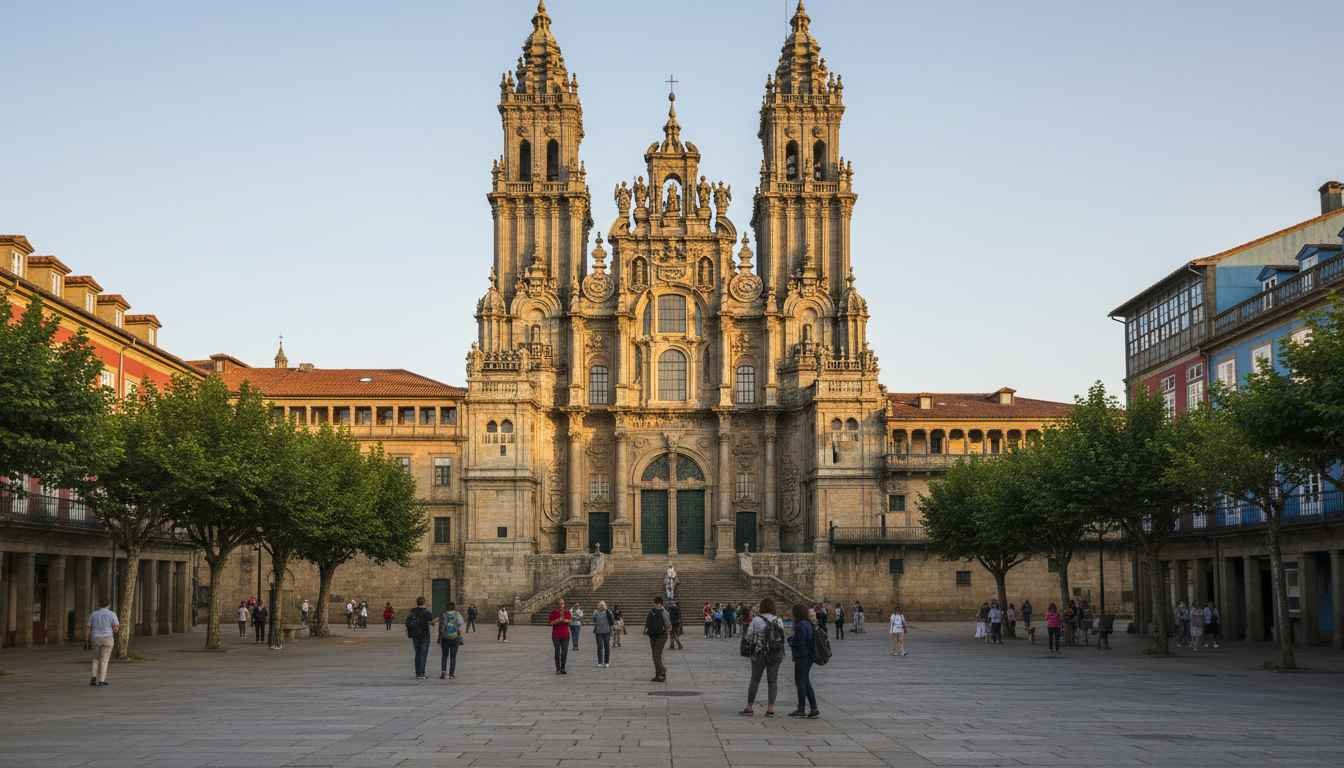
The Cathedral of Santiago de Compostela is the city’s heart. Pilgrims have gathered in the Praza do Obradoiro in front of it for centuries, and the square itself — framed by the cathedral, the Hostal dos Reis Católicos and the town hall — is one of Spain’s great public spaces. Inside, the Romanesque interior, the Botafumeiro (the giant incense burner swung on major feast days) and the rooftop tours are the main draws. Even if you arrive as a tourist rather than a pilgrim, watching walkers finish their Camino in the square is a memorable moment.
The old town around the cathedral is a UNESCO World Heritage site, a maze of granite streets sheltered by covered arcades. Wander through the Rúa do Franco and Rúa da Raíña, where tapas bars and small restaurants line the route, and look out for the Praza de Cervantes and the Praza da Quintana, quieter squares that reward a slow walk. The city’s old town is also a good reminder that European city breaks work best on foot — if you are weighing other city destinations, our guide to the best places in Europe to visit covers how different cities compare for walking, food and culture.
Parks and Viewpoints
Alameda Park, just west of the old town, is the city’s favourite green space. Its tree-lined paths, the statue of the poet Rosalía de Castro and the viewpoint over the cathedral rooftops make it a natural stop after the cathedral. For a wider panorama, climb to the Monte Pedroso viewpoint, which looks back over the whole city and the Galician hills beyond.
Museums and Galician Culture
Two museums anchor the city’s cultural life. The Museo do Pobo Galego, housed in the former Convent of Santo Domingo de Bonaval, explains Galician traditions, crafts and rural life, while the Galician Centre for Contemporary Art (CGAC) next door shows modern and contemporary work in a striking modern building. Together they give a fuller picture of Galicia than the cathedral alone: an old region with a living, contemporary culture.
Food: Markets and Galician Cooking
Santiago is one of Spain’s best cities for eating well without spending much. Start at the Mercado de Abastos, the covered market where stalls sell seafood, cheese, bread and vegetables, and where some vendors will cook your purchase on the spot. The dishes to try are pulpo a la gallega (octopus with paprika and olive oil), empanada gallega, Tetilla cheese and Albariño white wine from the nearby Rías Baixas region. The Rúa do Franco is the classic tapas crawl street, where many bars still serve a small free tapa with a drink.
Day Trips Around Santiago
Three day trips are worth building into your stay. Pontevedra, about 45 minutes south by train, is a car-free historic city with arcaded squares and a lively old town. Padrón, the small town that gives its name to the famous fried peppers, sits on the Camino route south of the city. And for a wilder day out, head west to Cape Finisterre on the Costa da Morte, once thought to be the end of the known world, where a lighthouse marks the Atlantic headland and pilgrims traditionally watched the sunset after reaching Santiago.
If you are travelling with teenagers or younger family members, the pacing of a Santiago trip — short walks, market food, one museum a day — also translates well to other European cities; our guide to the best places to visit in Europe with a teenager has ideas for keeping younger travellers engaged on city breaks.
Practical Tips
Spring and autumn are the best times to visit: mild weather, fewer crowds than summer, and the countryside at its greenest. Wear comfortable shoes — the old town’s granite streets are beautiful but uneven. Santiago has good train and bus connections to the rest of Galicia and to Madrid, and its airport (Lavacolla) is a short bus ride from the centre. If you plan to walk the final stretch of the Camino, the last 100 kilometres from Sarria is the most popular section and takes about five days.
FAQ: Santiago de Compostela
How many days do I need in Santiago de Compostela?
Two full days cover the cathedral, old town, parks and museums comfortably. Add a third day for a day trip to Pontevedra or Cape Finisterre.
Is Santiago suitable for families?
Yes. The old town is pedestrian-friendly, the parks are safe and open, and the food scene — especially the market — appeals to children as well as adults.
Do I need to be a pilgrim to enjoy the city?
No. Most visitors come as tourists, and the cathedral, museums, food and day trips stand on their own. Watching pilgrims arrive in the Praza do Obradoiro is part of the atmosphere, whatever your reason for visiting.
When is the best time to visit?
Spring and autumn offer mild weather and manageable crowds. Summer is lively but busy, especially in Holy Years, while winter is quiet and atmospheric, with rain likely.
Santiago de Compostela rewards slow travel: a morning in the cathedral square, a long lunch on the Rúa do Franco, an afternoon in the Alameda. Come for the history, stay for the food, and leave with a sense of why pilgrims have walked here for a thousand years.