
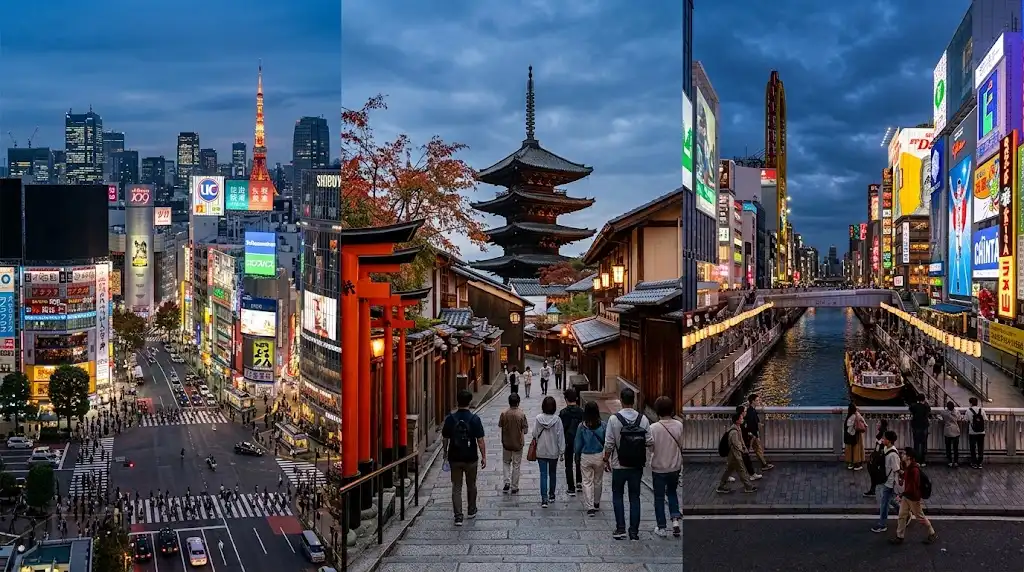
Why Visit Tokyo, Kyoto, and Osaka?
Japan is not a destination where every city feels the same. Tokyo is known for its enormous scale and combination of traditional neighborhoods with cutting-edge urban life. Kyoto is deeply connected to Japanese history, temples, gardens, traditional neighborhoods, tea culture, and seasonal experiences. Osaka has a more relaxed and energetic personality, with famous food districts, shopping areas, nightlife, and historic attractions.
Visiting all three therefore gives travelers a broad introduction to Japan rather than focusing on only one type of experience.
If you are interested in exploring beyond the country’s most famous cities, PostTrek also has a guide to places to visit in Japan besides Tokyo, Osaka, and Kyoto.
1. Tokyo – The Best Place for Modern Japan
Tokyo is the natural starting point for many international visitors. It is one of the world’s largest metropolitan areas and offers an enormous variety of neighborhoods, attractions, restaurants, shopping districts, museums, parks, and cultural experiences.
What makes Tokyo particularly interesting is the contrast between its futuristic urban environment and its historic traditions. A single day can include a centuries-old temple, a modern observation deck, a traditional food market, and a technology-focused shopping district.
Things to Do in Tokyo
First-time visitors can explore Asakusa and Sensoji Temple, experience the famous crowds of Shibuya, shop around Ginza, explore Shinjuku, or visit one of Tokyo’s many museums and digital-art experiences.
Tokyo’s official tourism guide highlights attractions across categories including historical sites, landmarks, museums, parks, gardens, waterfront areas, entertainment, and scenic locations.
Shibuya and Harajuku
Shibuya is famous for its energetic streets and iconic crossing, while nearby Harajuku is associated with youth culture, fashion, shopping, and creative street style.
These neighborhoods are ideal for travelers who want to experience contemporary Japanese city life.
Asakusa and Traditional Tokyo
Asakusa provides a very different atmosphere. The area surrounding Sensoji Temple offers historic streets, traditional shops, food stalls, and cultural landmarks.
This contrast between old and new is one of the reasons Tokyo works so well as an introduction to Japan.
Why Tokyo Belongs on Your Japan Itinerary
- Huge variety of attractions and neighborhoods
- Excellent public transportation
- World-class shopping and dining
- Traditional and modern experiences in the same city
- Easy access to destinations such as Hakone, Kamakura, Yokohama, and Nikko
If you want to explore Japan beyond Tokyo, see our guide to Japan’s destinations outside Tokyo, Osaka, and Kyoto.
2. Kyoto – The Best Place for Traditional Japanese Culture
Kyoto is the cultural heart of a classic Japan itinerary. The former imperial capital is known for historic temples, shrines, gardens, traditional wooden townhouses, tea culture, seasonal festivals, and distinctive neighborhoods.
Japan’s National Tourism Organization describes Kyoto as a city where cultural traditions developed over more than 1,200 years continue to influence everyday life. Its attractions include historic streets, shrines, castles, traditional inns, cuisine, bamboo landscapes, and areas outside the city center.
Visit Fushimi Inari Shrine
Fushimi Inari is famous for its long paths of vermilion torii gates leading through the wooded hills. It is one of Kyoto’s most recognizable cultural attractions and provides an opportunity to experience a historic Shinto site in a distinctive natural setting.
Explore Kiyomizu-dera
Kiyomizu-dera is another important Kyoto attraction. The temple complex offers historic architecture and elevated views across the surrounding city.
Discover Arashiyama
Arashiyama is particularly well known for its bamboo grove, temples, river scenery, and surrounding mountain landscape. It can be especially beautiful during spring and autumn.
Explore Gion and Higashiyama
Gion and Higashiyama are ideal areas for travelers interested in traditional streetscapes, historic architecture, tea culture, and Kyoto’s distinctive atmosphere.
Kyoto’s Seasonal Appeal
Kyoto changes dramatically throughout the year. Spring brings cherry blossoms, summer offers festivals and riverside experiences, autumn is famous for colorful foliage, and winter creates a quieter atmosphere around many historic sites.
Travelers should also be respectful of local communities. Kyoto’s official tourism guidance emphasizes responsible behavior and recommends checking congestion information when visiting especially busy attractions.
For another Japan-focused seasonal guide, explore our article about places to visit in Kyoto during summer.
3. Osaka – The Best Place for Food, Entertainment, and Nightlife
Osaka offers a noticeably different experience from Kyoto. While Kyoto is strongly associated with historic culture and traditional architecture, Osaka is famous for food, entertainment, shopping, nightlife, and its energetic urban atmosphere.
Japan’s official tourism organization describes Osaka as a relaxed city known for food, fun, nightlife, shopping, and attractions such as Osaka Castle. It also identifies areas such as Dotonbori, Shinsaibashi, Namba, and Osaka Castle as important places to explore.
Explore Dotonbori
Dotonbori is one of Osaka’s most recognizable entertainment districts. Bright signs, restaurants, shopping streets, and busy pedestrian areas create an energetic atmosphere, especially after sunset.
Visit Osaka Castle
Osaka Castle provides a connection to the city’s historical side. The castle and surrounding park offer visitors an opportunity to learn more about Japanese history while enjoying one of Osaka’s major landmarks.
JNTO also includes Osaka Castle in its recommended Kansai itinerary alongside Kyoto and Nara.
Try Osaka’s Famous Food
Food is one of the major reasons travelers visit Osaka. Local specialties include takoyaki and okonomiyaki, while districts such as Tenma and Ura Namba provide numerous opportunities to explore the city’s food culture.
Experience Osaka at Night
Osaka becomes particularly lively after dark. Dotonbori, Namba, Shinsaibashi, and nearby entertainment districts offer restaurants, bars, shopping, illuminated streets, and late-night activities.
For travelers interested in nighttime travel experiences elsewhere in Asia, you can also explore our guide to the best places to visit in the Philippines for nightlife.
Tokyo vs. Kyoto vs. Osaka
| City | Best For | What Makes It Different |
|---|---|---|
| Tokyo | Modern city life | Technology, shopping, neighborhoods, museums, food, and traditional districts |
| Kyoto | Culture and history | Temples, shrines, gardens, traditional streets, cuisine, and seasonal beauty |
| Osaka | Food and entertainment | Street food, nightlife, shopping, lively neighborhoods, and Osaka Castle |
How Many Days Do You Need?
A short trip can cover the highlights of all three cities, but allowing additional time makes the experience more comfortable.
5-Day Japan Itinerary
- Days 1–2: Tokyo
- Day 3: Travel to Kyoto and explore central Kyoto
- Day 4: Kyoto
- Day 5: Osaka
7-Day Japan Itinerary
- Days 1–3: Tokyo
- Days 4–5: Kyoto
- Days 6–7: Osaka
10-Day Japan Itinerary
With ten days, you can spend more time in each city and add day trips. Tokyo can be combined with destinations such as Hakone or Kamakura, while Kyoto can be paired with Nara. Osaka can serve as a base for exploring other parts of Kansai.
JNTO’s broader Golden Route connects Tokyo, Hakone, Kyoto, Nara, and Osaka while continuing toward Hiroshima, making these cities practical components of a longer Japanese journey.
How to Travel Between Tokyo, Kyoto, and Osaka
Japan’s rail network makes traveling between these major cities relatively straightforward.
Tokyo to Kyoto
The Tokaido Shinkansen provides a fast connection between Tokyo and Kyoto. Kyoto’s official tourism information also notes its convenient connections with Tokyo and other major Japanese cities.
Kyoto to Osaka
Kyoto and Osaka are close to each other and can be connected by several train services. This makes it practical to stay in one city and make day trips to the other, depending on your itinerary.
Osaka as a Kansai Base
Osaka can also work as a base for exploring the wider Kansai region. Official tourism information identifies Kyoto, Nara, Kobe, and Wakayama among destinations that can be reached from Osaka.
Best Time to Visit Tokyo, Kyoto, and Osaka
Japan is a year-round destination, but the best time depends on the experiences you want.
Spring
Spring is famous for cherry blossoms, pleasant sightseeing conditions, and seasonal events. Popular destinations can become very busy during peak blossom periods, so accommodation and transportation should be planned ahead.
Summer
Summer brings festivals, greenery, fireworks, and lively outdoor events. Kyoto’s Gion Festival is one of the major cultural highlights of the season.
Autumn
Autumn is particularly attractive for travelers interested in colorful foliage. Kyoto’s temples and gardens can be especially impressive during the fall season.
If you are specifically interested in seasonal Japan travel, see our Kyoto summer travel guide.
Winter
Winter offers cooler weather, seasonal illuminations, quieter sightseeing periods in some areas, and opportunities to combine city travel with hot springs and mountain destinations.
Can You Visit All Three Cities on One Trip?
Yes. Tokyo, Kyoto, and Osaka are particularly suitable for a multi-city Japan itinerary because they are connected by efficient rail services and each provides a different travel experience.
A first-time traveler could begin in Tokyo, continue to Kyoto, and finish in Osaka. This direction also works well for travelers who want to gradually move from modern metropolitan experiences into traditional culture and then finish with food and entertainment.
Travelers with additional time should consider extending the trip beyond these three cities. Our guide to places to visit beyond Tokyo, Osaka, and Kyoto can help identify additional destinations.
Other Japanese Destinations Worth Considering
Tokyo, Kyoto, and Osaka may be the classic starting points, but Japan has many other destinations worth exploring.
Travelers can consider Hiroshima, Nagasaki, Hokkaido, Okinawa, Kanazawa, Takayama, Nara, Nikko, Hakone, and other regional destinations depending on their interests and available time.
JNTO’s current destination guide covers regions including Kanto, Tokai, Kansai, Chugoku, Shikoku, Kyushu, and Okinawa, demonstrating the country’s geographic and cultural variety.
For travelers planning an alternative Japan itinerary, our guide to places to visit in Japan besides the three major cities is a useful next step.
Final Thoughts
Tokyo, Kyoto, and Osaka are three of the most useful destinations for a first trip to Japan because each offers a distinct side of the country.
Tokyo combines enormous city energy, technology, shopping, entertainment, and traditional neighborhoods. Kyoto offers historic temples, shrines, gardens, traditional streets, and deep cultural connections. Osaka adds famous food, nightlife, shopping, entertainment, and a more relaxed urban atmosphere.
Together, they provide a balanced introduction to Japan and can form the foundation of a longer itinerary. Once you have explored these three cities, you can expand your journey toward Japan’s other regions, islands, mountains, historic towns, and coastal destinations.
For more Japan travel inspiration, also explore PostTrek’s guides to Japan beyond Tokyo, Osaka, and Kyoto, the best places to visit in Tokyo, Kyoto in summer, and additional Japan travel ideas where available.