

Agriculture, Ecosystems & Environment is one of the leading peer-reviewed journals in farming science, published by Elsevier. For decades, its papers have quietly shaped how agronomists, growers and policymakers think about the land that feeds us. This guide explains what the journal actually studies, what its research keeps telling us, and what working farmers can take away from it — in plain English, without a science degree.
What the Journal Studies
The journal covers the science of agroecosystems: farms treated not as factories but as living networks. Every field is an ecosystem where soil microbes, crops, insects, water cycles and human decisions interact. A change in one corner — say, switching tillage methods — ripples through soil structure, pest pressure and yields in ways that only show up over years.
Its most cited themes are consistent: soil health, water management, biodiversity on farmland, pesticide impacts, nutrient cycling, and the effects of climate change on crop systems. If you farm, you are managing every one of these, whether or not you read the papers.
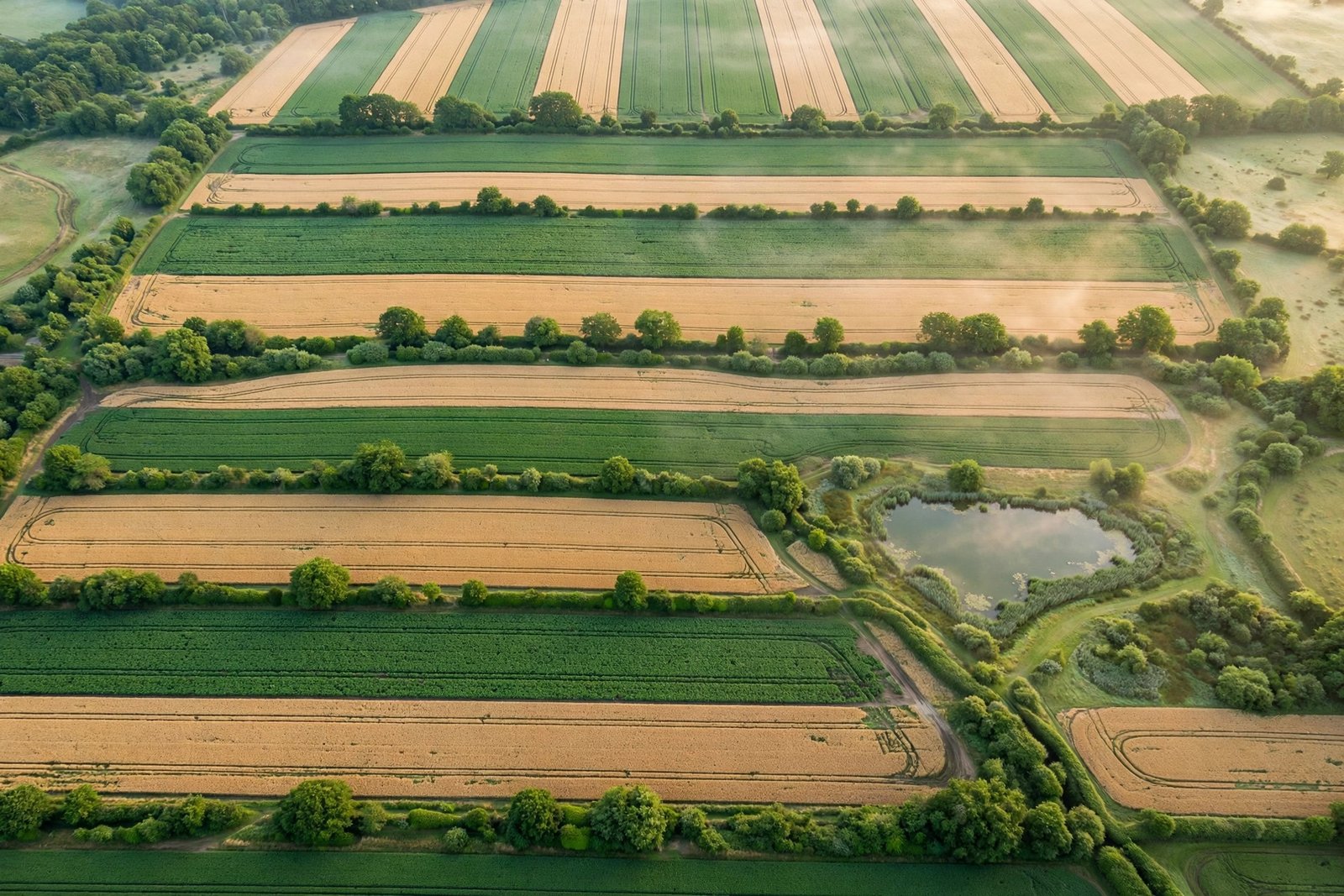
Soil Health: The Foundation Everything Else Rests On
Research in the journal has documented, again and again, that soils under intensive monoculture lose organic matter and microbial diversity over time. Chemical fertilizers boost short-term yield, but without organic inputs the soil’s structure degrades and it holds less water.
The practical findings are straightforward. Cover cropping, reduced tillage and crop rotation rebuild organic matter measurably within a few seasons. Fields with diverse rotations show stronger microbial communities and better resilience in drought years. The takeaway is not ideological — it is economic: soil that holds water and cycles nutrients on its own needs fewer inputs to produce the same yield.
Water: Irrigation Efficiency Decides Profit Margins
Over-extraction of groundwater for irrigation is one of the most studied problems in the journal. Aquifer depletion lowers water tables, raises pumping costs and can cause soil salinization — a slow process that quietly cuts yields year after year.
The research consensus favors precision: drip irrigation, soil-moisture sensors and scheduling irrigation around actual crop demand rather than the calendar. These are not futuristic technologies; they are affordable tools that cut water use by a fifth or more in many trials while holding yields steady.
Biodiversity and Pest Control Work Together
One of the journal’s strongest threads is integrated pest management (IPM). Studies show that diverse field margins — hedgerows, flower strips, beetle banks — host the predators and pollinators that suppress pests naturally. Farms that invest in this biological infrastructure typically cut insecticide applications without losing yield.
The lesson for growers: biodiversity is not a luxury for conservationists. It is a working input, like fertilizer, that pays back in fewer spray passes and more stable pollination.
Climate Pressure Is Already Here
The journal’s climate papers document shifting rainfall patterns, heat stress during flowering, and new pest ranges — all of which growers in many regions are already experiencing. The research consistently points to the same adaptation playbook: diversify crops, stagger planting dates, select varieties for heat and drought tolerance, and keep soil covered to buffer temperature extremes.
Practical Takeaways for Growers
You do not need to read every paper to benefit from this research. The consistent message across thousands of studies is:
- Measure your soil. Organic matter percentage is the single best indicator of long-term productivity. Test yearly and track the trend.
- Rotate and cover. Bare soil between seasons loses carbon and invites erosion. A cheap cover crop is one of the highest-return investments on a farm.
- Water by data, not habit. A soil-moisture probe costs less than one unnecessary irrigation pass over a large field.
- Keep the beneficial insects. Field margins and flower strips are pest-control infrastructure — treat them that way.
- Watch the research, not the marketing. Input suppliers sell products; journals document what actually worked in replicated trials.
What we eat is connected to how it is grown more directly than most shoppers realize — a point explored in our look at why plant-based burgers are here to stay, where food choices meet farming sustainability. And supporting local food systems, from restaurants built on regional flavor to farmers’ markets, keeps more of that value in farming communities.
Putting It Into Practice: A Season-by-Season View
How does this research translate to an actual farming year? In autumn, plant cover crops on bare ground to protect soil and fix nitrogen over winter. In spring, test soil before buying inputs — many fields need less fertilizer than habit dictates once organic matter is tracked. In summer, irrigate by sensor readings and keep field margins flowering for pollinators and pest predators. In winter, review the season’s numbers and read one review article on a topic you struggled with. None of this requires new equipment on day one; it requires paying attention to what the ecosystem is already telling you.
Who Should Read the Journal?
Agronomists, extension advisors, farm managers running larger operations, and policy analysts will get the most direct value. But any grower making decisions about rotations, inputs or water can skim the review articles — which summarize dozens of studies into practical conclusions — and stay ahead of problems their neighbors are still guessing about.
The Bottom Line
Agriculture, Ecosystems & Environment has spent decades documenting a simple truth: farms work best when managed as ecosystems, not machines. Soil biology, water discipline, biodiversity and climate awareness are not buzzwords — they are the levers that decide whether a farm is profitable ten years from now. The science is already written. The advantage goes to the growers who act on it.