
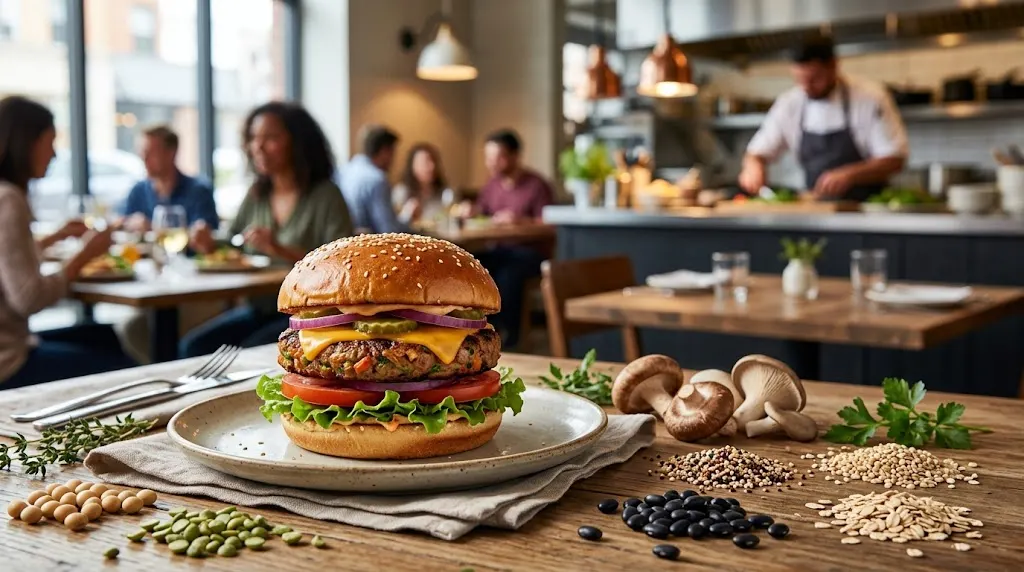
Plant-based burgers have moved from a niche option for vegetarians and vegans into a recognizable part of the modern food market. They are now available in grocery stores, restaurants, fast-casual menus, and home kitchens, giving consumers another way to enjoy a familiar burger format without using conventional meat.
That does not mean plant-based burgers are replacing beef burgers across the board. Recent research shows that taste, price, convenience, nutrition, and familiarity continue to influence food choices strongly. But the continued development of alternative proteins, broader consumer interest, and the flexibility of these products help explain why plant-based burgers are here to stay.
What Makes a Plant-Based Burger Different?
Plant-based burgers are designed to provide some of the familiar characteristics of a traditional burger using ingredients derived from plants. Depending on the product, the primary protein source may include soy, peas, beans, wheat, or other plant ingredients.
The goal is not always to create an exact nutritional or culinary replacement for beef. Instead, many products aim to provide a convenient burger-style food for people who want to reduce or avoid animal meat while maintaining the familiar shape, cooking method, and meal experience.
Ingredient transparency is increasingly important. The FDA’s guidance on plant-based alternatives emphasizes clear descriptions and identification of plant sources so consumers can better understand what they are buying.
Why Consumers Continue to Try Plant-Based Burgers
There is no single reason people choose plant-based burgers. Dietary preferences are one factor, but consumers may also be interested in variety, environmental considerations, personal nutrition goals, or simply trying something different.
Research on consumer behavior suggests that the decision is more complicated than simply choosing between “meat” and “vegan.” Taste and price remain important, while perceptions of health and environmental impact can also affect interest in alternative proteins.
This is similar to the broader way people approach food. The quality of ingredients, preparation methods, flavor, and overall meal experience all influence whether a product becomes part of someone’s regular routine. Readers interested in the broader relationship between food and agriculture can also explore agriculture ecosystems and the roots of our food systems.
Taste Has Become a Major Part of the Equation
Earlier generations of meat alternatives were often criticized for having a different texture or flavor from conventional burgers. Product developers have spent years working on those sensory differences, using combinations of plant proteins, fats, seasonings, and processing techniques.
That development matters because consumers do not evaluate food on nutrition alone. A burger still needs to be enjoyable, convenient to prepare, and satisfying.
The importance of flavor also connects with the fundamentals discussed in The Secret Ingredient Top Chefs Swear By, where seasoning, acidity, texture, ingredient quality, and balance play central roles in creating a better eating experience.
At the same time, research published in 2026 found that plant-based burgers still face meaningful consumer barriers. In a U.S. experiment involving 831 participants, approximately 10% selected plant-based products in a complex choice environment, while active consideration of taste was associated with choosing meat-based options. The findings suggest that interest exists, but taste and context remain important to adoption.
Nutrition Depends on the Product
It is tempting to describe every plant-based burger as automatically healthier than a conventional burger, but that is too broad a conclusion. Products differ substantially in protein, saturated fat, sodium, fiber, vitamins, minerals, calories, and added ingredients.
Some plant-based burgers are formulated to provide relatively high amounts of protein, while others may emphasize different nutritional characteristics. Consumers should therefore compare the Nutrition Facts panel and ingredient list rather than relying solely on marketing language.
This broader approach to food choices is also relevant to health-focused content such as How Skipping Breakfast May Be Harming Your Mental Health. A person’s overall dietary pattern matters more than treating one individual food as automatically good or bad.
Plant-Based Burgers and Sustainability
Environmental considerations are another reason plant-based meat alternatives continue to attract attention. Livestock production can have significant environmental impacts, although those impacts vary considerably according to production systems, geography, and farming practices.
Research reviewed by the USDA has found that some plant-based meat alternatives can have lower environmental footprints than certain forms of conventional beef production, while comparisons can change depending on the production system being evaluated. That makes broad claims about every burger or every farming method inappropriate.
The USDA’s Agricultural Research Service has also emphasized that plant-based meat alternatives should not automatically be treated as nutritionally identical to meat. Their nutritional role depends on the formulation and the rest of an individual’s diet.
For consumers interested in how food production connects with natural systems, PostTrek’s coverage of agriculture, ecosystems, and food systems provides additional context.
The Rise of the Flexitarian Approach
One of the most practical reasons plant-based burgers may remain relevant is that consumers do not have to choose a completely plant-based diet to use them.
A flexitarian approach can involve eating more plant foods while still consuming meat occasionally. For these consumers, a plant-based burger can simply be another convenient meal option rather than a permanent replacement for every meat product.
This flexibility expands the potential audience. Someone might choose a beef burger one day, a plant-based burger another day, and a traditional vegetable or bean-based meal on another occasion.
Restaurants Are Part of the Story
Restaurants have helped make alternative food choices more visible. A plant-based burger can fit naturally into menus that already offer multiple burger styles, salads, sides, and other customizable meals.
That makes plant-based burgers part of a wider dining trend rather than an isolated dietary category. Readers exploring restaurant and food experiences can also browse Truong Tien restaurant dining, Beulah Restaurant in Sarasota, Harutaka Restaurant in Tokyo, Crandall’s restaurant experience, and Hohenwald restaurants.
Why Plant-Based Burgers Will Remain Part of the Food Landscape
The phrase “here to stay” does not necessarily mean plant-based burgers will dominate the burger market. Current research suggests the category continues to face challenges involving taste, price, consumer perceptions, and purchasing habits.
Instead, their staying power comes from flexibility. They provide another option for people who want to experiment with alternative proteins, reduce meat consumption, follow particular dietary preferences, or simply enjoy a different type of burger.
The alternative-protein industry is also continuing to develop. Researchers and food companies are examining new protein sources, formulations, processing methods, nutrition profiles, and ways to make products more appealing to a wider range of consumers.
What Consumers Should Look For
If you are considering plant-based burgers, start with the information on the package rather than the front-of-package claims. Check protein content, saturated fat, sodium, calories, fiber, serving size, and the ingredient list.
It is also worth considering how the burger fits into your overall diet. A plant-based burger can be part of a balanced eating pattern, but it should not automatically be considered equivalent to minimally processed foods such as beans, lentils, vegetables, whole grains, nuts, and seeds.
For more food and lifestyle inspiration, explore the PostTrek blog, including its coverage of food, health, lifestyle, travel, and everyday consumer trends.
Final Thoughts
Plant-based burgers have evolved beyond their early niche image. Their future will depend on whether manufacturers can continue improving taste, texture, nutrition, affordability, and convenience while giving consumers clear information about ingredients.
They may not replace conventional burgers for everyone, and current research does not support assuming that they will. But their versatility, expanding availability, and role within the broader alternative-protein market give plant-based burgers a lasting place in modern food culture.
For consumers, the most useful approach is simple: compare products, understand the ingredients, consider the nutrition facts, and choose foods that fit individual preferences and dietary needs.