
Your cat is not scratching the sofa to annoy you. Scratching is one of the most natural things a cat does — it keeps claws sharp, stretches the muscles in the shoulders and back, and leaves scent and visual marks that tell other cats this territory is taken. You cannot train the instinct out of a cat, but you can absolutely redirect it. This guide shows how to stop your cat scratching the furniture, step by step, without punishment and without harming your pet.
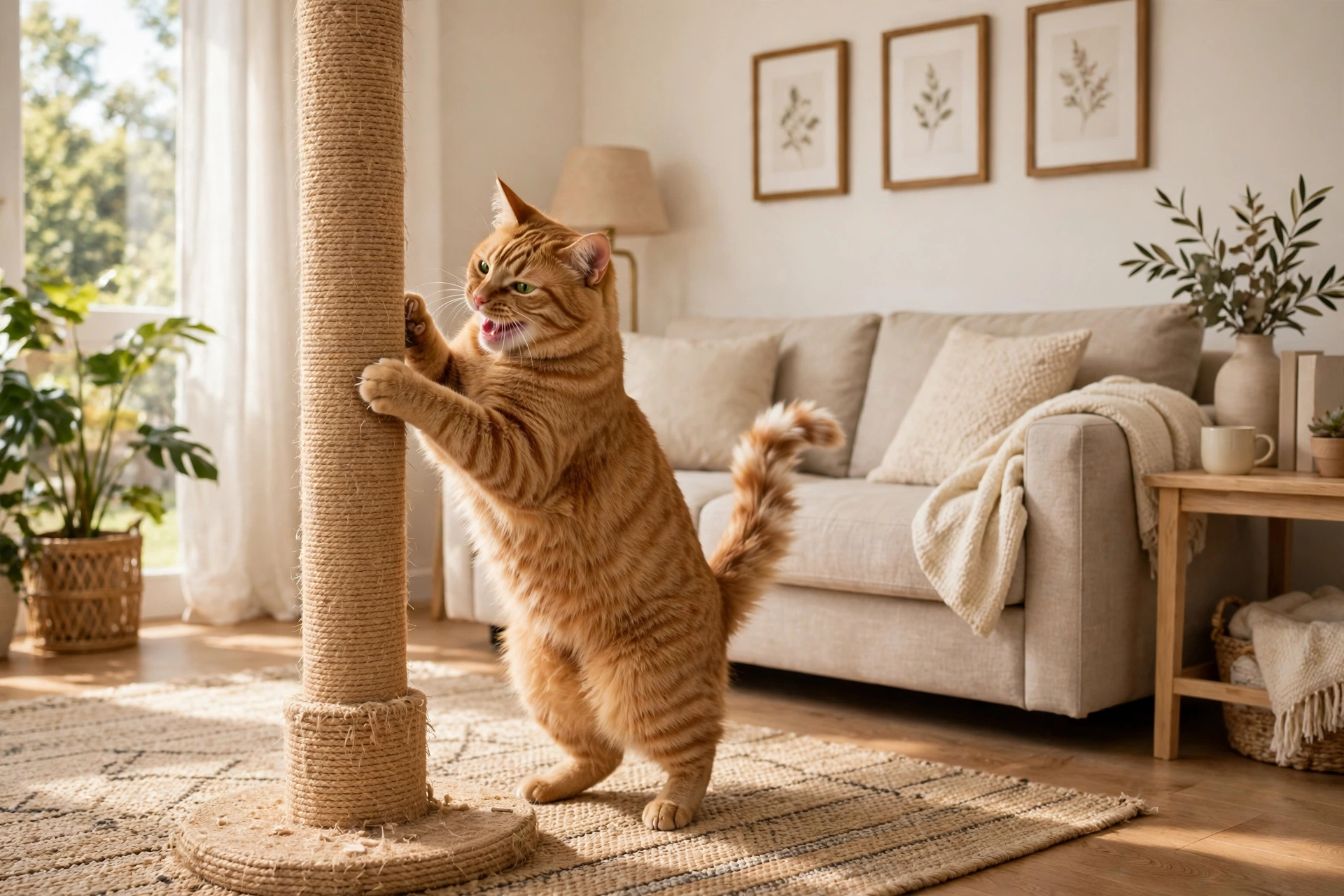
Why Cats Scratch Furniture in the First Place
Before fixing the problem, it helps to understand it. Cats scratch for four main reasons. First, claw maintenance: scratching strips away the dead outer layer of the claw and keeps it sharp. Second, stretching: a good scratch after a nap stretches the whole body. Third, communication: scent glands in the paws leave a scent mark, and the visible scratch lines are a visual signal to other cats. Fourth, stress or boredom: a cat that is anxious, under-stimulated, or adjusting to a change in the home may scratch more than usual.
The sofa is a popular target because it sits where the family gathers, it is tall enough for a full stretch, and its fabric gives claws something to grip. Once you know what your cat gets from the sofa, you can offer something better that gives the same reward.
1. Give Your Cat Something Better to Scratch
This is the single most important step. A cat that has no good scratching surface will use the furniture — that is not misbehaviour, it is a lack of options.
Choose a post that fits how your cat scratches. Cats that scratch vertically need a tall, sturdy post, at least 75 cm high, wrapped in sisal rope, that does not wobble when they lean into it. A wobbly post will be abandoned after one try. Cats that scratch horizontally usually prefer a flat cardboard scratcher or a low sisal mat on the floor. If you are not sure which type your cat prefers, offer one of each and see which gets used.
Placement matters as much as the post itself. Put the new scratching post right next to the piece of furniture your cat targets, and another near their favourite sleeping spot, since cats love a stretch-and-scratch when they wake up. In a multi-cat home, provide one post per cat plus one extra, in different rooms, so no cat has to wait its turn.
To make the post more attractive than the sofa, rub a little catnip or silvervine on it, or dangle a toy from the top so your cat discovers it during play. Most cats take to a well-placed post within a few days.
2. Make the Furniture Less Appealing
While your cat learns to use the post, make the sofa a less rewarding target. Double-sided sticky tape made for cats (sold as furniture deterrent tape) is the most effective option: cats dislike the sticky feeling on their paws and will walk away. Apply it to the arms and corners your cat favours most, and remove it once the new habit is established — usually after two to three weeks.
Temporary covers help too. A washable throw or a fitted furniture cover protects the fabric while training is underway and can be removed for guests. Aluminium foil wrapped around a targeted corner works as a short-term deterrent, since most cats dislike the texture and sound, though it is not a long-term solution. The goal in every case is the same: the furniture becomes boring and slightly unpleasant to scratch, while the post becomes the rewarding choice.
3. Trim Your Cat’s Claws Regularly
Shorter claws cause far less damage, even if your cat still sneaks in an occasional scratch. Trim the sharp tip of each claw every two to three weeks using clippers made for cats — never use human nail clippers on a cat’s curved claws. Cut only the clear, pointed tip and stay well away from the pink quick inside the claw, which contains blood vessels and nerves. If you are unsure, ask your vet or a groomer to show you the first time; a five-minute demonstration is worth more than a guess.
Start claw trims when your cat is calm, offer a treat afterwards, and stop if your cat becomes stressed. Two claws trimmed calmly are better than a wrestling match that makes the next session harder.
4. Redirect and Reward, Every Time
When you catch your cat scratching the furniture, stay calm. Pick them up gently, carry them to the scratching post, and place their front paws on it. The moment they scratch the post — even once — praise them warmly and offer a small treat. The same reward-based approach used in puppy training basics works for cats too: reward the behaviour you want, and it will happen more often.
Consistency matters more than intensity. Every person in the household should redirect the same way, every time. Playing with your cat near the post also helps — a feather wand waved over the sisal surface often triggers scratching naturally, and the post becomes associated with fun rather than with being told off.
5. Use Deterrents and Calming Aids for Persistent Scratchers
If your cat keeps returning to the same spot despite a good post, stress may be part of the problem. Changes such as a new pet, a new baby, building work, or a move can all increase scratching. A plug-in feline pheromone diffuser near the scratched furniture can help a stressed cat settle; these mimic the calming scent cats deposit when they rub their cheeks on objects.
Cats generally dislike citrus scents, so a citrus-scented spray on the furniture (never sprayed on the cat) can add a mild deterrent. Do not use essential oils directly on or near your cat, as many are toxic to cats. If scratching suddenly increases sharply, or your cat seems distressed, a vet check is worthwhile — pain or anxiety can show up as a change in scratching behaviour.
What Not to Do
Never punish a cat for scratching. Shouting, squirting water, or hitting a cat does not teach them where to scratch instead — it teaches them to scratch when you are not looking, and it damages the trust between you. Scratching is a normal need, not a crime.
Declawing is not a solution either. It is the surgical removal of the last bone of each toe, it causes lasting pain and can lead to behaviour problems, and it is banned in the UK and in many other countries and US states. If a vet ever suggests it for furniture protection, seek a second opinion.
Soft plastic nail caps, glued over the claws by a vet or groomer and replaced every four to six weeks, are a humane alternative for cats that simply will not stop scratching a valuable piece of furniture. They blunt the damage while training continues.
Soft plastic nail caps, glued over the claws by a vet or groomer and replaced every four to six weeks, are a humane alternative for cats that simply will not stop scratching a valuable piece of furniture. They blunt the damage while training continues.
Protecting Your Furniture While Training
Most cats redirect to a post within two to four weeks of consistent redirection, but the furniture needs protection in the meantime. Keep deterrent tape and covers in place until your cat chooses the post on their own several days in a row. Good nutrition also supports healthy claws and coat, so it is worth reading our guide on choosing the right grain-free canned cat food brand for your feline if you are reviewing your cat’s diet.
Scratching is not a behaviour problem to eliminate. It is a need to satisfy in the right place. Give your cat a post they love, make the sofa uninteresting, and reward the right choice — the furniture will survive, and your cat will be happier for it.
Frequently Asked Questions
Will my cat ever completely stop scratching furniture?
Your cat will never stop scratching — and should not. The realistic goal is to move the scratching from your furniture to a scratching post. With a good post in the right place and consistent redirection, most cats make the switch within a few weeks.
Does catnip on a scratching post really help?
For most cats, yes. Rubbing catnip on a new post makes it far more interesting than the sofa. If your cat ignores catnip, try silvervine, which many catnip-indifferent cats respond to.
How long does it take to train a cat to use a scratching post?
Kittens often take to a post in a few days. Adult cats usually take two to four weeks of consistent redirection, especially if they have been scratching the same sofa for years. Older cats and multi-cat households may take longer — patience and consistency matter more than speed.
Final Thoughts
Stopping a cat from scratching the furniture is not about winning a battle with your pet. It is about understanding why they scratch and giving them a better outlet. A sturdy post in the right place, claws kept trimmed, gentle redirection, and a reward every time they choose well — that combination protects your furniture and keeps your cat content. Start with the post today, and give it a few consistent weeks.