
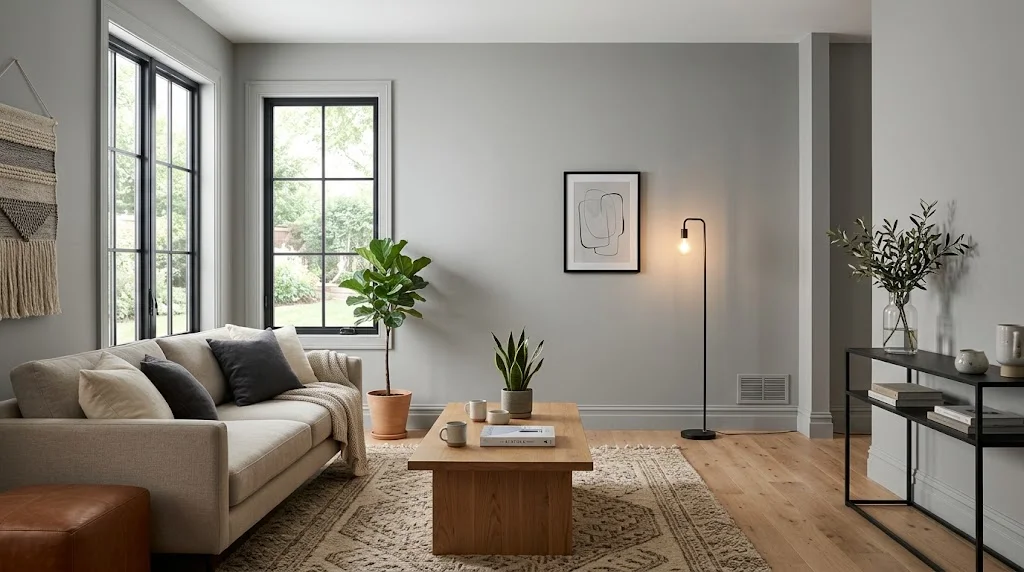
Behr Paint Fashion Gray is a versatile neutral for homeowners who want a modern interior without committing to an overly stark white or an intensely dark wall color. Its soft gray character can create a calm backdrop for contemporary furniture, natural materials, metallic accents, and a wide range of decorative styles.
What Makes Behr Paint Fashion Gray Interesting?
Fashion Gray works as a neutral foundation rather than demanding attention as a dominant accent color. That makes it useful when you want your furniture, artwork, flooring, textiles, or architectural details to remain visually important.
A well-chosen gray can also provide more character than plain white while remaining considerably easier to coordinate than many stronger colors. This balance makes gray particularly useful in modern interiors where simplicity and texture are more important than an abundance of color.
The existing PostTrek article describes Fashion Gray as a muted, sophisticated shade that can work with both contemporary and traditional furnishings. It also emphasizes the way surrounding light can influence the appearance of the color throughout the day.
Why Gray Paint Works in Modern Interiors
Modern interior design often relies on a restrained palette. Instead of filling a room with numerous strong colors, designers may use neutral walls as a foundation and introduce personality through furniture, artwork, lighting, rugs, plants, and decorative objects.
A gray wall can support that approach particularly well. It can sit comfortably behind warm wood, black metal, white trim, natural fabrics, leather furniture, and carefully selected accent colors.
For homeowners interested in creating a connected lifestyle aesthetic throughout the property, the neutral approach can also work alongside practical upgrades. For example, a modern room can combine understated walls with ideas inspired by smart home devices without allowing technology to dominate the visual design.
How Lighting Changes Fashion Gray
Lighting is one of the most important factors to consider before painting an entire room gray. The same wall color can appear different in direct sunlight, indirect daylight, warm artificial lighting, and cool LED lighting.
A room with large windows may make the paint appear lighter and more open during the day. In the evening, warmer bulbs can create a softer and cozier atmosphere.
This does not necessarily mean the color is changing. Instead, the surrounding light is changing the way your eyes perceive the paint.
Natural Morning Light
Morning light can give a painted room a fresh and airy appearance. If your room receives strong daylight early in the day, look at a large sample on several walls rather than judging the color from a small swatch.
Afternoon Light
Afternoon conditions can reveal how the shade interacts with flooring, curtains, furniture, and nearby exterior colors. This is particularly useful for open-plan rooms.
Evening Lighting
Artificial lighting can make a neutral room feel warmer or cooler depending on the bulbs being used. Check the sample after sunset before making the final decision.
Fashion Gray in the Living Room
The living room is one of the easiest places to use a versatile gray because it typically contains a mixture of furniture, textiles, artwork, and decorative objects.
Fashion Gray can provide a calm background for a contemporary sofa, wooden coffee table, black metal lighting, neutral rug, and framed artwork. If the room already contains strong furniture colors, a restrained wall shade can help keep the overall composition balanced.
For a warmer appearance, introduce natural wood, beige textiles, cream upholstery, and warm lighting. For a sharper modern aesthetic, combine gray walls with black accents, white furniture, glass, and simple geometric shapes.
Keeping the rest of the room organized also matters. A recently refreshed wall can lose some of its visual impact if the surrounding space feels cluttered, which is why practical home-care resources such as professional home cleaning ideas can complement a broader makeover.
Using Fashion Gray in the Bedroom
Bedrooms benefit from colors that create a visually quiet environment. A soft neutral can help establish that feeling without making the room look empty.
Pair gray walls with upholstered furniture, layered bedding, soft curtains, natural wood, and warm bedside lighting. Textiles become particularly important because they introduce the variation that a monochromatic wall palette may lack.
For example, a gray wall can be paired with cream bedding, charcoal cushions, a textured rug, and warm wood furniture. The result can feel sophisticated without relying on a large number of colors.
If comfort is a major part of the redesign, consider the broader bedroom environment as well. A suitable mattress and sleep-focused setup can make the room feel complete; the hotel-style mattress guide offers another perspective on creating a comfortable bedroom atmosphere.
Fashion Gray for a Home Office
A home office needs to balance comfort with concentration. Extremely bright or saturated wall colors may become distracting, while a neutral gray can create a more controlled background.
Use a gray wall behind a desk, shelving unit, or video-call area to establish a clean visual backdrop. Natural wood and black hardware can give the room structure, while plants, artwork, and textiles can prevent the space from feeling sterile.
Technology can be integrated into the room without compromising its appearance. Smart lighting, connected devices, and organized cable management can help maintain the clean aesthetic associated with a modern workspace.
Can Fashion Gray Work in a Small Room?
Yes, but the result depends on the room’s lighting, surrounding finishes, and the exact visual balance of the space. Gray does not automatically make a small room feel smaller.
In a compact room with adequate natural or artificial light, a soft neutral can create continuity and make the walls feel less visually demanding. Using lighter furniture, mirrors, simple window treatments, and uncluttered surfaces can reinforce that effect.
Instead of assuming that a gray room will feel cramped, test the paint in the actual space. Paint samples should be viewed at different times of day before committing to the entire room.
Pairing Fashion Gray With White
White trim and gray walls create a classic combination. The contrast can emphasize architectural details such as doors, baseboards, window frames, crown molding, and built-in shelving.
If your home already has white trim, gray walls can provide enough contrast to make those details more noticeable without creating a dramatic color scheme.
The key is to consider the undertone of the surrounding white. A very cool white may create a sharper appearance, while a warmer white can produce a softer transition.
Pairing Fashion Gray With Natural Wood
Natural wood is one of the easiest materials to combine with gray. The warmth and texture of wood can prevent a neutral room from feeling too flat.
Oak, walnut, pine, and other wood finishes can each produce a different result. Lighter wood can create a Scandinavian-inspired appearance, while darker wood can produce a more traditional or sophisticated environment.
This approach can be particularly effective in homes where the goal is to combine modern simplicity with natural materials.
Pairing Gray With Black Accents
Black can give a gray room a stronger contemporary edge. Consider black window frames, lamps, cabinet hardware, shelving, picture frames, or furniture legs.
The combination works especially well when black is used selectively. Too much black can overpower a neutral palette, but small repeated accents can create visual consistency throughout the room.
Pairing Fashion Gray With Metallic Finishes
Metallic accents can add another layer of visual interest. Brass, bronze, chrome, and brushed metal can all work depending on the atmosphere you want to create.
Warm metals can make gray feel more inviting, while chrome and other cooler finishes can reinforce a sleek contemporary look.
This principle also connects with fashion and decorative styling. For example, the combination of neutral tones and metallic detailing seen in steampunk-inspired design demonstrates how restrained base colors can provide a backdrop for stronger metallic accents.
Using Gray With Bold Accent Colors
One of the biggest advantages of a neutral wall is that it gives you freedom to experiment with accent colors.
Depending on the room, you might introduce navy, emerald green, burgundy, muted blue, terracotta, mustard, or dusty pink through furniture and accessories.
If you are interested in broader color trends, fashion coverage such as Paris Fashion Week color trends can provide inspiration for accent palettes that can later be adapted to interiors.
Fashion Gray in the Kitchen
Gray can work particularly well in kitchens because it provides a neutral background for cabinets, countertops, appliances, and hardware.
A gray wall can complement white cabinets, natural wood cabinetry, dark countertops, stainless-steel appliances, and black fixtures. The exact combination should be selected according to the existing materials rather than treating gray as a standalone decision.
If your kitchen has several competing finishes, a restrained wall color can help bring them together.
Fashion Gray in the Bathroom
Bathrooms can benefit from neutral colors because tile, mirrors, fixtures, and lighting already provide significant visual detail.
Gray walls can create a clean foundation behind white fixtures, natural stone, dark hardware, or wood-look accents. In a small bathroom, lighting becomes especially important because limited windows can dramatically affect how the paint appears.
Use samples around the vanity, shower, and opposite walls to understand how the color interacts with different surfaces.
Creating a Modern Open-Plan Interior
Open-plan homes require extra attention to color continuity because several functional areas may share the same visual space.
A neutral wall color can make it easier to connect the living area, dining space, and kitchen. Instead of using a different color in every zone, you can establish one base color and differentiate areas through furniture, rugs, lighting, and artwork.
This approach can make an interior feel larger and more intentional, especially when the flooring continues across multiple spaces.
How to Use Fashion Gray With Existing Furniture
You do not necessarily need to replace your furniture when repainting. In fact, examining your existing pieces first can help you decide whether gray is appropriate.
Look at sofas, cabinets, tables, flooring, curtains, rugs, and artwork. If most of the room is already neutral, Fashion Gray can reinforce that palette. If the room contains strong warm colors, test a large sample before committing.
Even decorative items can influence the final result. A room with traditional accessories may feel different from one furnished with minimalist pieces despite having exactly the same wall color.
Paint Color and Home Value
A neutral interior can be appealing when preparing a home for sale because it provides potential buyers with a relatively adaptable background. However, paint alone should not be treated as a guarantee of increased property value.
The overall condition of the property, location, layout, maintenance, finishes, and buyer demand generally matter far more than one particular paint shade.
If you are considering a broader property improvement project, related real-estate topics such as Hugoton real estate opportunities and Vermont property investment can provide broader context around how homeowners and investors think about property improvements.
Painting Preparation Matters
Even an excellent color will not look its best if the surface beneath it has not been properly prepared.
Before painting, clean the walls, repair visible holes or cracks, remove loose or peeling material, and make sure the surface is appropriately prepared for the selected paint system.
Use painter’s tape where necessary, protect floors and furniture, and work methodically rather than rushing through the project.
Test the Color First
Never rely solely on an online image or tiny color card. Apply a generous sample to the actual wall and observe it during daylight and evening conditions.
Check Adjacent Materials
Place your sample near flooring, countertops, cabinetry, trim, curtains, and major furniture pieces. A color that looks attractive alone may produce a different impression beside another finish.
Consider the Entire Room
Look at the room from different angles. A wall facing a window may appear different from one receiving indirect light.
Keeping a Newly Painted Home Looking Its Best
A fresh coat of paint is only one part of maintaining an attractive interior. Regular cleaning, careful furniture placement, and prompt attention to marks can help preserve the appearance of painted walls.
For homeowners managing larger properties, broader home-care resources such as home care and maintenance services can be useful when a makeover involves more than painting.
Cleaning routines also matter. A resource covering home cleaning services can provide additional ideas for keeping a refreshed living space organized and presentable.
Fashion Gray and Different Interior Styles
Modern Minimalist
Use Fashion Gray with simple furniture, clean lines, white surfaces, and limited decoration. Let texture rather than color create visual interest.
Industrial
Combine gray with black metal, exposed textures, dark wood, and warm lighting. The neutral wall color can support an industrial palette without becoming overly dramatic.
Traditional
Pair gray with classic furniture, decorative molding, warm wood, patterned textiles, and traditional artwork.
Contemporary
Use gray as the foundation for modern furniture, sculptural lighting, large artwork, and carefully selected accent colors.
Transitional
Gray can help bridge traditional and modern elements. Combine classic furniture shapes with contemporary lighting, simple textiles, and modern hardware.
When a Gray Paint Color May Not Be the Best Choice
Although gray is versatile, it is not automatically ideal for every room.
A room with very limited natural light may require careful testing because some gray shades can appear dull under certain lighting conditions. Likewise, a space dominated by warm beige, yellow, or orange finishes may require more consideration before introducing a cooler-looking neutral.
The answer is not necessarily to avoid gray altogether. Instead, compare samples against the room’s existing finishes and evaluate them throughout the day.
How to Build a Cohesive Home Palette
If Fashion Gray is being used throughout several rooms, avoid making every space look identical. The same neutral can serve as a foundation while different rooms receive their own accent colors and textures.
For example, a living room might use gray with natural wood and navy, while a bedroom combines the same base with cream and muted green. A home office could use black accents and warm wood.
This creates continuity without sacrificing personality.
Other Home Improvements That Complement a Paint Refresh
A wall makeover can become more effective when combined with small improvements that reinforce the same design direction.
- Replace outdated light fixtures.
- Update cabinet hardware.
- Add textured rugs or curtains.
- Rearrange furniture to improve flow.
- Introduce plants and natural materials.
- Declutter visible surfaces.
- Improve smart-home organization.
- Use artwork to introduce accent colors.
For homeowners interested in technology-led improvements, the smart-home device guide can complement a modern interior strategy.
If the property itself requires structural attention, a separate guide to mobile home leveling and stability highlights an important principle: cosmetic improvements are most effective when the underlying home is properly maintained.
Final Thoughts on Behr Paint Fashion Gray
Behr Paint Fashion Gray can serve as a flexible foundation for homeowners who want a modern, calm, and adaptable interior. Its strongest advantage is its ability to work alongside different materials, furniture styles, lighting conditions, and accent colors rather than forcing the entire room into one specific design direction.
The most important step is to test the color in the actual room. Observe it in natural daylight, evening lighting, and alongside the furniture and finishes that will remain after the makeover.
Whether you are updating one bedroom, refreshing a living room, modernizing a home office, or developing a consistent palette across an entire property, thoughtful preparation and coordinated styling can make a neutral paint choice feel intentional rather than ordinary.
For additional lifestyle inspiration, explore related PostTrek topics covering steampunk-inspired aesthetics, fashion and styling, and lifestyle collections for ideas that can influence the colors, textures, and personality of your home.