
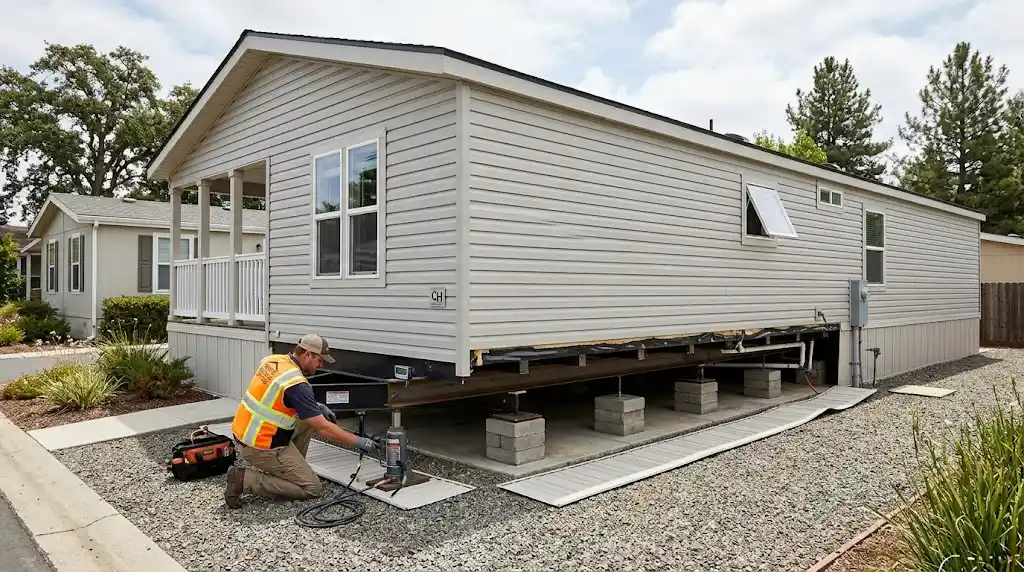
Professional Mobile Home Leveling Services: Signs, Process, Cost & Benefits
A level mobile home is essential for a stable, comfortable, and properly functioning living space. When the ground beneath a manufactured home settles, shifts, or develops drainage problems, the structure can gradually become uneven. Doors may stick, floors can feel sloped, and cracks may appear around walls, ceilings, or other interior surfaces.
Professional mobile home leveling services are designed to identify these problems, carefully restore the home to a more even position, and improve the stability of its support system. Because manufactured homes rely on specific support and foundation arrangements, leveling is more than simply lifting one side of the structure. The work should account for the home’s support points, soil conditions, drainage, manufacturer requirements, and applicable local regulations.
This guide explains the signs of an unlevel mobile home, how professional releveling generally works, what affects the cost, and how to choose a qualified contractor.
Why Mobile Home Leveling Matters
Manufactured homes are supported by systems that must distribute the home’s weight appropriately to the ground. When soil settles or support points change position, the home can gradually lose its original level position.
An uneven structure can affect much more than appearance. Changes in the home’s position may contribute to sticking doors, difficult-to-close windows, uneven floors, gaps, cracks, and problems with other components. Drainage beneath the home is also important because standing water can contribute to soil movement and other moisture-related problems.
Federal manufactured-housing guidance emphasizes proper site preparation, stable soil, suitable foundation support, and drainage. HUD homeowner resources also recommend checking manufacturer instructions and applicable state or local requirements when work is performed on a manufactured home.
Common Signs Your Mobile Home May Need Leveling
Recognizing early warning signs can help homeowners investigate a potential foundation or support problem before it becomes more complicated.
1. Uneven or Sloping Floors
A noticeable slope beneath your feet is one of the more obvious signs that something may have changed beneath the home. Furniture may appear to lean, objects can roll across a floor, or certain areas may feel higher or lower than others.
Not every uneven floor automatically means the entire home needs releveling, so a professional assessment is important before assuming the cause.
2. Doors That Stick or No Longer Close Properly
Doors that previously operated normally may begin rubbing against their frames, sticking, or failing to latch. Changes in the home’s alignment can affect openings and framing enough to make doors noticeably harder to operate.
3. Windows Become Difficult to Operate
Windows that suddenly stick, bind, or become difficult to close can also indicate movement in the structure. Although hardware problems can produce similar symptoms, multiple affected windows may justify having the home’s level and support system inspected.
4. Cracks or Gaps
New cracks around walls, ceilings, trim, or other areas deserve attention, particularly when they appear alongside uneven floors or doors and windows that have become misaligned.
5. Visible Changes Beneath the Home
Problems below the home can sometimes be visible around support points, piers, or other foundation components. Leaning, displaced, damaged, or visibly altered supports should not be ignored.
6. Recurring Problems After Previous Repairs
If doors, floors, or other components repeatedly develop the same problems after repairs, the underlying cause may not have been addressed. Soil movement, inadequate support, drainage issues, or changes around the foundation may need professional evaluation.
What Causes a Mobile Home to Become Unlevel?
Several conditions can contribute to movement beneath a manufactured home. The cause is not always obvious from inside the property, which is why professional assessment is valuable.
Soil Settlement
Soil can compress or shift over time, particularly where the original site preparation was inadequate or where soil conditions change. Foundation support depends on the ground beneath the home being capable of carrying the required loads.
Water and Drainage Problems
Water accumulation beneath a manufactured home can contribute to soil movement and moisture-related problems. Proper grading and drainage help move water away from the area beneath the home.
Changes in Support Points
Piers and other support components carry substantial loads. If a support settles, shifts, becomes damaged, or is no longer positioned correctly, the load distribution beneath the home can change.
Weather and Environmental Conditions
Freeze-thaw cycles, heavy rainfall, prolonged moisture, and other environmental conditions can affect soil and drainage conditions. The impact varies considerably by location and site characteristics.
Age and Previous Installation Issues
Older homes or properties with a history of installation, foundation, or drainage problems may require closer inspection. Previous repairs do not necessarily eliminate the underlying cause of movement.
How Professional Mobile Home Leveling Works
Professional leveling is a controlled process rather than simply placing additional material under a low area. The exact procedure depends on the home’s design, foundation system, site conditions, and the contractor’s assessment.
Step 1: Initial Inspection
The contractor first evaluates the home and the area beneath it. This may include checking floors, doors, windows, support points, piers, drainage, and visible signs of settlement.
Step 2: Determine the Extent of Movement
The technician identifies which areas have changed and determines how much adjustment may be necessary. A professional assessment helps distinguish leveling needs from unrelated structural or maintenance problems.
Step 3: Carefully Raise the Home
Where appropriate, hydraulic jacking equipment can be used to raise portions of the home in a controlled manner. The goal is to make measured adjustments while protecting the structure and its connections.
Step 4: Adjust or Restore Support
Once the home is positioned appropriately, support components can be adjusted or repaired as necessary. Depending on the installation, support may involve approved piers, blocks, or other foundation components designed for the required loads.
HUD’s model manufactured-home installation standards address foundation support, pier capacity, and load distribution. Actual work should follow the manufacturer’s installation instructions and applicable state and local requirements.
Step 5: Check the Result
The contractor should verify that the home has been properly supported after adjustments. Doors, floors, windows, and other areas affected by movement may be checked again to identify remaining problems.
Step 6: Evaluate Drainage and Surrounding Conditions
Leveling alone may not solve recurring settlement if water continues collecting beneath the home. The surrounding grade and drainage should therefore be considered as part of the overall solution.
Why Professional Leveling Is Safer Than DIY Repairs
Mobile homes carry substantial structural loads, and lifting or supporting them incorrectly can create serious safety risks. A homeowner may be able to recognize symptoms of an unlevel home without having the equipment or expertise needed to safely correct the underlying problem.
DIY adjustments can also overlook issues such as soil bearing capacity, drainage, support spacing, load distribution, damaged components, and local installation requirements.
Professional contractors can assess the support system, use appropriate lifting equipment, and identify conditions that may require additional foundation or structural work. For a project involving substantial lifting or changes to foundation support, professional evaluation is the safer approach.
How Much Do Mobile Home Leveling Services Cost?
The cost of mobile home leveling varies significantly by project. Factors can include the home’s size, the number of support points requiring adjustment, accessibility beneath the home, the extent of settlement, site conditions, regional labor rates, and whether additional foundation work is required.
Current cost guides indicate that basic releveling projects can range from several hundred dollars upward, while homes requiring more extensive foundation repairs can cost substantially more. A site-specific inspection and written estimate are more useful than relying on a single national average.
Factors That Can Increase the Cost
- Extensive settlement or structural movement
- Damaged or inadequate support components
- Restricted access beneath the home
- Drainage or grading problems
- Foundation repairs beyond routine leveling
- Skirting that must be removed and reinstalled
- Additional engineering, permits, or inspections where required
- Unusual soil or site conditions
How to Choose a Mobile Home Leveling Contractor
Choosing the right contractor is just as important as recognizing the need for leveling. Manufactured homes have specific installation and support requirements, so experience with this type of property matters.
Look for Manufactured-Home Experience
Ask whether the contractor regularly works with manufactured or mobile homes. Experience with conventional residential foundations does not automatically mean a contractor understands manufactured-home support systems.
Verify Licensing and Insurance
Check the licensing and insurance requirements that apply in your state and locality. HUD notes that some states license or certify manufactured-home installers, while installation requirements can vary by jurisdiction.
Ask for a Detailed Inspection
A reputable contractor should be able to explain what they found, what needs adjustment, and why. Be cautious of contractors who recommend extensive work without examining the home and its support conditions.
Request a Written Estimate
The estimate should clearly explain the proposed work and identify whether additional repairs, materials, permits, or follow-up inspections could affect the final price.
Check Reviews and References
Customer reviews can help you evaluate communication, workmanship, punctuality, and whether previous customers were satisfied with the completed project.
Questions to Ask Before Hiring a Leveling Service
- How much experience do you have leveling manufactured homes?
- What do you believe is causing the settlement?
- Will you inspect the piers and other support components?
- Will drainage beneath the home be evaluated?
- What equipment will be used to raise and level the home?
- Are you licensed and insured for this work in my area?
- Are permits or inspections required for this project?
- Will the estimate include materials and follow-up adjustments?
- Do you provide documentation or a warranty for completed work?
What Happens If You Ignore an Unlevel Mobile Home?
Small changes can become more difficult to address when the underlying cause is left unresolved. Continued settlement may affect floors, doors, windows, walls, and other components. If drainage or support problems are involved, postponing an inspection can also allow the underlying site condition to continue.
That does not mean every uneven floor requires emergency leveling. Instead, homeowners should consider the number and severity of symptoms. Multiple new problems occurring together are a good reason to arrange a professional inspection.
How to Protect Your Mobile Home After Leveling
Releveling is not necessarily the end of maintenance. Regular observation can help identify recurring problems early.
- Watch for new floor slopes or soft areas.
- Pay attention to doors and windows that begin sticking again.
- Inspect accessible areas for obvious changes around supports.
- Keep drainage paths clear around the home.
- Prevent water from consistently collecting beneath the structure.
- Follow the manufacturer’s maintenance recommendations.
- Arrange a professional inspection if symptoms return.
Final Takeaway
Professional mobile home leveling services can help restore stability when settlement or movement affects a manufactured home. Uneven floors, sticking doors, difficult windows, cracks, and visible changes around support areas can all justify further evaluation.
The most effective approach is to identify the underlying cause rather than simply correcting one visible symptom. Proper support, suitable soil conditions, drainage, manufacturer requirements, and local regulations all matter when work is performed beneath a manufactured home.
If you suspect your home is no longer level, arrange an inspection with a qualified manufactured-home leveling professional. A careful assessment can help determine whether the property needs routine releveling, support repairs, drainage improvements, or a more extensive foundation solution.
Important: Manufactured-home foundation and installation requirements vary by location and property. Always consult applicable state or local authorities and the home’s manufacturer instructions before undertaking structural or foundation work.