
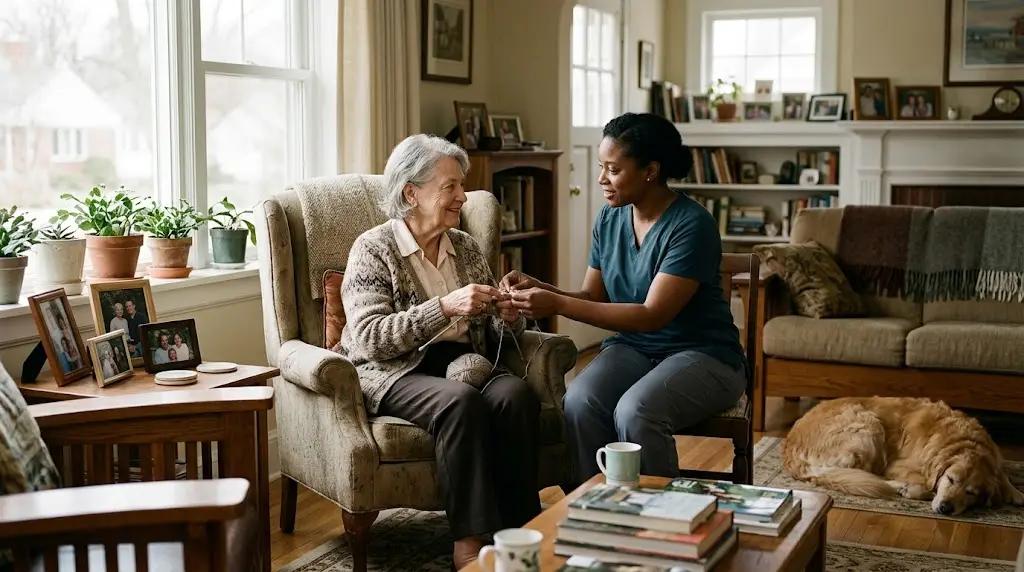
This guide explains what Cantata Home Services offers, how personalized home care works, what families should consider when evaluating in-home support, and why flexible care can make a meaningful difference in everyday living.
What Is Cantata Home Services?
Cantata Home Services is the home-care services division of Cantata Adult Life Services, a nonprofit organization serving older adults and families in the Chicago area’s western suburbs.
The organization says its home services were originally developed to help people transition back into the community from campus-based services. Over time, Cantata adapted its approach after recognizing that many clients wanted more flexible assistance rather than having someone continuously present in their homes.
That philosophy remains central to the service model: support should be based on what a person actually needs, when they need it.
A Personalized Approach to Home Care
Every household has different circumstances. One person may need help with personal care, while another may benefit from shorter visits, companionship, respite support, or assistance with daily activities.
Cantata begins its process with an in-home consultation. According to its service information, this allows clients and families to discuss their concerns and goals before developing an individualized plan of care.
This approach can help avoid unnecessary services while ensuring that important needs are addressed.
Personal Care Assistance
Personal care assistance is one of the core services offered through Cantata Home Services.
The organization states that personal care assistants can help with everyday activities such as personal hygiene, bathing, and bathroom use. The service is designed to support overall well-being rather than focusing exclusively on physical tasks.
For families, this type of assistance can be especially valuable when an older adult wants to continue living at home but needs additional support with activities that have become difficult.
Why Personal Care Support Matters
Personal care needs can affect confidence, independence, and quality of daily life. Having appropriate assistance can allow an individual to remain involved in familiar routines while reducing the burden placed on family members.
The goal is not necessarily to take over every task. Effective support should help an individual maintain as much independence as reasonably possible.
Neighborhood Home Care
Cantata also offers what it calls a Neighborhood Home Care program. The model allows shorter care visits for people living in neighborhoods where other Cantata clients are also receiving care.
This can be useful for someone who needs assistance with a specific task or occasional support rather than extended companionship throughout the day.
Flexible visit lengths can also make home care more adaptable to changing needs. A person may need more support temporarily and less assistance later, depending on circumstances.
Respite Care for Families and Caregivers
Family caregivers often provide significant amounts of support to loved ones. While caregiving can be rewarding, maintaining that responsibility without breaks can become challenging.
Respite care can provide temporary assistance, giving family caregivers an opportunity to rest, attend appointments, handle personal responsibilities, or simply step away from caregiving duties for a period.
Cantata’s service information describes respite care as support intended to provide peace of mind and renewed balance for families.
Supporting Independence at Home
One of the central themes of Cantata Home Services is helping older adults maintain independence.
Remaining at home can allow people to stay connected to familiar surroundings, routines, neighbors, and communities. However, living independently does not always mean doing everything without assistance.
Appropriate home care can provide support where it is needed while allowing the individual to continue making everyday decisions about how they live.
This distinction is important because good home care should be designed around the person rather than simply around a list of tasks.
How the Cantata Home Care Process Works
Families considering home care may wonder what happens before services begin. Cantata’s model starts with understanding the individual’s circumstances.
Step 1: Discuss Needs and Concerns
An in-home consultation provides an opportunity for the individual and family to explain what is becoming difficult and what type of assistance they believe would be useful.
Step 2: Identify Goals
The conversation should consider more than immediate tasks. Goals may include maintaining independence, staying safely at home, receiving help with personal care, or giving family caregivers additional support.
Step 3: Develop a Care Plan
Cantata states that its team works with clients to develop a plan that can include different types of assistance depending on individual circumstances.
Step 4: Adjust Support as Needs Change
Home-care requirements can change over time. A flexible approach makes it easier to consider different levels or types of support as circumstances evolve.
Who Can Benefit From Home Care?
Home care can be useful in many situations, particularly when someone wants to remain at home but needs additional assistance.
Older Adults
Older adults may need help with personal care or selected daily activities while continuing to live in familiar surroundings.
People Recovering at Home
Someone returning home after a period of treatment or rehabilitation may temporarily need additional assistance while rebuilding their normal routine.
Family Caregivers
Families providing ongoing support may benefit from supplemental care that gives them time to rest or manage other responsibilities.
People Who Need Flexible Assistance
Not everyone needs a caregiver present for an entire day. Shorter or scheduled visits may be more appropriate for people who require help with specific activities.
Home Care Is Different From One-Size-Fits-All Support
A common misconception is that home care means having a caregiver in the home for a fixed number of hours every day. In reality, support can take many forms.
Cantata’s own description emphasizes flexibility, explaining that clients may need support for an hour a day, selected periods during the day, or substantially longer periods depending on their circumstances.
This flexibility can make home care more practical for households that do not require constant assistance.
What Families Should Look for in a Home Care Provider
Choosing an in-home care provider is an important decision. Families should evaluate several factors before selecting a service.
Experience and Training
Caregivers should have appropriate training and experience for the type of assistance they provide. Cantata states that its home-care services are performed by trained, experienced, background-checked, and insured care professionals.
Licensing and Accreditation
Families should understand which services a provider is licensed to deliver and whether relevant accreditation or professional standards apply.
Cantata Home Services states that it is licensed by the Illinois Department of Public Health for non-medical personal care services and home nursing services. Its parent organization also states that it has been accredited by CARF International.
Communication
Clear communication between caregivers, clients, and family members is essential. Families should understand who to contact when needs change or concerns arise.
Flexibility
A provider should be able to explain how care can adapt as circumstances change. Flexible arrangements can be particularly important for people whose needs vary from day to day.
Geographic Coverage
Confirm that the provider serves the client’s specific community and understand whether service availability differs by location.
Home Care and Family Peace of Mind
Home care can benefit more than the person receiving assistance. Family members may experience greater peace of mind when they know that a loved one has appropriate support during parts of the day.
It can also create a healthier division of responsibilities. Instead of one family member carrying every caregiving task, professional support can supplement what the family is already providing.
The objective is not to replace family involvement. In many situations, professional home care and family support can work together.
Why Flexible Care Can Be Valuable
Needs can change gradually. Someone who is independent today may need additional help months later, while another person may require temporary support during recovery and then reduce services.
Flexible home care makes it possible to respond to those changes without automatically committing to a level of assistance that exceeds the person’s needs.
Cantata’s Neighborhood Home Care model is one example of an approach designed around shorter, more targeted visits.
Questions to Ask Before Choosing Home Care
Families can make the evaluation process easier by preparing questions in advance.
- What types of home care services are available?
- How is an individual’s care plan developed?
- Can visits be scheduled for specific times of day?
- Are caregivers trained and background-checked?
- What licensing applies to the services provided?
- How does the provider respond when care needs change?
- What responsibilities remain with family members?
- Which communities are included in the service area?
- How are concerns or changes in condition communicated?
Clear answers can help families compare providers according to actual needs rather than choosing solely on price or availability.
Cantata’s Long-Term Community Focus
Cantata Adult Life Services describes itself as a nonprofit organization committed to helping individuals, families, and communities age successfully. Its current organization-wide information says it supported more than 1,250 individuals in 2024 through its campus and in-home services.
The broader organization also traces its history back nearly a century, while Cantata Home Services says its home-care division has evolved over time in response to what clients want from care at home.
This long-term community orientation is relevant for families looking for care that goes beyond a short-term transaction and instead fits into an ongoing support strategy.
Related Home Service Resources
Readers researching broader home support can also explore PostTrek’s related Shiny Home Cleaning Services guide, which focuses on professional residential cleaning and property-care services.
These services address a different part of home living. Cleaning services focus primarily on the condition of the property, while home care focuses on supporting the people who live there. Understanding that distinction can help families choose the right type of professional assistance.
Final Thoughts on Cantata Home Services
Cantata Home Services takes a personalized approach to supporting people who want to remain comfortable and independent at home. Its services include personal care assistance, neighborhood home care, respite support, and other forms of in-home assistance tailored to individual circumstances.
The most important consideration when evaluating home care is not simply how many services a provider offers. It is whether the provider can understand the individual’s needs, communicate clearly, provide appropriately trained support, and adapt care as circumstances change.
For families in the Berwyn area and surrounding western suburbs of Chicago, Cantata Home Services offers a flexible model centered on personalized care and helping older adults maintain independence in familiar surroundings.
This article is for general informational purposes and is not medical, legal, or financial advice. Families should contact an appropriate licensed professional to determine what type of care is suitable for an individual’s circumstances.