What Is Chapel-Romanoff Technologies?
Chapel-Romanoff Technologies has provided low-voltage electrical and technology solutions in the Dayton and Toledo, Ohio, areas for more than two decades. The company works across the design, installation, integration, service, and support stages of technology projects.
According to the company’s official information, CRT specializes in structured cabling, audio/visual technology, access control and security equipment, distributed antenna systems, and other connected building technologies. Its broader capabilities reflect the increasing role of technology infrastructure in modern commercial and institutional facilities.
For businesses researching digital technology and business transformation, this distinction is important. Digital transformation is not limited to software. Reliable networks, communications systems, security infrastructure, and connected devices are also essential components of a modern technology environment.
Core Services Offered by Chapel-Romanoff Technologies
Structured Cabling
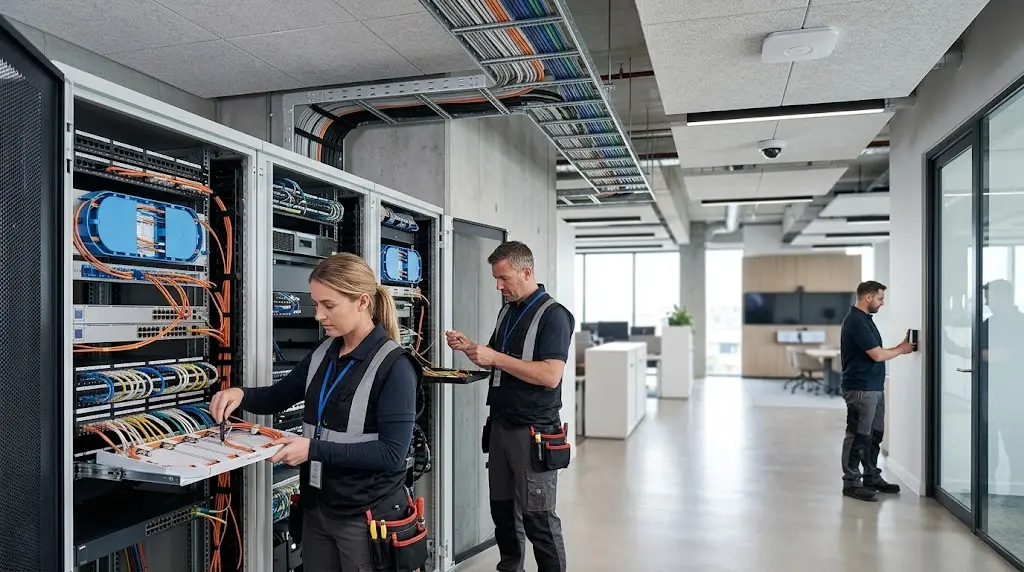
Structured cabling provides the physical foundation for voice, data, networking, and other connected systems. A well-designed cabling infrastructure can support current requirements while giving organizations a more practical foundation for future technology upgrades.
This area also connects with wider discussions about information technology infrastructure, because reliable digital services depend on dependable underlying connectivity.
Audio and Visual Technology
CRT provides audio/visual solutions for environments where communication, presentation, collaboration, and information sharing are important. These systems can be relevant to corporate offices, educational institutions, entertainment venues, and other facilities.
Modern AV infrastructure can include presentation technology, displays, sound systems, and integrated communication equipment. For businesses exploring technology-driven workplace improvements, these systems can work alongside broader audio and network technology.
Security and Access Control
Physical security has become increasingly connected to digital infrastructure. CRT’s services include security systems, access control, and IP video surveillance, helping organizations manage controlled access and security monitoring within their facilities.
These capabilities are particularly relevant in environments such as healthcare facilities, schools, government buildings, commercial properties, and industrial sites where controlled access and reliable monitoring are important.
Wireless Infrastructure
Wireless connectivity has become an essential part of modern workplaces and institutional environments. CRT provides wireless infrastructure services designed to support connected facilities and the growing number of devices that rely on dependable network access.
The importance of connectivity also appears throughout the broader technology landscape, from smart connected devices to enterprise information systems.
Industries Served by CRT
Chapel-Romanoff Technologies serves a range of markets rather than focusing on a single type of customer. Its published market areas include commercial, entertainment and sports, federal and government, healthcare, higher education, industrial, and K-12 education.
Commercial Buildings
Corporate facilities need dependable networks, telecommunications, security, and communication systems. CRT’s low-voltage expertise can support the technology infrastructure required by modern office environments.
This broader business-technology conversation also includes topics such as digital transformation in business services and the increasing integration of technology into everyday operations.
Healthcare Facilities
Healthcare environments have specialized technology requirements. Networking, security, access control, communications, and other low-voltage systems must operate reliably while minimizing disruption to sensitive environments.
That makes infrastructure planning particularly important for organizations dealing with complex technology environments and connected facilities.
Education
Schools, colleges, and universities increasingly depend on reliable connectivity, audiovisual technology, security systems, and access controls. CRT identifies both higher education and K-12 education among its markets.
Technology infrastructure can support connected classrooms, campus networking, security systems, communication tools, and other digital services that are now common in educational environments.
Industrial and Government Environments
Industrial facilities and government organizations can have demanding requirements for connectivity, security, communications, and system reliability. CRT’s market experience includes industrial organizations as well as federal, county, and local government projects.
Organizations evaluating technology investments can also benefit from understanding broader digital manufacturing and technology processes, particularly where connected systems are becoming part of operational infrastructure.
Why Low-Voltage Infrastructure Matters to Modern Businesses
Technology performance is affected by more than applications and software. The infrastructure underneath those applications can influence connectivity, security, communication, and the ability to expand systems over time.
A company may use cloud applications, digital communications, connected devices, security platforms, and data-driven services, but these technologies still require appropriate physical and network infrastructure.
This is one reason technology planning increasingly overlaps with subjects such as IT and digital business systems, business technology strategy, and technology adoption across different industries.
Design, Installation, Integration, and Support
One of CRT’s important characteristics is that its work extends beyond installation. The company describes its capabilities across design, construction, integration, maintenance, service, and technical support.
This project lifecycle approach can be valuable when multiple technology systems need to operate together. Instead of treating cabling, security, AV, wireless connectivity, and related systems as completely separate projects, integration can help organizations plan how those components function within the same building environment.
For organizations considering technology investments, evaluating the expected operational return is also important. Related discussions about technology and business ROI can help illustrate why businesses increasingly evaluate technology based on measurable operational outcomes.
Chapel-Romanoff Technologies and Modern Business Efficiency
Business efficiency increasingly depends on connected infrastructure. Employees need reliable access to information, organizations need secure facilities, and customers and visitors expect modern communication and connectivity.
CRT’s role is therefore best understood through the infrastructure it designs and integrates rather than through unsupported claims about proprietary AI platforms or financial systems. Its official materials emphasize low-voltage systems integration, including voice and data, fiber, security, audio/visual, network electronics, structured cabling, and related technologies.
These capabilities fit into a wider technology ecosystem that includes business technology solutions, technology and operational efficiency, and advanced sensor technology.
Technology Infrastructure for Connected Facilities
As buildings become more connected, infrastructure systems increasingly need to work together. Networks can support communication, security systems can manage access, audiovisual systems can improve collaboration, and wireless infrastructure can connect employees and devices.
This connected approach is relevant across offices, schools, healthcare facilities, industrial sites, sports venues, and government properties.
It also explains why companies researching modern business technology may encounter related topics such as technology strategies for growing businesses, digital business infrastructure, and reliable technology platforms.
Chapel-Romanoff Technologies’ Approach to Safety and Quality
Safety is another stated component of CRT’s approach. The company’s official materials describe project-specific safety planning, worksite analysis, hazard identification, employee testing, pre-task meetings, toolbox meetings, and communication of safety policies.
The company also states that it has been recognized as an OSHA VPP Contractor. For organizations managing complex construction and technology projects, safety procedures can be an important consideration alongside technical capability and project experience.
Where Chapel-Romanoff Technologies Fits in the Technology Landscape
Chapel-Romanoff Technologies occupies a specialized position within the broader technology industry. Its focus is not simply on software development or digital marketing. Instead, CRT works on the connected infrastructure that allows physical facilities and technology systems to function together.
That specialization makes its services relevant to organizations planning new construction, facility upgrades, technology modernization, security improvements, network deployments, or audiovisual installations.
Businesses exploring the wider impact of technology can also examine related subjects such as the future of digital business, digital business services, and technology’s impact on IT-driven organizations.
Final Thoughts
Chapel-Romanoff Technologies is an Ohio-based low-voltage technology systems integrator with expertise spanning structured cabling, telecommunications, wireless infrastructure, audio/visual systems, security, access control, and related connected technologies.
Its published market experience covers commercial, healthcare, education, government, industrial, entertainment, and sports environments. By combining design, installation, integration, service, and maintenance capabilities, CRT addresses the infrastructure side of modern business technology.
For organizations evaluating technology modernization, the company’s work illustrates an important point: digital transformation depends not only on software and applications, but also on the reliable physical and connected systems that support them.