
Nothing changes a trip quite like ditching the checked bag. No baggage carousel roulette, no surprise overweight fees, no dragging a 25-kilo suitcase up the stairs of a metro station. Packing light for a week-long trip is a skill, not a talent — and once you learn the system, you will never go back to hauling half your wardrobe across the world.
This guide walks you through exactly how to fit seven days of outfits, toiletries, and essentials into a single carry-on, without feeling like you are missing anything.
Why Packing Light Changes the Whole Trip
Traveling with only a carry-on gives you freedom that checked luggage never can. You walk off the plane and straight out of the airport while everyone else crowds around the carousel. If your flight gets rerouted, your bag reroutes with you — it cannot get lost in a connecting airport. Budget airlines charge steep fees for checked bags, so a carry-on-only trip can easily save you $60–$120 round trip.
There is a mental benefit too. With fewer choices, getting dressed each morning takes two minutes instead of twenty. You stop worrying about your stuff and start enjoying the trip.
The 5-4-3-2-1 Packing Formula
Professional light packers use a simple formula as a starting point: 5 tops, 4 bottoms, 3 pairs of shoes, 2 layers, 1 hat — plus underwear and sleepwear for seven days. Adjust to your climate, but the principle holds: every item should work with every other item.
The real secret is not the numbers but the capsule wardrobe underneath them. Pick three colors that all go together — navy, white, and gray, for example — and choose every piece of clothing within that palette. Suddenly five tops and four bottoms create dozens of combinations instead of five outfits. Add one scarf or accessory for variety, and nobody will notice you are repeating pieces.
Choose the Right Bag First
Your bag sets the limit, and the limit is the point. A standard carry-on (around 55 × 40 × 20 cm, or 22 × 14 × 9 inches) holds everything you need for a week if you pack smart. Check your airline’s exact dimensions before you buy — budget carriers are stricter than legacy airlines.
Soft-sided bags and travel backpacks squeeze into overhead bins more forgivingly than hard shells. If you walk a lot, a convertible backpack with hip straps beats a roller you have to lift over curbs. Packing cubes are worth their weight: they compress clothes, keep categories separated, and let you pull out one cube instead of exploding the whole bag in a hotel room.
Packing Techniques That Actually Save Space
How you pack matters as much as what you pack:
- Roll, don’t fold. Rolling t-shirts, trousers, and casual clothes saves space and reduces wrinkles. Reserve folding for structured items like blazers.
- Use shoes as storage. Stuff socks, chargers, and small items inside your shoes — dead space becomes useful space.
- Wear your bulkiest items on the plane. Your heaviest shoes, jacket, and sweater travel on your body, not in your bag.
- Decant toiletries. You do not need a full-size shampoo bottle for seven days. Small refillable bottles or solid bars (shampoo, conditioner, soap) take a fraction of the space and skip the liquid hassle.
- Limit “just in case” items. That extra outfit for a scenario that will not happen is the number one cause of overweight bags. If you truly need something, buy it at your destination.
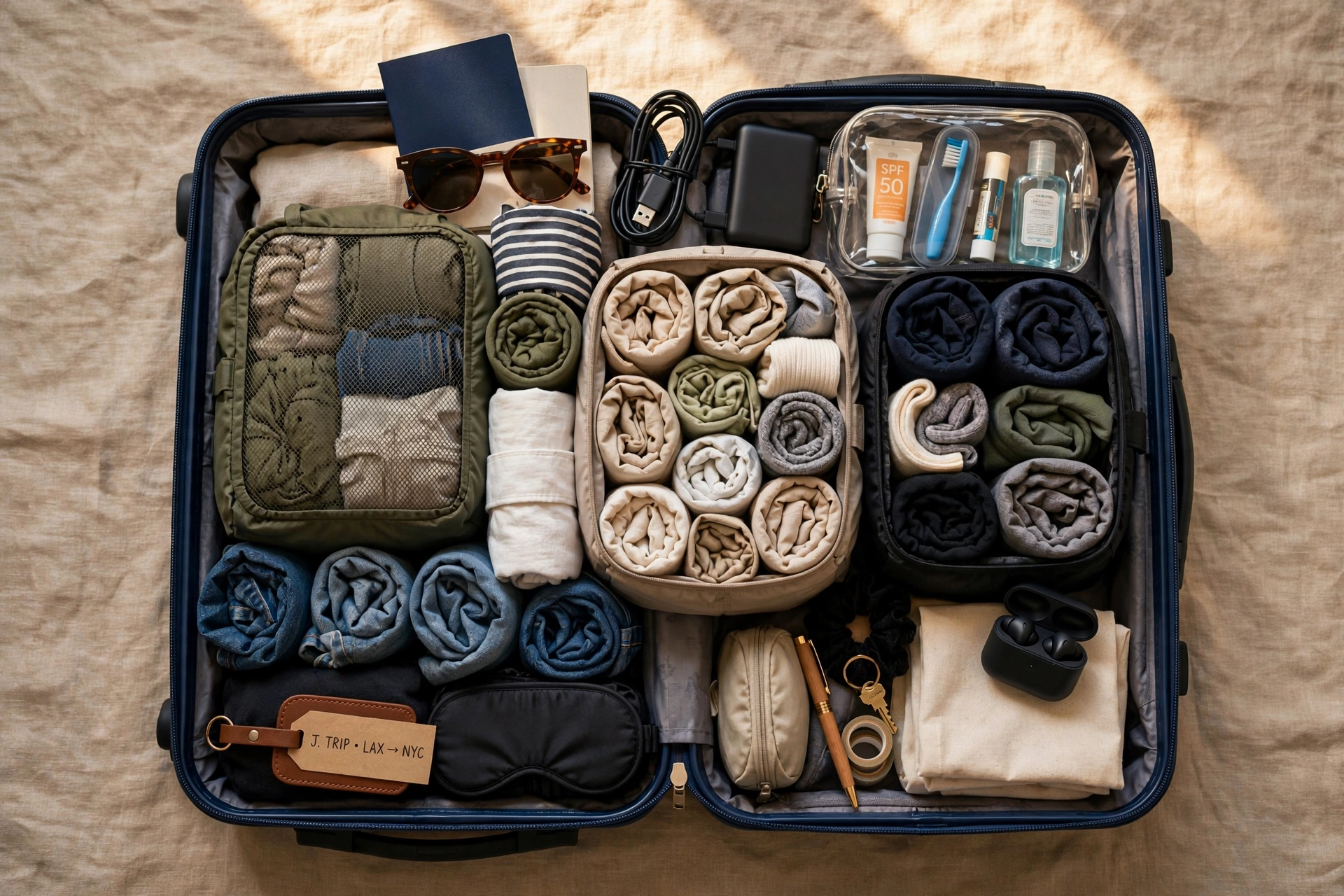
The One-Week Carry-On Checklist
Use this as your baseline and adjust for weather and activities:
- 5 tops in your color palette
- 3–4 bottoms (trousers, skirts, or shorts)
- 2–3 pairs of shoes (one worn, rest packed — including one comfortable walking pair)
- 1 light jacket or layer, 1 warmer layer
- 7 sets of underwear, 3–4 pairs of socks
- Sleepwear and one outfit for dressing up, if needed
- Toiletries in a quart-size bag or solid bars
- Medications, chargers, passport/ID, and a small day bag
- Travel insurance details — light packing does not mean light preparation, so it is worth reading our guide on travel insurance for beginners before you fly
If you are still deciding where to go, browse ideas in our roundup of the top 15 places to visit in the United States — most of them are perfect for a carry-on-only week.
Mistakes That Make Bags Heavy
- Packing for who you wish you were, not the trip you are taking. Be honest about your plans.
- Full-size toiletries. Decant everything.
- Too many shoes. Shoes are the heaviest, bulkiest items — two to three pairs is the ceiling.
- Cotton everything. Cotton is heavy, slow to dry, and wrinkles. Synthetics and merino wool are lighter and handle a week of wear better.
- No laundry plan. For trips longer than a week, plan one mid-trip laundry stop instead of packing fourteen days of clothes.
Frequently Asked Questions
Can I really fit a week of clothes in a carry-on?
Yes. With a capsule wardrobe, rolling, and packing cubes, a standard 35–45 liter carry-on comfortably holds seven days of outfits for most climates. Winter trips are the exception — wear your coat and boots on the plane.
What about souvenirs?
Pack a foldable tote or duffel inside your carry-on. If you buy things on the trip, you have an extra bag for the return flight.
Should I do laundry on the trip?
For exactly seven days, you usually do not need to. For longer trips, one laundry stop halfway lets you pack half the clothes.
Packing light is a habit that compounds: each trip teaches you what you did not use, and the next bag gets lighter. Start with the formula above, be ruthless with the “just in case” items, and enjoy walking straight past the baggage carousel on your next trip.