
Most healthy adult dogs need a vet checkup once a year. Puppies need far more frequent visits while they finish their vaccine series, and senior dogs do best with a checkup every six months. That yearly visit is not just a formality — it is how your vet catches dental disease, weight gain, lumps, and early signs of illness long before they become serious or expensive problems.
If your dog seems perfectly fine, it is tempting to skip a year. But dogs hide discomfort well, and many common conditions — kidney disease, arthritis, heart problems — develop quietly. A routine exam gives your vet a baseline to compare against, so small changes get noticed early, when treatment is simplest.
How Often Should You Take Your Dog to the Vet? The Schedule by Age
The right frequency depends mostly on your dog’s age and health. Here is the schedule most veterinarians recommend:
| Life stage | How often | Why |
|---|---|---|
| Puppy (8–16 weeks) | Every 3–4 weeks | Vaccine series, deworming, and growth checks |
| Young adult (6 months–1 year) | Every 6–12 months | Spay/neuter follow-up, final vaccines, baseline bloodwork |
| Healthy adult (1–7 years) | Once a year | Annual exam, vaccine boosters, parasite prevention |
| Senior (7+ years; 5–6 for large and giant breeds) | Every 6 months | Early detection of age-related disease, bloodwork, dental checks |
| Dog with a chronic condition | As your vet directs | Monitoring medication, bloodwork, and symptoms |
Puppies need the most visits because their immune systems are still developing. The vaccine series is given in rounds a few weeks apart, and each visit also lets the vet check growth, weight, and development. It is also the ideal time to start the basics of good behaviour — our guide to puppy training basics: 10 commands every new owner should teach pairs well with those early vet visits, since a puppy that is used to being handled is much easier to examine.
Senior dogs age faster than we do — roughly speaking, one calendar year is several “dog years” for an older pet. That is why vets recommend twice-yearly exams after age seven, or even earlier for large and giant breeds, which age faster than small breeds. Bloodwork at these visits can catch kidney, liver, and thyroid problems months before symptoms appear.
What Happens at a Routine Vet Checkup
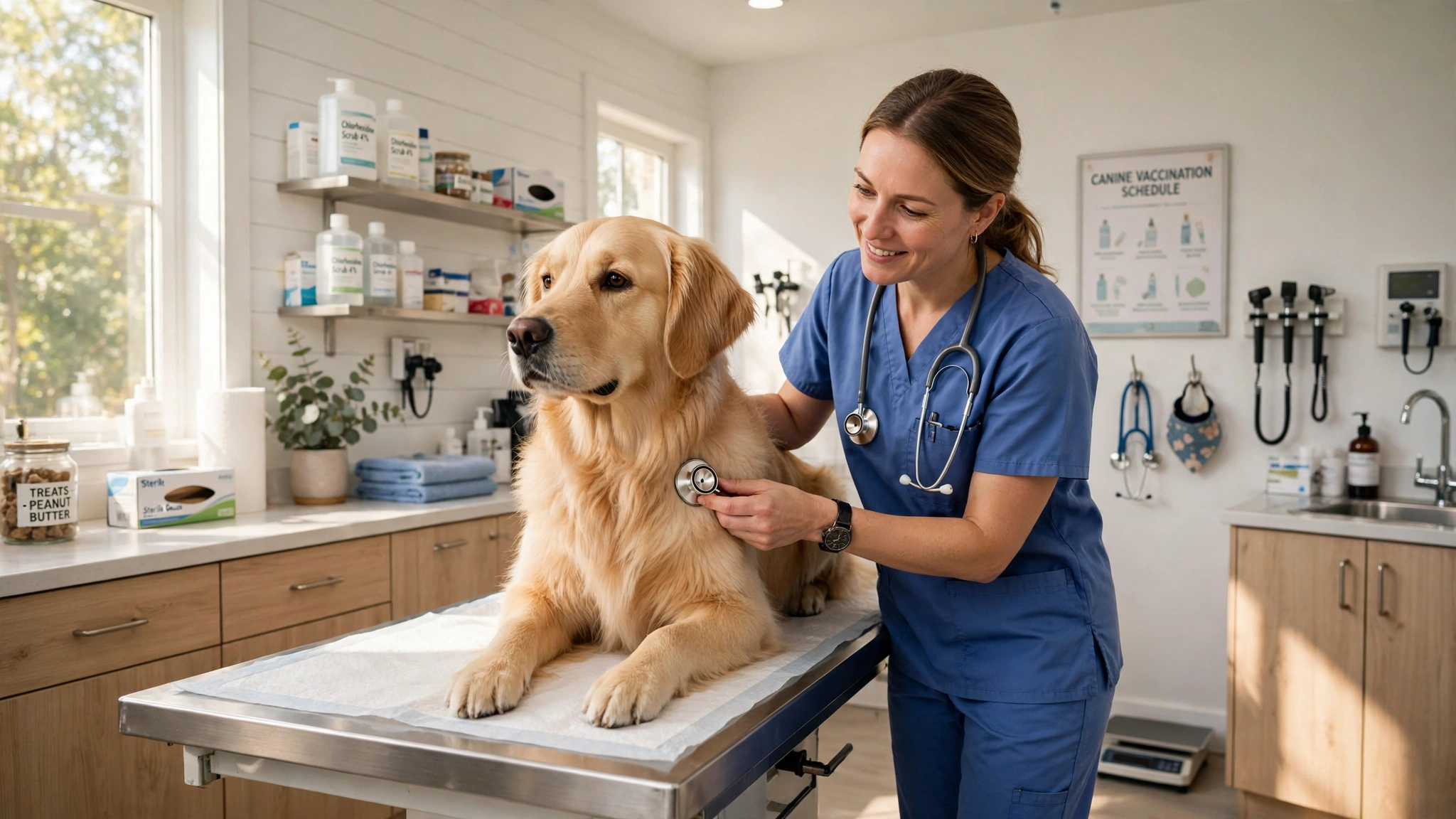
Knowing what to expect makes the visit easier for both of you. A standard wellness exam usually includes:
- A nose-to-tail physical exam: weight, temperature, heart and lungs, eyes, ears, teeth and gums, skin and coat, belly, joints, and lymph nodes.
- Vaccines: core vaccines such as rabies and distemper are boosted on schedule; your vet will advise which non-core vaccines (for example Bordetella or Lyme) suit your dog’s lifestyle and area.
- Parasite prevention: heartworm testing, flea and tick prevention, and a fecal test for intestinal parasites.
- Dental check: tartar, gum disease, and broken teeth are common and painful — and easy to miss at home.
- Bloodwork and urine tests: routine for seniors, and useful as a baseline for younger adults.
- A conversation: diet, exercise, behaviour changes, and any questions you have. Bring a short list — it is easy to forget things in the exam room.
Keep your dog’s vaccination records in one place. Boarding kennels, groomers, and doggy daycare facilities almost always ask for proof of up-to-date vaccines before they accept your dog, so a current vet record saves last-minute scrambling before a trip. If you ever need boarding, our guide to Greenbriar Pet Resort Urbana explains what a good boarding facility looks for, including vaccination requirements.
Signs Your Dog Needs the Vet Sooner
The schedule above covers routine care. Between visits, watch for changes that mean your dog should be seen sooner rather than waiting for the next annual checkup:
- Not eating or drinking for more than 24 hours, or vomiting or diarrhea lasting more than a day
- Sudden lethargy, weakness, or collapse
- Difficulty breathing, persistent coughing, or wheezing
- Limping, trouble standing, or signs of pain when touched
- A new lump or bump, or a wound that will not heal
- Sudden changes in thirst, urination, or weight
- Red, cloudy, or discharging eyes, or a swollen ear
- Behaviour changes — hiding, aggression, or anxiety that is new for your dog
When in doubt, call your vet’s office and describe what you are seeing. Most clinics will tell you honestly whether it can wait or needs same-day attention, and a phone call costs nothing. This article is general information, not medical advice — your own vet knows your dog’s history and is the right person to judge any specific symptom.
How Much Does a Routine Vet Visit Cost?
Cost is one of the main reasons owners put off vet visits, so it helps to know what to expect. In the United States, the exam fee alone for a dog typically runs $50–$100, and the national average for a routine visit is $56–$129, according to CareCredit’s Synchrony cost study. With vaccines and basic tests added, a routine visit commonly totals $50–$250. Prices vary by location, clinic type, and your dog’s size and needs — your clinic’s written estimate is the only accurate price for your pet. (CareCredit — Veterinary Exam and Procedure Costs)
A few ways to keep costs manageable: book the annual exam before something goes wrong, ask for an itemised estimate before approving tests, and look into pet insurance or a wellness plan if your budget is tight. Preventive care is almost always cheaper than treating a disease that was caught late.
How to Make Vet Visits Less Stressful for Your Dog
Many dogs dread the vet, and a stressed dog is harder to examine. A little preparation helps:
- Practise handling at home: touch your dog’s paws, ears, and mouth gently during calm moments, with treats, so the exam itself feels familiar.
- Keep car rides positive: short, pleasant trips that end with a treat — not only trips to the vet — stop the car from meaning “something bad is about to happen.”
- Bring comforts: a favourite blanket or toy, and high-value treats to reward calm behaviour in the waiting room.
- Arrive a little early: rushing in late raises your stress, and your dog reads that instantly.
- Ask about fear-free options: many clinics offer calming pheromone sprays, quiet waiting areas, or pre-visit medication for very anxious dogs.
Frequently Asked Questions
Do indoor dogs still need regular vet visits?
Yes. Indoor dogs still need vaccines (rabies is legally required in most places), parasite prevention, dental checks, and weight monitoring. Staying indoors lowers some risks, but not the ones a yearly exam is designed to catch.
Can I skip a year if my dog seems healthy?
It is not recommended. Dogs are good at hiding pain and early illness, and a skipped year means a skipped baseline — your vet loses the comparison that makes small changes visible. If cost is the barrier, ask your clinic about wellness plans or lower-cost preventive clinics in your area.
How often do puppies need shots?
Puppies usually receive vaccines every 3–4 weeks from about 6–8 weeks old until around 16 weeks, alongside deworming. Your vet will set the exact schedule based on your puppy’s age, breed, and local disease risk.
Conclusion
For most dogs, the answer is simple: once a year for healthy adults, every few weeks for puppies finishing their vaccines, and every six months for seniors. Add a visit any time something changes — appetite, energy, weight, or behaviour — and you have a schedule that keeps your dog healthy without overdoing it. Put the next checkup on your calendar today, and the habit will take care of itself.