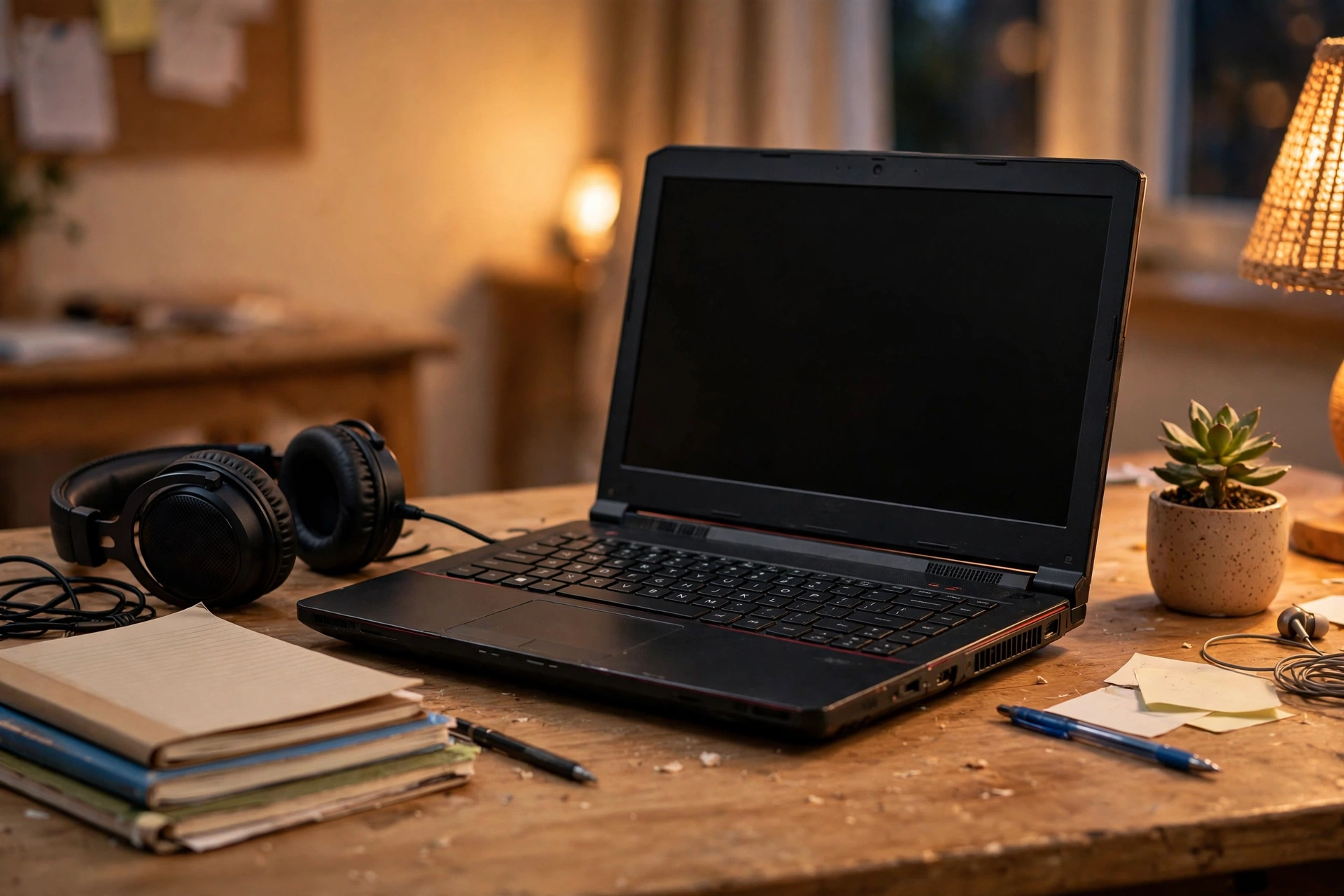
If bedtime in your house means bargaining, screen negotiations, and a child who is somehow wired at 9:30 PM, you are not alone. Screens keep children’s brains in “daytime mode” — the blue light suppresses melatonin and the content keeps their minds racing. The fix is not to rip the iPad away and hope for the best. It is to replace screens with a predictable, screen-free bedtime routine for kids that their bodies and brains learn to trust.
Why Screens Make Bedtime Harder
Research consistently shows that screen use in the hour before bed delays sleep onset in children. It is not just the light: fast-paced videos and games keep the nervous system alert, while the endless novelty of feeds trains kids to expect stimulation right up to the moment their head hits the pillow. A child who falls asleep with a tablet often also learns they *need* the tablet to fall back asleep after night wakings — and then the whole family pays for it at 2 AM.
Step 1: Set a Firm “Screens Off” Time
Pick a time 60 minutes before lights-out and make it non-negotiable. Consistency matters more than the exact hour. Announce the shutdown with a 10-minute warning and a 2-minute warning, so the end of screen time is never a surprise ambush.
Step 2: Replace, Don’t Just Remove
An empty hour feels like punishment. Fill the wind-down with activities that naturally lower energy: drawing, puzzles, coloring books, Lego, or listening to an audiobook. A great replacement for evening screen time is planning or reading about a future trip together, like this guide to Hawaii with kids, which sparks imagination without the glow of a screen. Travel reading works even better if you keep a world map on the bedroom wall and let the kids track places they want to visit — Malaysia with the family is a fun one to dream about.
Step 3: Dim the House
Light is a signal. About 30 minutes before bed, dim overhead lights, switch to lamps, and close curtains. The house itself should start whispering “bedtime” before you say a word.
Step 4: The Bath or Shower Reset
Warm water raises body temperature, and the drop afterward tells the brain it is time to sleep. Even a quick warm wash works for kids who resist full baths. Make it part of the sequence: bath, pajamas, teeth — same order every night.
Step 5: Make the Bed a Sleep Cave
A dark, cool, quiet room does half the work for you. Blackout curtains, a white-noise machine, and a room around 20°C (68°F) are the big three. Keep the bed for sleep only — no homework, no snacks, no “just five more minutes” of play on the bed. And do not underestimate the mattress itself: kids sleep noticeably better on a supportive, comfortable surface, and if you have ever wondered why hotel beds feel so good, this breakdown of the Beautyrest hotel mattress explains what makes them different.
Step 6: A Calm Connection Ritual
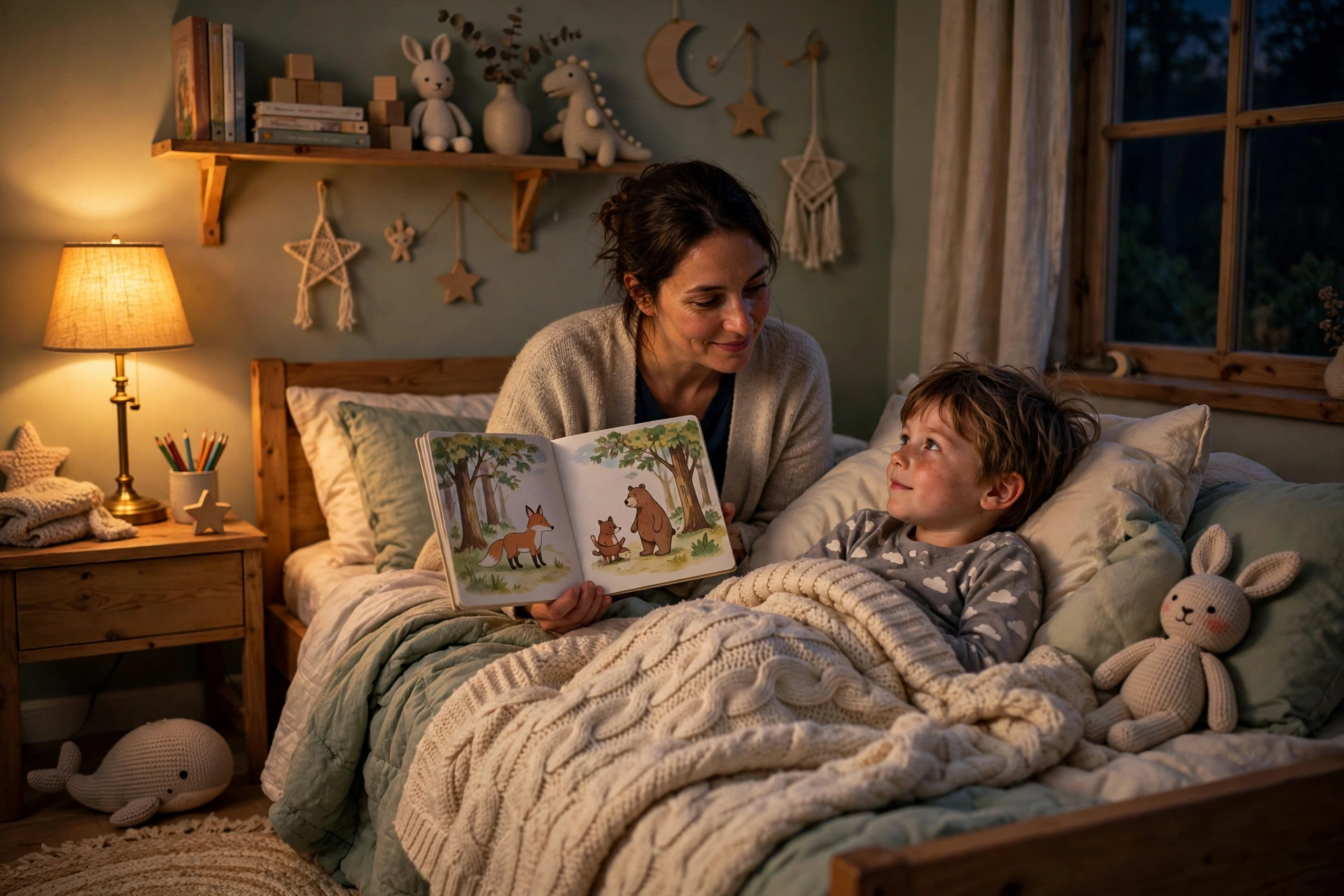
This is the part kids remember. Ten minutes of reading together, talking about the best part of the day, or a short gratitude practice gives them the emotional closure screens never provide. Connection is the real sleep aid.
Step 7: Same Wake Time Every Day
Yes — even weekends. A consistent wake time anchors the circadian rhythm far more effectively than a consistent bedtime. A child who wakes at the same time gets sleepy at the same time.
Step 8: Move the Chargers Out
If your kids have their own devices, charging happens in the parents’ bedroom, not theirs. This single change ends most midnight screen sneaking. No exceptions, no “but the alarm” — buy a cheap alarm clock.
Step 9: Give It Two Weeks
The first few nights of any new routine are rough. Kids test boundaries. Hold steady for 10–14 days and the routine starts running itself — the brain learns the sequence, and bedtime resistance fades.
How Long Should the Routine Be?
Shorter is better. A good routine lasts 20–40 minutes depending on age — long enough to be calming, short enough to sustain every single night. Toddlers do well with 15–20 minutes (bath, one book, one song). School-age kids can handle 30–40 minutes. Anything longer becomes a negotiation marathon. Write the steps on a chart and let younger kids check them off; the visual sequence turns the routine into a game they control.
More Screen-Free Wind-Down Ideas
If you need more variety in the replacement hour, rotate through these: jigsaw puzzles sized to your child’s age, sticker books, drawing prompts (“draw the funniest animal you can imagine”), building challenges with blocks, listening to calm music while doing a simple craft, or a “worry box” where kids draw their worries and put them away for the night — a surprisingly effective anxiety tool for school-age children.
Troubleshooting Common Problems
“My child says they are not tired.” Fine — the rule is the bed, not sleep. Quiet time in bed still works. Boredom is a surprisingly effective sleep aid.
“They wake up at night asking for the tablet.” Walk them back to bed, no lecture, no screen. Every exception resets the clock.
“Weekends ruin it.” Shift wake time by at most 30 minutes on weekends. Bigger shifts create a Monday crash.
FAQ
What age can a child start a screen-free bedtime routine? From about age 2, simplified. Toddlers do best with a 20-minute version: bath, book, song, lights out.
Does TV count as a screen at bedtime? Yes. Passive or not, it is still bright, stimulating light an hour before sleep.
What if my child shares a room? Stagger bedtimes by 15–20 minutes and give the older child a reading lamp and a book so they can wind down quietly.
What About Weekends and Travel?
Protect the core: screens off an hour before bed and the same wake time within 30 minutes. The bath and the reading can flex. On trips, pack the non-negotiables — a familiar stuffed animal, one book, and a portable white-noise app on *your* phone (not the child’s tablet). Kids adapt to new places faster when the sequence stays familiar.
The Bottom Line
A screen-free bedtime routine for kids is not about being strict — it is about being predictable. Screens off an hour before bed, a calm sequence, a dark cool room, and consistency for two weeks. Most parents see falling-asleep time cut in half within a month. The whole house sleeps better when the screens do.