
A small kitchen does not have to mean constant frustration. Most tiny kitchens fail not because they are small, but because everything in them fights for the same few square feet. These ten small kitchen organization ideas are chosen for one reason: they work in real kitchens, with real budgets, without a renovation.
1. Declutter Before You Organize
No organizer fixes a kitchen with 14 mugs and 5 spatulas. Empty every cabinet, keep only what you use weekly, and donate the rest. Most people can cut 30% of their kitchen stuff without missing anything. Organization starts with subtraction, not storage products.
2. Zone Your Kitchen Like a Pro
Divide the kitchen into zones: cooking (stove, pots, utensils), prep (cutting boards, knives, trash), and cleanup (sink, dishwasher, dish soap). Store each item in its zone, not where it “fits.” A zone-based kitchen means you stop walking in circles — everything you need for a task lives within arm’s reach of where you do it.
3. Use the Inside of Cabinet Doors
The backs of cabinet doors are free real estate. Mount narrow spice racks, measuring-cup hooks, or a clipboard with recipes on the inside of doors. Under-sink doors can hold spray bottles and sponges on a tension rod — simple, cheap, and it keeps counters clear.
4. Go Vertical Everywhere
Small kitchens waste wall space. A magnetic knife strip frees an entire drawer. Wall-mounted rails with S-hooks hold utensils, mugs, and even small pans. A two-tier shelf inside tall cabinets doubles usable space. Think in cubic feet, not square feet.
5. Group Into Labeled Bins
Deep cabinets and pantries become black holes. Clear, labeled bins — one for baking, one for snacks, one for cans — turn them into searchable drawers. Labels matter more than matching bins: you will actually maintain a system you can read at a glance. While you are at it, give the whole house a reset with the same mindset as these home cleaning services pros recommend — organized spaces are dramatically easier to keep clean.
6. Decant Into Clear Containers
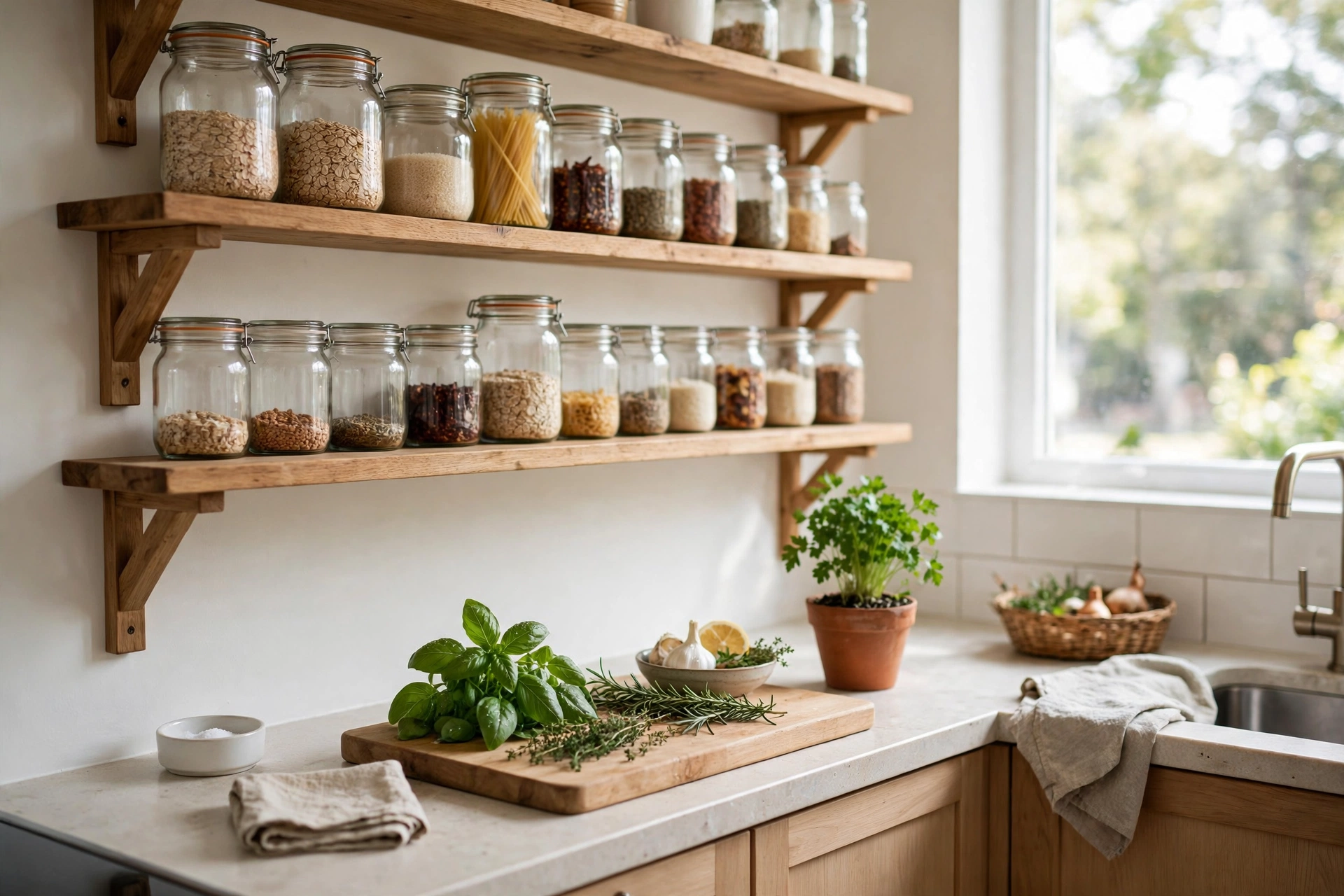
Flour, rice, pasta, and cereal in mismatched bags eat space and hide what you own. Matching clear containers stack perfectly and show exactly what needs restocking. Start with the five items you buy most — you do not need to decant everything on day one.
7. Make the Fridge Work Harder
Use shelf risers and clear turntables in the fridge so nothing gets lost behind the milk. Assign each shelf a job: top for ready-to-eat, middle for leftovers, bottom for raw ingredients, drawers for produce. A labeled fridge wastes less food, which in a small kitchen is as good as extra storage.
8. Choose Multi-Use Tools
In a small kitchen, every tool must earn its space twice. A Dutch oven bakes, braises, and serves. A bench scraper transfers, cleans, and chops. Sell or store the avocado slicer, the egg separator, and the garlic press — one good chef’s knife replaces all of them.
9. Add a Rolling Cart
A slim rolling cart is a movable island: prep station, coffee bar, extra pantry — whatever the day needs. Park it against a wall when you are not cooking, wheel it out when you are. For under $50 it is the single highest-impact addition to a small kitchen.
Bonus: The Pantry Overhaul (One Weekend Project)
Take everything out of the pantry, wipe the shelves, check expiration dates, and put items back grouped by meal type — breakfast together, snacks together, baking together. Add a small step-shelf so back-row items are visible. This one project, done once, saves you ten minutes every grocery run because you finally know what you own.
Bonus 2: Rethink the Junk Drawer
Every kitchen has one. Empty it, keep only true multi-use items (tape, scissors, batteries, one screwdriver), and give everything else a real home or the bin. Replace the junk drawer with a “launch pad” — a small tray by the door for keys, wallet, and phone. It takes twenty minutes and removes the single most chaotic square foot in the kitchen.
Take everything out of the pantry, wipe the shelves, check expiration dates, and put items back grouped by meal type — breakfast together, snacks together, baking together. Add a small step-shelf so back-row items are visible. This one project, done once, saves you ten minutes every grocery run because you finally know what you own.
10. Maintain With a 5-Minute Reset
Organization dies without maintenance. Every evening, set a timer for five minutes: dishes in the dishwasher, counters wiped, everything back in its zone. A professional cleaning routine works the same way — small, consistent effort beats occasional marathons.
The $0 Version: What to Do Today for Free
No budget? Start here: declutter one drawer, move daily dishes to the lowest cabinet shelf, and put the fruit bowl on the counter as your only decoration. Rearrange the spice situation into alphabetical order. These cost nothing and most people feel the difference the same afternoon. Storage products help later — the system comes first.
Small Changes, Big Difference
You do not need a bigger kitchen. You need less stuff, clear zones, vertical storage, and a five-minute nightly reset. If you also want the kitchen to *look* bigger while you are at it, the right paint color helps enormously — see why Fashion Gray is a favorite for modern small kitchens. Start with idea 1 today: most people feel the difference the same afternoon.