

Standing beneath a giant sequoia does something to your sense of scale. These are the largest trees on Earth by volume, some pushing 3,000 years old, and Sequoia National Park protects the greatest groves of them anywhere. If you are planning a visit, here are the essential places to see — the icons, the quiet corners, and the practical know-how to make the most of your trip.
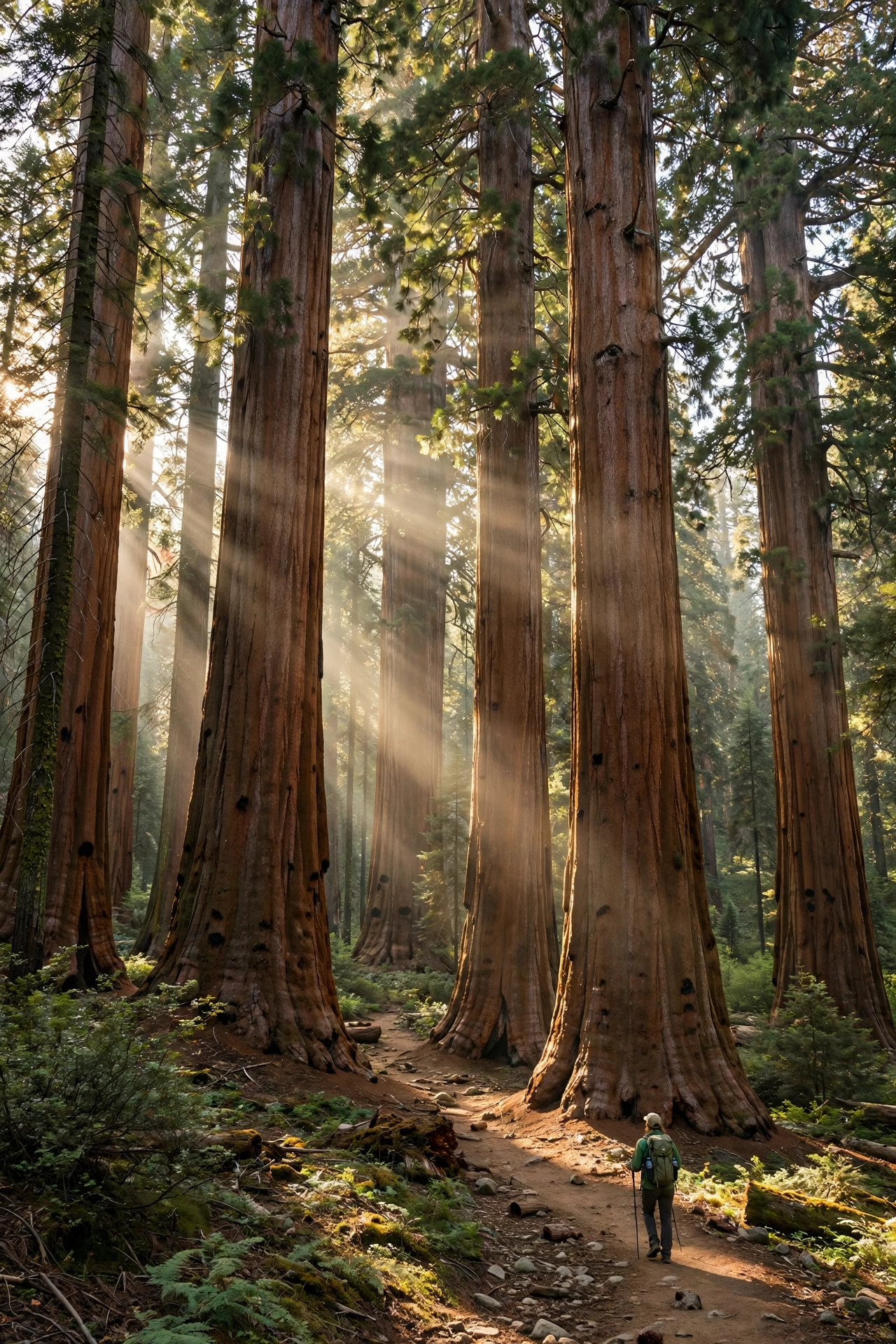
Giant Forest and the General Sherman Tree
Start where everyone should: the Giant Forest, home to the General Sherman Tree — the largest known living single-stem tree on the planet. The Congress Trail, an easy 2-mile paved loop, winds past clusters of giants including the House and Senate groupings. Arrive before 9 a.m. to walk among the trees in near-solitude; by midday the main grove hums with visitors. The Giant Forest Museum, in a historic 1928 market building, is worth 30 minutes for the ecology exhibits that explain how fire, not just time, shaped these forests.
Moro Rock
This granite dome rises 6,725 feet above sea level, and the quarter-mile staircase to its summit — 350 steps carved into the rock — delivers one of California’s great panoramas: the Great Western Divide on one side, the San Joaquin Valley on the other. It is steep and exposed, so go early, bring water, and skip it in thunderstorms (lightning strikes the dome regularly). Sunset from the top is spectacular if you time your descent before dark.
Crystal Cave
Beneath the forest floor lies a marble cavern of stalactites, stalagmites, and rippling flowstone. Crystal Cave is accessible only by guided tour, and tickets must be purchased in advance — they are not sold at the cave. The half-mile trail down to the entrance is steep, and the cave stays a cool 50°F year-round, a welcome break from summer heat. Tours run roughly May through September; book the moment dates open, as they sell out.
Crescent Meadow and Tunnel Log
John Muir called Crescent Meadow the “Gem of the Sierra,” and the 1.8-mile loop still earns the name: wildflower-strewn grass ringed by sequoias, with black bears a common (keep-your-distance) sighting at dawn and dusk. Nearby, Tunnel Log — a fallen giant you can drive your car through — is the park’s most photographed novelty. Go early in the morning for both, when the light slants through the canopy and the crowds have not arrived.
Extend the Trip: Kings Canyon
Sequoia’s twin, Kings Canyon National Park, is administered jointly and connected by the Generals Highway — and it is criminally underrated. The canyon itself plunges 8,200 feet, one of the deepest in North America. Zumwalt Meadow offers an easy riverside loop beneath towering granite walls, while the drive to Cedar Grove passes roaring waterfalls in spring. If you have three days, split them between the two parks. For broader trip planning, our top 15 places to visit in the United States puts Sequoia in national context, and places to visit in the western United States helps string together a multi-park road trip.
Best Time to Visit
Late May through October is the main season, when all roads and facilities are open. Summer brings crowds and booked-out lodging — reserve campsites and park lodges months ahead. September and early October offer warm days, thinner crowds, and golden light. Winter transforms the park: the Giant Forest under snow is magical, but tire chains are frequently required and some roads close. Spring means waterfalls at peak flow and wildflowers, with lingering snow at higher elevations.
Practical Tips
Buy the park pass at the entrance or online in advance; the neighboring national forest lands have separate rules, so know where you are. Fill up on gas before entering — there are no stations inside the park. Cell service is essentially nonexistent, so download offline maps. Store all food and scented items in bear boxes; bears here are expert car-break-in artists. And give the trees their due: stay on trails, since sequoia roots are shallow and easily damaged by trampling.
Sequoia rewards the unhurried traveler. Build in an unscheduled afternoon, find a fallen log in a quiet grove, and sit with trees that were seedlings when the Roman Empire fell — that is the real attraction, and it costs nothing.
Where to Stay and Eat
Lodging inside the park is limited but memorable. The Wuksachi Lodge, near the Giant Forest, is the only full-service hotel in the park — book as early as reservations open. Grant Grove Village in neighboring Kings Canyon offers cabins, a lodge, and the park’s best-stocked market. Just outside the Ash Mountain entrance, the town of Three Rivers has motels, vacation rentals, and riverside restaurants along the Kaweah River; it is the most convenient base if park lodging is full. For food, the Peaks Restaurant at Wuksachi serves the park’s best sit-down meals, while the Lodgepole Market Center covers groceries, picnic supplies, and quick bites. Whatever you choose, reserve well ahead for summer weekends — and always keep dinner plans flexible, because a sunset at Moro Rock is worth a late meal.
Don’t Miss the Night Sky
Sequoia is a designated dark-sky area, and on moonless nights the Milky Way arches over the giant trees in a display few places on Earth can match. The park occasionally hosts ranger-led astronomy programs in summer; even without one, any dark pullout along the Generals Highway works. Bring a red-light headlamp to preserve your night vision, dress warmly even in summer, and give your eyes twenty minutes to adjust — the reward is unforgettable.