

Traveling with a teenager is a different sport from traveling with younger kids. Teens want things that feel real and social — not a bus window full of monuments. The best places to visit in Europe with teenager appeal share one trait: they give teens something to do, not just something to look at. The seven destinations below earned their spot by passing that test — hands-on museums, street culture, water sports, and history that involves climbing on things rather than reading about them.
London, England
London wins with teens because it mixes heavyweight sights with street-level culture they actually recognize. The Science Museum is free to enter and full of interactive galleries, from space tech to a flight simulator area. Then cross to Shoreditch, where entire streets double as outdoor galleries of large-scale murals, and let your teen photograph the work the way they’d scroll it. Camden Market and Borough Market cover the food side: food stalls, vintage stalls, and people-watching that feels nothing like a school trip. If you want a structured overview before you go, this roundup of the ten best places to visit in London is a useful planning companion.
Paris, France
The trick in Paris is to skip the parts that bore teens and lean into the parts that don’t. At the Louvre, head straight for what teenagers remember: the Egyptian wing with real mummies, the dramatic sculpture of winged victory, and yes, the Mona Lisa. Montmartre works because it’s an artist quarter your teen can actually interact with — street portraitists, sketch vendors, and the white dome of Sacré-Cœur with a view across the city. Renting city bikes for a loop along the Seine costs little and covers more ground than an afternoon on foot. For the wider country context, this travel overview of the most popular places to visit in France fills in what lies beyond the capital.
Rome, Italy
Rome is the rare history lesson that teens don’t resist, because the history is enormous and climbable. The Colosseum’s underground chambers — the tunnels and holding areas beneath the arena floor — are open on guided tours and genuinely unsettle adults too. Some local schools run gladiator training sessions where teens learn basic techniques with wooden swords, which beats reading a plaque every time. Between sights, Rome runs on pizza al taglio (pizza by the slice) and gelato, so fuel stops double as cultural experiences. Climbing the Spanish Steps area or the Palatine Hill gives tired legs a purpose.
Barcelona, Spain
Barcelona is built for the teenage attention span: dramatic architecture, a beach, and street energy, all within metro range. The Sagrada Família looks like nothing a teen has ever seen in a textbook, and the light inside changes through the day. Park Güell is the fun counterweight — a public park of mosaic terraces and winding paths that photographs incredibly well. When the architecture overload hits, Barceloneta beach is a ten-minute ride away for swimming or just sitting with a snack. The city’s skate plazas and waterfront promenade make evening walks feel like entertainment rather than exercise.
Amsterdam, Netherlands
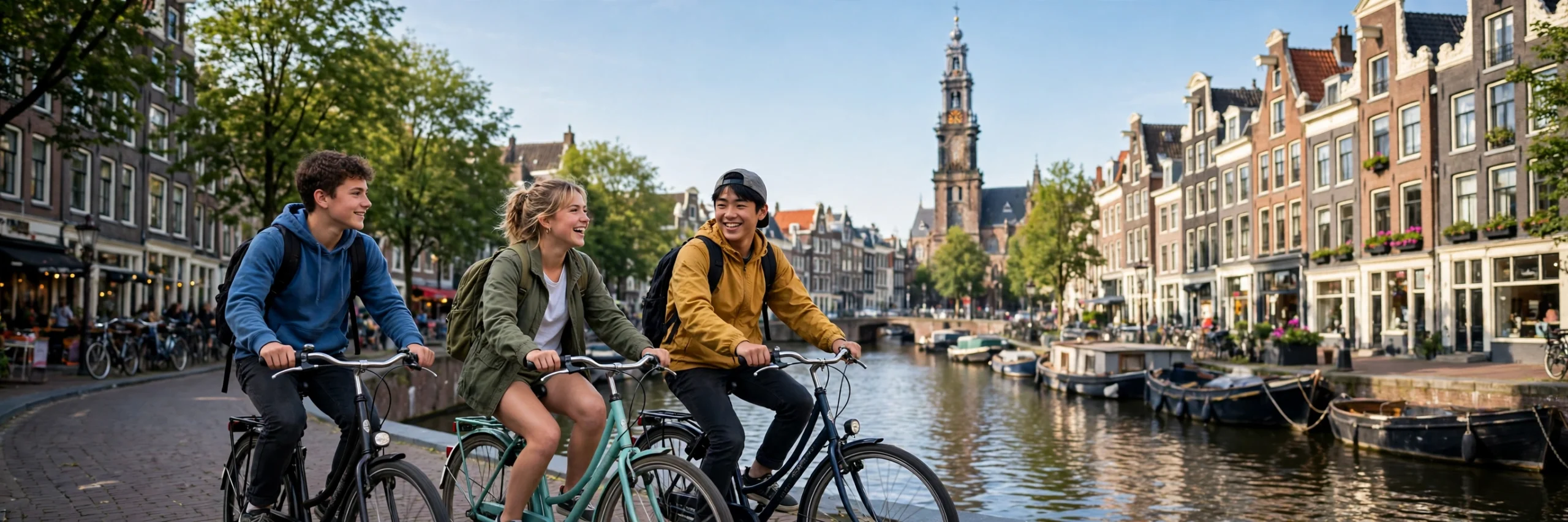
Amsterdam may be the easiest European city to hand over to a teenager, because cycling is the culture, not an excursion. Teens adapt to city bikes within an hour, and suddenly the whole city is theirs — canals, bridges, and side streets included. The NEMO Science Museum is designed exactly for this age group: five floors of hands-on experiments where touching everything is the point. For something calmer, kayak rentals on the quieter eastern canals let teens see the city from water level. This guide to the best places to visit in Amsterdam has more detail on planning the city itself.
Swiss Alps, Switzerland
When city days start blending together, the Alps reset everyone’s mood. The Jungfrau Railway climbs from the valley floor through the Eiger mountain itself to the Jungfraujoch — the journey is the attraction, with views through panoramic windows the whole way up. In summer, many mountain resorts run toboggan tracks and rope parks that give teens a shot of adrenaline between hikes. Short, achievable hikes around Grindelwald or Wengen work better than full-day treks; teens prefer a lake to swim in at the bottom over a summit certificate.
Greek Islands, Greece
The islands work because they slow the trip down. Base in one spot and book a half-day sailing trip — teens get to swim off the boat in open water, which no city museum can compete with. Sea kayaking along rocky coves is common around Crete, Rhodes, and the smaller Cyclades, and outfitters supply the gear. Santorini’s caldera views and sunset crowds are real, but quieter islands like Naxos or Paros give teens beaches, windsurfing rentals, and old towns to explore without the crush. Island evenings are late and social — dinner at 9, a walk through the harbor.
Practical Tips for Traveling Europe With Teens
A few logistics lessons make or break a teen trip. First, give each teen one day they plan — it ends the “this is boring” veto and usually surfaces something good you’d never have picked. Second, don’t over-schedule: two to three nights per base is the minimum for teens to feel settled, and a rest morning in a park or café saves the afternoon’s museum. For budget, city tourist cards and free walking tours (tip-based) keep costs down, and apartment-style stays with a kitchen cut breakfast and dinner bills substantially. On safety, the basics work: agree on a meeting point if you split up, keep phones charged, and use a hotel safe for passports. Pickpockets target distracted tourists in crowded metros and stations, so teens need the same reminder adults do.
Frequently Asked Questions
What is the best age to visit Europe with a teenager?
Most families find ages 12 and up ideal — younger teens have the stamina for walking-heavy cities and the interest level for museums, while kids under about 10 get more from shorter, pool-centered holidays. Older teens (15–17) handle multi-country itineraries easily and engage more with history and culture.
How many destinations fit comfortably in a two-week Europe trip with teens?
Three to four bases is the sweet spot. Teens adjust to a new city in about two days, so moving faster than that keeps everyone in a packing loop. Pick cities that pair well by train — London, Paris, and Amsterdam are a classic three-city run — rather than zigzagging across the continent.
When is the best time of year to visit Europe with teenagers?
Late spring (May–June) and early autumn (September) are generally the best balance: warm enough for outdoor activities, fewer crowds than July and August, and shorter queues at major attractions. Peak summer brings the hottest weather and highest prices, especially in southern Europe.
How do you balance a teen’s screen time with sightseeing?
Don’t fight the phone — recruit it. Give your teen the role of trip photographer or navigator, or set a photo challenge (best street art, funniest sign). Teens who document the trip tend to engage with it. Save the real screen-free time for meals and one shared activity per day.
Visiting Europe with a teenager works best when you stop optimizing for sights and start optimizing for their participation. A city they explore by bike, a museum they can touch, a boat they can jump off — those are the days they remember, and the days that make the trip worth the planning.