
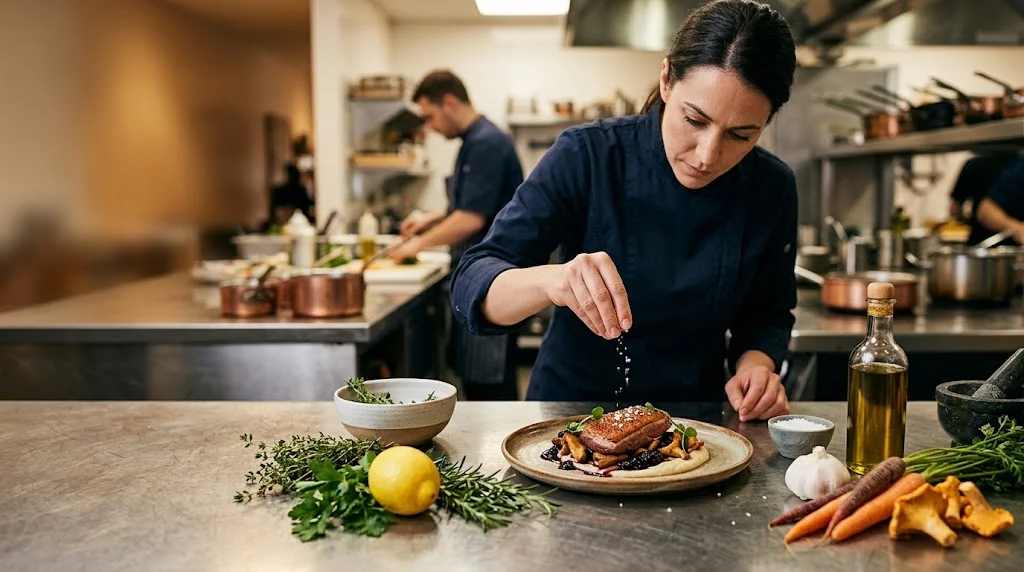
What separates an ordinary home-cooked meal from a restaurant-quality dish? It is rarely one exotic ingredient. Professional chefs often rely on something much simpler: balance.
Salt, acidity, fat, aromatics, texture, and proper cooking technique can transform familiar ingredients into food that tastes more complete. While every chef has personal preferences, understanding how these elements work together can help anyone create more flavorful meals at home.
That is the real secret behind many memorable dishes: knowing how to make each ingredient contribute to the final flavor instead of allowing one element to dominate.
Why Salt Is More Important Than It Seems
If there is one ingredient that deserves special attention in professional cooking, it is salt. Salt does more than make food taste salty. In the right amount, it can enhance the natural flavors already present in meat, vegetables, grains, sauces, and other ingredients.
The key is timing and moderation. Adding a small amount during cooking can help develop flavor throughout a dish, while a final adjustment can bring everything together just before serving.
This principle becomes especially noticeable when preparing plant-based dishes. For example, the growing popularity of plant-based burgers shows how seasoning and texture can play a major role in making familiar foods satisfying.
Acidity Can Wake Up a Dish
Another tool chefs frequently use is acidity. Lemon juice, vinegar, tomatoes, yogurt, and other acidic ingredients can add brightness and prevent rich foods from tasting heavy.
Imagine a creamy sauce without enough acidity. It may taste rich but flat. A small amount of lemon juice or vinegar can create contrast and make the other flavors seem more noticeable.
Acidity is particularly useful when balancing dishes containing butter, cream, cheese, oils, or fatty cuts of meat. The goal is not necessarily to make food sour. Instead, it is to create enough contrast to keep the palate interested.
Umami Adds Depth
Umami is often described as a savory or deeply satisfying taste. Ingredients such as mushrooms, aged cheese, tomatoes, fermented foods, meat broths, and certain sauces can contribute natural umami characteristics.
Chefs can layer several sources of umami rather than depending on one ingredient. A mushroom-based sauce, for instance, may become more complex when combined with roasted vegetables, herbs, stock, or aged cheese.
This idea connects naturally with the broader discussion of food systems and agriculture. Great cooking ultimately begins with the ingredients available to the kitchen and the way those ingredients are grown, sourced, stored, and prepared.
Fresh Ingredients Still Matter
No seasoning trick can completely compensate for poor-quality ingredients. Fresh vegetables, properly stored herbs, quality proteins, and well-selected grains provide a stronger foundation for cooking.
Seasonality can also influence flavor. Ingredients harvested at the right stage often require less manipulation because their natural characteristics are already prominent.
That is one reason chefs pay attention to sourcing. The restaurant experience is not created only at the stove; it starts with purchasing decisions and continues through preparation, storage, cooking, plating, and service.
Heat Changes Everything
Cooking temperature is another ingredient in the final result. The same vegetable can taste completely different when steamed, roasted, grilled, sautéed, or fried.
Roasting can encourage browning and create deeper flavors. Sautéing can quickly develop color while retaining some texture. Slow cooking can soften tougher ingredients and allow flavors to develop gradually.
Understanding heat gives cooks more control. Instead of simply following a recipe, they can recognize what the food needs at each stage.
Texture Is Part of Flavor
Great food is not only about taste. Texture influences the entire eating experience.
A dish can become more interesting when creamy, crunchy, crisp, tender, and chewy elements appear together. Consider a smooth soup finished with toasted seeds, crispy vegetables, or fresh herbs. The contrast makes every bite more dynamic.
This is also why restaurant menus often offer dishes with carefully considered combinations of textures rather than relying on a single consistency.
Fresh Herbs Can Change the Final Result
Herbs may seem like a finishing touch, but they can have a significant effect on aroma and perceived freshness. Parsley, cilantro, basil, mint, thyme, rosemary, and other herbs each bring different characteristics.
Some herbs work best during cooking, while delicate varieties are better added shortly before serving. The distinction matters because prolonged heat can reduce the fresh character of certain herbs.
The same attention to finishing touches can be seen when exploring different restaurant menus and dining experiences.
Why Professional Chefs Taste as They Cook
One of the most useful professional habits is tasting throughout the cooking process. A recipe provides a framework, but ingredients can vary in sweetness, acidity, moisture, saltiness, and intensity.
Tasting helps a cook determine whether a dish needs more seasoning, acidity, richness, freshness, or texture.
This principle is useful whether you are preparing dinner at home or exploring the menu at destinations such as Beulah Restaurant in Sarasota, Harutaka Restaurant in Tokyo, or Crandall’s restaurant menu.
The Secret Is Usually Balance
The idea of a single secret ingredient can make cooking sound mysterious, but professional results are usually built from several small decisions.
- Use enough salt to bring out natural flavors.
- Add acidity when a dish feels heavy or flat.
- Build savory depth with naturally umami-rich ingredients.
- Choose cooking methods that suit the ingredient.
- Create contrast through texture.
- Use fresh herbs and aromatics thoughtfully.
- Taste and adjust before serving.
These principles can apply to everything from a simple vegetable dish to a carefully composed restaurant entrée.
Food Quality Begins Before the Kitchen
Flavor is also connected to where food comes from. Agriculture, supply chains, storage, and preparation all influence the ingredients eventually reaching a kitchen.
Readers interested in that bigger picture can explore food selection and ingredient considerations as well as the broader relationship between agriculture and food production.
For diners, the same principle helps explain why different restaurants can create very different experiences from familiar ingredients. Local sourcing, preparation traditions, cooking equipment, and culinary culture all influence the finished plate.
How to Use the Chef Approach at Home
You do not need professional equipment or an expensive pantry to apply these ideas. Start with one simple dish and focus on balance.
Season gradually rather than adding a large amount at once. Taste before serving. If the dish tastes heavy, consider acidity. If it feels flat, check the seasoning. If it lacks depth, consider adding an ingredient with savory character. If every component has the same texture, introduce something crisp or fresh.
You can also learn by paying attention to restaurant menus. A visit to a destination known for food can provide ideas about combinations, presentation, ingredients, and regional cooking styles. Culinary-focused travel can be part of the broader experience described in guides such as places to visit in Solvang, Rome travel experiences, and Venice attractions.
Frequently Asked Questions
What is the secret ingredient chefs use most?
There is no single ingredient used by every chef. Salt is one of the most important seasoning tools, while acidity, fat, aromatics, umami-rich ingredients, and cooking technique all contribute to balanced flavor.
Why does restaurant food often taste more flavorful?
Professional kitchens typically pay close attention to seasoning, cooking temperature, ingredient quality, timing, texture, and finishing. Chefs also taste and adjust dishes throughout preparation.
Can better seasoning improve simple ingredients?
Yes. Proper seasoning can make simple ingredients taste more complete, but seasoning works best when it complements good ingredients and appropriate cooking methods.
Does every dish need an acidic ingredient?
Not necessarily. Acidity is a useful balancing tool, particularly for rich or heavy foods, but the amount and type depend on the dish.
Final Thoughts
The secret ingredient top chefs swear by is not necessarily a rare spice or expensive product. The bigger secret is understanding how ingredients interact.
Salt can enhance flavor. Acidity can add brightness. Umami can create depth. Fresh herbs can provide aroma. Proper heat can transform texture, while thoughtful combinations can make familiar ingredients feel completely different.
Once you start thinking about cooking as a process of balance rather than simply following instructions, even everyday meals can become more flavorful and memorable.
For more lifestyle, dining, food, and travel ideas, explore the wider PostTrek blog.