
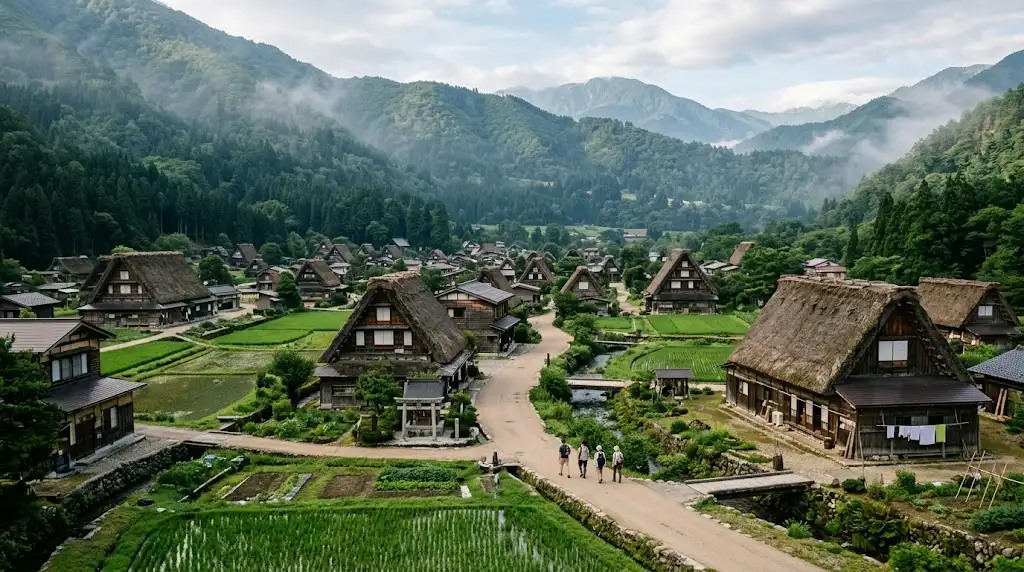
Japan is famous for Tokyo’s neon streets, Kyoto’s temples, Osaka’s food scene, and Mount Fuji’s iconic views. But travelers looking for a quieter and more immersive experience are increasingly turning toward the country’s rural villages, mountain valleys, and traditional settlements.
Japan’s hidden villages offer something major cities cannot: a closer look at traditional architecture, local customs, mountain landscapes, regional food, and everyday life. Places such as Shirakawa-go, Miyama, Ainokura, and the Iya Valley combine dramatic scenery with communities that have preserved distinctive traditions over generations.
These destinations are not necessarily “secret” in the literal sense. Some have become well-known among international travelers. Their appeal comes from being far removed from Japan’s biggest urban centers and offering a slower style of travel.
If you are planning a Japan itinerary beyond the usual tourist circuit, these villages deserve serious consideration.
Why Japan’s Hidden Villages Are Attracting Travelers
Japan’s rural destinations appeal to travelers who want more than famous landmarks and crowded city centers. They provide opportunities to walk through historic settlements, stay in traditional homes, experience regional food, and explore landscapes shaped by centuries of interaction between people and nature.
Some villages are surrounded by mountains, forests, and rice fields. Others sit within narrow valleys or along rivers. Traditional houses are often part of the landscape rather than isolated attractions, which creates a different experience from visiting a museum or reconstructed historical site.
The appeal is particularly strong for travelers interested in slow travel, photography, history, architecture, hiking, and cultural experiences.
1. Shirakawa-go: Japan’s Famous Mountain Village
Shirakawa-go in Gifu Prefecture is one of Japan’s best-known traditional rural destinations. Its Ogimachi settlement is famous for gassho-zukuri houses, recognizable by their steep thatched roofs.
The Historic Villages of Shirakawa-go and Gokayama were inscribed as a UNESCO World Heritage Site in 1995. UNESCO describes the settlements as outstanding examples of traditional communities adapted to their mountain environment and historical economic conditions.
The architecture is particularly impressive because the steep roofs were designed for the region’s heavy snowfall. Historically, the upper floors of some houses were also used for silkworm cultivation.
According to the Japan National Tourism Organization, Ogimachi contains the largest hamlet of gassho-zukuri houses in Japan. Visitors can explore historic homes, museums, viewpoints, and traditional guesthouses.
For a deeper look at Japan’s broader destinations, you can also explore this guide to top places to visit in Japan before building a wider itinerary.
2. Ainokura: A Quieter Gokayama Experience
Ainokura is located in the Gokayama area of Toyama Prefecture and forms part of the same UNESCO World Heritage property as Shirakawa-go and Suganuma.
The village is surrounded by mountains and has retained a distinctly traditional atmosphere. Many of its buildings remain private residences, while several traditional houses operate as guesthouses.
That makes Ainokura particularly appealing to travelers who want to experience a smaller settlement rather than a destination centered entirely around sightseeing.
The village can also be visited as part of a wider trip through the region, including Shirakawa-go. JNTO notes that Ainokura can be reached from Toyama, Takaoka, or Shirakawa-go by bus.
3. Miyama: Traditional Japan Near Kyoto
Miyama offers one of the most convenient ways to experience rural Japan while still remaining relatively close to a major tourist city.
Located roughly 50 kilometers north of central Kyoto, Miyama is known for its traditional kayabuki thatched-roof farmhouses. Kayabuki no Sato is the best-known village area and contains one of Japan’s largest concentrations of these traditional homes.
Unlike a historical theme park, Miyama remains a living rural community. Many of its traditional houses are private residences, and local craftspeople continue to maintain traditional skills.
Visitors can explore the village, cycle through the surrounding countryside, join guided experiences, hike, and in some cases stay overnight in a traditional farmhouse.
For travelers who want to combine rural scenery with cultural exploration, Miyama is an especially practical addition to a Kyoto itinerary.
4. Iya Valley: A Remote Mountain Escape
Deep in the mountains of Tokushima Prefecture, the Iya Valley offers a very different version of rural Japan.
The valley is known for dramatic gorges, forested mountains, hot springs, traditional homes, and historic vine bridges. JNTO describes Iya as one of Japan’s more remote destinations, with its mountainous location helping preserve a strong sense of isolation.
The area also has a long history of limited outside access. Traditional hillside villages and historic sites can be found throughout the region.
For adventurous travelers, Iya is especially appealing because the journey itself becomes part of the experience. Roads wind through mountainous terrain, while hiking routes and scenic viewpoints reveal landscapes that feel very different from urban Japan.
5. Suganuma: Small-Scale Heritage in Gokayama
Suganuma is another village included within the UNESCO-listed Historic Villages of Shirakawa-go and Gokayama.
Compared with larger and more heavily visited destinations, its smaller scale makes it attractive to travelers interested in traditional architecture without spending their entire day in a large tourist center.
The village’s gassho-style houses demonstrate how architecture evolved in response to the local environment. The steep thatched roofs were particularly suited to heavy snowfall, while the large multi-level structures supported historical agricultural and household activities.
Visiting Suganuma alongside Ainokura and Shirakawa-go can create a more complete understanding of the architectural and cultural heritage of the region.
What Makes These Villages Different From Tokyo and Kyoto?
Tokyo and Kyoto offer enormous cultural value, but their travel experiences are fundamentally different from those found in rural villages.
In major cities, travelers move between attractions, restaurants, shopping districts, museums, temples, and transportation hubs. In rural communities, the environment itself becomes part of the attraction.
You may spend the morning walking along a narrow village road, looking at traditional houses, eating regional food, and watching the surrounding mountains change with the weather.
The pace is slower, and there are generally fewer conventional attractions to check off a list. That is precisely what makes these destinations appealing.
Traditional Architecture Is a Major Attraction
Architecture is one of the strongest reasons to visit Japan’s rural villages.
Gassho-zukuri and kayabuki houses are not simply decorative structures. Their designs developed in response to climate, available materials, local industries, and community needs.
In Shirakawa-go and Gokayama, the sharply pitched roofs help deal with heavy snowfall. In Miyama, thatched farmhouses remain an important part of the area’s cultural landscape.
For architecture enthusiasts and photographers, these villages provide an opportunity to see traditional buildings within the landscapes that shaped them.
Rural Japan Is Also a Great Choice for Photographers
Japan’s villages offer strong photographic opportunities throughout the year.
Spring brings fresh greenery and seasonal blossoms. Summer creates vibrant mountain landscapes. Autumn transforms forests and hillsides with warm foliage, while winter can cover traditional villages in snow.
Shirakawa-go is particularly famous for its winter scenery, when snow-covered roofs create a dramatic contrast with the surrounding mountains.
Travelers interested in improving their understanding of Japanese landscape photography can also read this Japan landscape photography guide for useful terminology and context.
How to Experience These Villages Responsibly
Rural tourism comes with responsibilities. Many of Japan’s famous villages are living communities rather than open-air museums.
Visitors should respect private property, avoid entering restricted areas, follow local photography rules, keep noise levels low, and dispose of waste properly.
It is also worth remembering that traditional houses may still be people’s homes. A beautiful photograph does not give visitors permission to enter private spaces or photograph residents without consideration.
Choosing locally operated accommodation, restaurants, guides, and experiences can also help tourism contribute directly to the communities being visited.
Best Time to Visit Japan’s Hidden Villages
The best season depends on what you want to experience.
Spring
Spring brings fresh greenery and seasonal flowers. It can be a good choice for travelers who want mild weather and colorful landscapes.
Summer
Summer offers lush mountain scenery and opportunities for hiking, cycling, and outdoor activities. Some rural areas can also be humid and warm, so travelers should plan accordingly.
Autumn
Autumn is particularly attractive for photography because forests surrounding mountain villages can develop striking seasonal colors.
Winter
Winter transforms destinations such as Shirakawa-go into snow-covered landscapes. The scenery can be spectacular, but heavy snowfall can also affect transportation and access.
How to Plan a Rural Japan Trip
Rural travel requires more planning than visiting Tokyo or Kyoto because transportation options can be less frequent.
- Check transportation schedules in advance. Buses and local services may operate less frequently than urban trains.
- Allow extra travel time. Mountain roads and transfers can make rural journeys slower than they appear on a map.
- Book traditional accommodation early. Popular farmhouse stays and guesthouses can have limited availability.
- Carry practical essentials. Comfortable walking shoes, weather-appropriate clothing, and portable charging equipment can be useful.
- Research seasonal conditions. Snow, rain, heat, and mountain weather can affect travel plans.
- Respect local communities. Remember that many traditional villages remain working residential areas.
Should You Visit Japan’s Hidden Villages?
If your idea of a great Japan trip includes traditional architecture, mountain scenery, local culture, photography, and slower travel, the answer is likely yes.
You do not necessarily have to choose between Japan’s major cities and its rural destinations. A well-designed itinerary can combine Tokyo or Osaka with Kyoto and then continue into places such as Miyama, Shirakawa-go, or the Iya Valley.
Travelers who want to explore beyond Japan’s most famous destinations can also use this guide to places to visit in Japan besides Tokyo, Osaka, and Kyoto when expanding their itinerary.
Frequently Asked Questions
What are the best hidden villages to visit in Japan?
Shirakawa-go, Ainokura, Suganuma, Miyama, and the Iya Valley are among the most compelling rural destinations for travelers interested in traditional architecture, culture, and natural scenery.
Is Shirakawa-go worth visiting?
Yes. Shirakawa-go is particularly notable for its historic gassho-zukuri houses, mountain setting, seasonal scenery, and UNESCO World Heritage status.
Can you stay overnight in Japanese villages?
Yes. Some villages have traditional guesthouses and farmhouse accommodations. Availability can be limited, so booking ahead is recommended.
Is Miyama close to Kyoto?
Miyama is approximately 50 kilometers north of central Kyoto and can be reached using a combination of train and bus services.
What is the most remote village in Japan?
There is no single universally recognized “most remote village.” The Iya Valley is frequently described as one of Japan’s most secluded regions because of its mountainous geography and historically limited accessibility.
Final Thoughts
Japan’s hidden villages show a side of the country that can be easy to miss when an itinerary focuses only on Tokyo, Kyoto, Osaka, and other major destinations.
From the UNESCO-listed landscapes of Shirakawa-go and Gokayama to the traditional farmhouses of Miyama and the secluded mountains of Iya Valley, these places offer opportunities to experience architecture, nature, history, and community at a slower pace.
The real attraction is not simply finding a place that looks different from the modern cities. It is experiencing how Japanese communities have adapted their homes, traditions, and lifestyles to their surrounding environments.
For travelers willing to venture beyond the conventional tourist route, rural Japan can become one of the most memorable parts of the journey.