
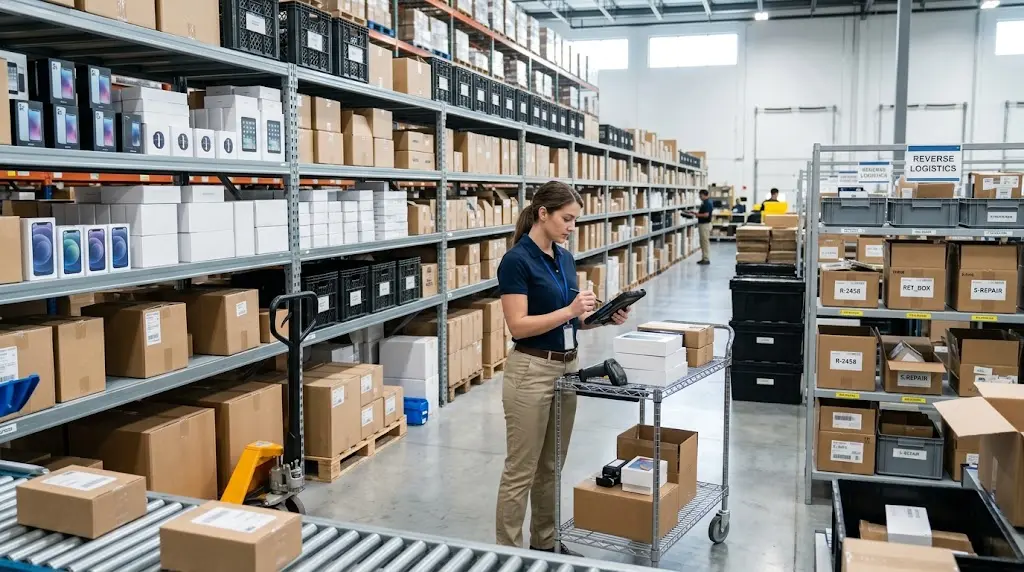
This guide explores how Assurant approaches logistics, the role of technology and supply chain management, reverse logistics, inventory handling, and the factors businesses should consider when evaluating a logistics partner.
What Is Assurant Logistics?
Assurant is a global business that provides protection, support, and related services across areas including connected devices, housing, and automotive markets. Its logistics capabilities are particularly connected to its work with devices and customer lifecycle services.
According to Assurant, its logistics solutions support customer journeys that can include protection activation, device repair, replacement, trade-ins, and refurbishment. Its logistics capabilities include warehousing, inventory management, shipping, returns, and reverse logistics.
This means Assurant Logistics should not be viewed simply as a conventional parcel-delivery operation. Its logistics activities are integrated with broader processes involving devices, repairs, replacements, upgrades, and customer support.
Why Logistics Matters to Modern Supply Chains
Supply chain performance can have a direct effect on customer experience and operating costs. When inventory is poorly managed or shipments are delayed, businesses can face additional handling costs, customer dissatisfaction, and operational disruption.
A well-managed logistics operation helps coordinate several connected activities:
- Inventory storage and management
- Product movement and shipping
- Order fulfillment
- Returns processing
- Reverse logistics
- Repair and replacement workflows
- Shipment visibility
- Distribution coordination
The objective is to create a predictable flow of products and information from the point where inventory enters the supply chain to the point where it reaches the customer or returns to the business.
Assurant’s Approach to Logistics
Assurant presents its logistics capabilities as part of a wider customer-experience model. Its logistics services are designed to support multiple stages of a product lifecycle rather than treating shipping as an isolated activity.
The company’s official logistics information highlights warehousing, inventory management, shipping, returns, and reverse logistics. It also describes support for replacement devices, trade-ins, and certified refurbished inventory.
This approach is especially relevant for industries where products may need to be repaired, replaced, upgraded, returned, or repurposed after the initial sale.
Warehousing and Inventory Management
Warehousing is a fundamental component of any large supply chain. Products need to be received, stored, located, picked, and prepared for their next destination.
Assurant identifies warehousing and inventory management as part of its logistics capabilities.
Effective inventory management can help businesses understand where products are located and how available inventory should be allocated. This becomes increasingly important when businesses manage products across different markets or stages of the customer lifecycle.
For businesses researching other logistics models, the PostTrek logistics cluster also includes Gray Poplar Logistics Partner and its supply chain approach.
Shipping and Distribution
Shipping connects inventory with customers, retailers, service centers, and other supply chain destinations. The appropriate transportation strategy depends on the product, destination, urgency, shipment size, and operational requirements.
Assurant lists shipping as one of its logistics capabilities and describes its logistics network as supporting different stages of customer journeys.
For businesses, the important consideration is not simply how quickly a shipment can move. Delivery reliability, tracking, inventory availability, handling procedures, and returns also contribute to the overall logistics experience.
Reverse Logistics and Returns
Reverse logistics has become increasingly important as businesses manage returns, repairs, trade-ins, replacements, and product recovery.
Instead of products moving only from manufacturer to customer, modern supply chains may involve several additional movements. A device may be returned for repair, exchanged for a replacement, traded in, refurbished, or prepared for another customer.
Assurant specifically identifies returns and reverse logistics among its logistics capabilities.
Effective reverse logistics can help businesses recover value from returned products while improving the customer experience. It can also reduce unnecessary waste when products can be repaired, refurbished, or reused rather than discarded.
Repair, Replacement, and Refurbishment Logistics
Some supply chains require logistics to work closely with product repair and replacement operations. This is particularly relevant for connected devices such as smartphones and other consumer electronics.
Assurant describes logistics capabilities that support replacement-device delivery, trade-ins, and certified refurbished inventory. Its broader connected-living capabilities also include repair and refurbishment activities.
This creates a more circular product journey. Instead of ending the logistics process after the original delivery, products can continue through repair, replacement, trade-in, refurbishment, and redistribution processes.
Technology and Supply Chain Visibility
Technology plays an important role in modern logistics because supply chains generate large amounts of operational information.
Businesses may need visibility into inventory levels, shipment status, warehouse activity, returns, repairs, and product movements. Digital systems can help connect these activities and provide information to teams responsible for operations and customer service.
Assurant describes its logistics capabilities as being integrated with protection products and digital tools, helping partners operate more efficiently while supporting customer experiences.
For logistics providers, technology should ultimately serve a practical purpose: improving visibility, reducing unnecessary manual processes, and helping businesses respond more effectively when supply chain conditions change.
Assurant Logistics and Customer Experience
Logistics can have a direct impact on how customers experience a brand. A replacement device that arrives promptly, a trade-in that is processed efficiently, or a repair that moves smoothly through the system can all influence customer satisfaction.
Assurant connects its logistics capabilities with the broader customer journey, including protection, repair, replacement, and device lifecycle services.
This is important because customers generally experience logistics indirectly. They may not see the warehouse or transportation network, but they notice when an order arrives on time, when tracking information is available, or when a return is handled efficiently.
Global Scale and Local Operations
Global logistics requires coordination across different markets, transportation networks, suppliers, service providers, and regulatory environments.
Assurant states that it operates across 21 countries and has more than 13,500 employees globally. Its markets include North America, Latin America, Europe, and Asia-Pacific.
A broad geographic footprint can be valuable for organizations that operate internationally, although businesses should always evaluate the specific facilities, routes, services, and contractual coverage relevant to their own supply chain.
Companies comparing providers can also explore Interdel Logistics and global supply chain solutions as another example within the PostTrek logistics cluster.
Supply Chain Management for Connected Devices
Connected devices create specialized logistics requirements because the product lifecycle may continue long after the initial purchase.
A device can move through several stages, including manufacturing, distribution, customer ownership, repair, replacement, trade-in, refurbishment, and eventual disposition.
Assurant’s connected-living capabilities include supply chain activities designed to manage device supply, logistics, repair and refurbishment, warehousing, and device disposition.
This type of lifecycle approach can help businesses think about logistics as a continuous process rather than a one-time delivery function.
Risk Management in Logistics
Every supply chain faces operational risks. These can include transportation delays, inventory shortages, damaged products, unexpected demand, supplier disruption, and problems during returns.
Businesses should therefore evaluate how a logistics partner identifies and responds to operational exceptions.
Important questions include:
- How are delayed shipments handled?
- How is damaged inventory documented?
- How are urgent replacement orders prioritized?
- How is inventory monitored?
- How are returns processed?
- How quickly can operational problems be escalated?
Good logistics management does not eliminate every supply chain disruption. Instead, it creates processes that help businesses identify problems and respond to them efficiently.
Sustainability and Product Reuse
Reverse logistics can also contribute to more efficient product lifecycles. When products can be repaired, refurbished, traded in, or reused, businesses have more opportunities to recover value from existing inventory.
Assurant reports that more than 160 million pre-owned mobile devices have been repurposed globally.
For connected-device businesses, product reuse can therefore become an important part of both logistics and lifecycle management.
Assurant Logistics vs. Traditional Freight Services
Traditional freight providers generally focus on transportation and related logistics functions. A more integrated logistics model may connect transportation with warehousing, inventory, returns, repairs, refurbishment, and customer lifecycle services.
Assurant’s logistics offering is closely connected to its broader protection and connected-living businesses. Its official logistics page specifically describes support for device repairs, replacements, trade-ins, returns, and refurbished inventory.
This distinction matters when businesses compare providers. The best logistics partner depends on the complexity of the product lifecycle and the level of operational integration required.
What Businesses Should Consider Before Choosing a Logistics Partner
Businesses should assess a logistics provider against their specific operational requirements instead of relying on a general reputation alone.
Service Coverage
Confirm which logistics services are actually included. A company may require transportation only, while another may need warehousing, inventory management, returns, refurbishment, or reverse logistics.
Geographic Reach
Review the provider’s coverage in the markets where the business operates. International businesses should consider local capabilities as well as global network coverage.
Technology Integration
Determine whether the provider can connect with the systems used for inventory, orders, tracking, customer service, and reporting.
Scalability
A logistics partner should be able to accommodate changes in shipment volumes, product ranges, geographic markets, and seasonal demand.
Returns Management
For consumer products, returns can represent a significant part of the customer journey. Businesses should understand how returned products are inspected, processed, repaired, refurbished, restocked, or disposed of.
Customer Support
Clear communication is essential when shipments or inventory encounter problems. Businesses should establish escalation procedures before entering a long-term logistics relationship.
Other Logistics Models Worth Comparing
There is no single logistics model that works for every business. Companies should compare providers according to their product type, shipment volume, geographic requirements, and fulfillment needs.
Within the PostTrek logistics content cluster, businesses can also review WellTrans Logistics and global supply chain services and Covenant Logistics and its position within the logistics industry.
These comparisons can help readers understand that logistics providers may operate under different business models and specialize in different areas of transportation and supply chain management.
Frequently Asked Questions About Assurant Logistics
What does Assurant Logistics do?
Assurant’s logistics capabilities include warehousing, inventory management, shipping, returns, and reverse logistics. The company also connects logistics with device repair, replacement, trade-in, and refurbishment activities.
Does Assurant handle reverse logistics?
Yes. Assurant explicitly lists returns and reverse logistics among its logistics capabilities.
Does Assurant provide warehousing?
Yes. Warehousing and inventory management are listed among Assurant’s logistics capabilities.
Does Assurant work with connected devices?
Yes. Connected devices are an important part of Assurant’s broader Connected Living business, which includes supply chain, logistics, repair, refurbishment, and device disposition capabilities.
Is Assurant a global company?
Assurant describes itself as a global company operating across 21 countries, with capabilities spanning North America, Latin America, Europe, and Asia-Pacific.
Final Thoughts
Assurant Logistics illustrates how modern logistics can extend beyond traditional transportation. By connecting warehousing, inventory management, shipping, returns, reverse logistics, repairs, replacements, trade-ins, and refurbishment, logistics can become an important part of the entire customer and product lifecycle.
For businesses evaluating a logistics partner, the most important consideration is whether the provider’s capabilities match the actual complexity of the supply chain. Transportation speed matters, but so do inventory visibility, returns management, technology, geographic coverage, scalability, and operational support.
Assurant’s official logistics capabilities demonstrate an integrated model particularly relevant to connected devices and customer lifecycle services.
As global supply chains continue to evolve, businesses that treat logistics as a strategic operational function can be better positioned to manage customer expectations, product lifecycles, and changing market demands.