Every parent wants a child who loves to read — not one who treats books like homework. The research is unambiguous: kids who read for pleasure build bigger vocabularies, stronger focus, better empathy, and even better sleep. But you cannot force a reading habit. You can only grow one, patiently, the way you grow anything that lasts.
Whether your child is a reluctant reader or already curious, these strategies will help you build a reading habit that survives childhood and sticks for life.
Start With Reading Aloud — At Every Age
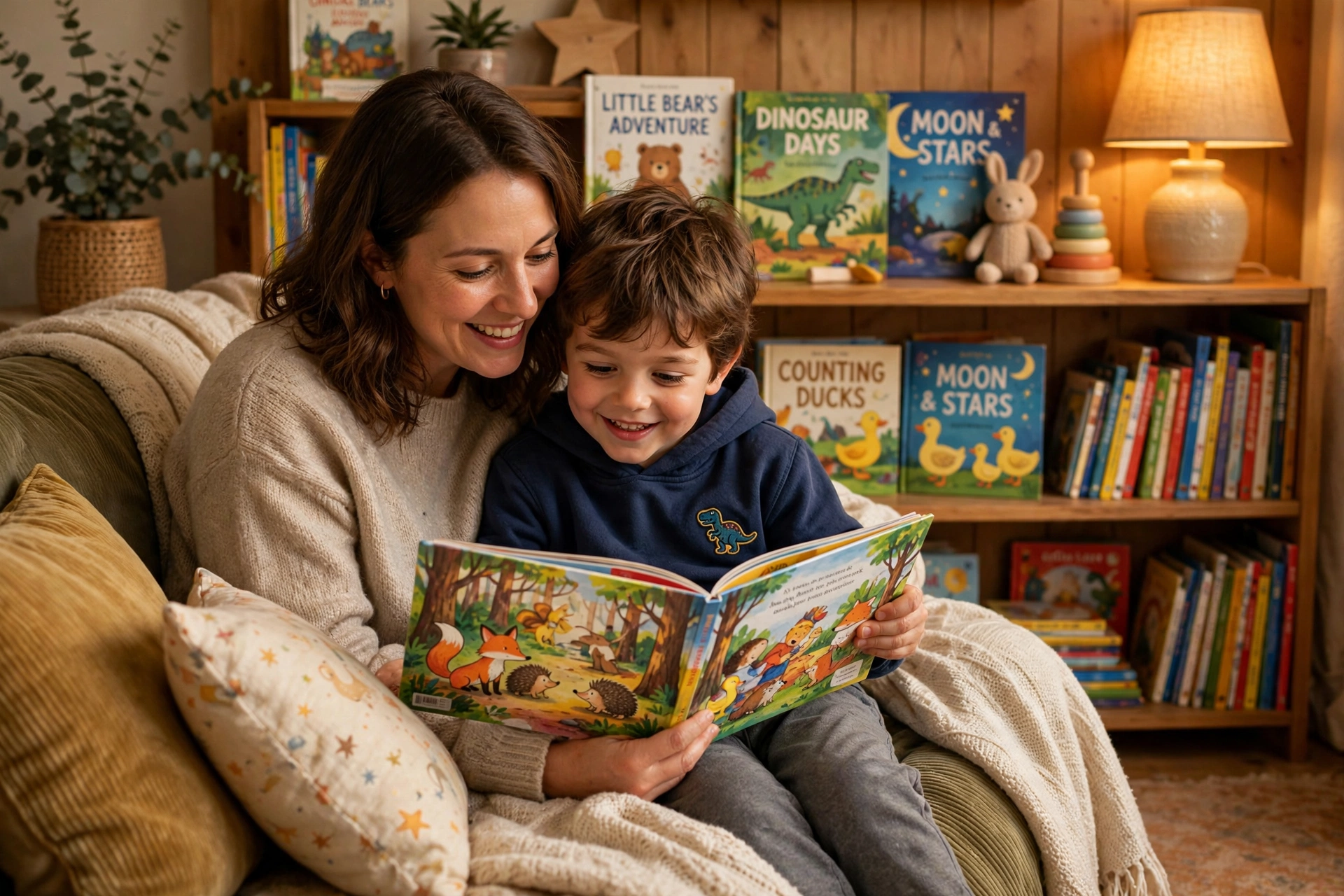
Reading aloud is the single highest-impact thing you can do, and most parents stop far too early. Even after your child can read independently, keep reading together. Hearing fluent, expressive reading builds vocabulary and comprehension far beyond what a child can decode alone.
Make it a ritual, not a chore: the same cozy spot, the same time each day, books your child chose. Ten to twenty minutes is plenty. And do not stop when they hit chapter books — many families happily read aloud together well into the teen years.
Let Them Choose (Even If You Hate the Book)
Nothing kills a reading habit faster than assigned reading that feels like school. Let your child pick — graphic novels, joke books, sports biographies, silly series you would never choose. Reading is reading: the vocabulary, stamina, and comprehension grow regardless of genre.
The only rule worth enforcing is “abandon boring books.” Teaching a child they are allowed to quit a book that is not working gives them control, and control keeps them coming back. Forced marches through dull books teach one lesson: reading is punishment.
Build Reading Into the Day’s Rhythm
Habits stick when they are attached to existing routines. The two easiest anchors:
Bedtime reading.
Replace the last 20 minutes of screens with books. It is the perfect wind-down — and pairing reading with a consistent screen-free bedtime routine doubles the benefit, since calmer evenings also mean better sleep.
The waiting book.
Keep a book in the car, in your bag, at restaurants. Those dead minutes — waiting rooms, queues, siblings’ practices — become reading minutes without any scheduling effort.
Make Books Unavoidably Available
Children read what is within reach. Scatter books the way you scatter toys: a basket by the couch, a stack by the bed, a few in the car, some at grandparents’ houses. Visit the library regularly and let them check out an almost unreasonable number of books — abundance removes the pressure of each choice.
Rotate the visible selection every few weeks. A “new” shelf of familiar books feels fresh and triggers curiosity all over again. And keep books at your child’s reading level *and* slightly above; the stretch books are where growth happens.
Read Yourself — Visibly
Children copy what they see, not what they are told. A child who regularly sees a parent absorbed in a book absorbs the message that reading is what interesting adults do. You do not need to perform it — just let your own reading be visible instead of hidden behind a phone.
Talk about what you are reading, too. “This book has the funniest chapter” or “I just learned the strangest fact” models reading as a source of pleasure and conversation, not a solitary duty.
Use Series as a Secret Weapon
A child who finishes book one of a series and immediately demands book two has just built a habit without noticing. Series create momentum: familiar characters, escalating stakes, and the irresistible pull of “just one more chapter.”
When you find a series that clicks, buy or borrow the next three books immediately. Never let momentum die waiting for the next installment. Librarians are excellent allies here — ask for “read-alikes” when a series ends.
Make Reading Social
Reading feels bigger when it is shared. Try these:
– **Family book club:** everyone reads the same book (or the parent reads aloud), then talks about it over pizza.
– **Reading with a buddy:** siblings, cousins, or friends reading the same series will race each other through it.
– **Audiobooks count:** long car rides with a great audiobook build story stamina and vocabulary just like print does. Follow along with the physical book for an extra boost.
The goal is to make books a source of connection and conversation, not isolation.
Handle the Screens Without a War
You will not win by banning screens outright — you win by making reading competitive. The most effective approach is structural, not confrontational: screens off during the reading windows you have already built (bedtime, car rides, waiting times), rather than negotiated case by case.
Also, use screens as a bridge, not just a rival. A child obsessed with a game or show will often devour books set in that world. Novelizations, companion guides, and fan fiction are legitimate on-ramps to a reading habit.
What to Do When They Resist
First, rule out a skills problem. A child who “hates reading” is often a child who finds reading hard — and no strategy overcomes undiagnosed difficulty. If your child consistently avoids reading, reads far below grade level, or gets frustrated and tearful, talk to their teacher about a screening. Early support changes trajectories.
If skills are fine but motivation is low, lower the bar, not the expectations: comics, magazines, audiobooks, reading to a pet, or 10 minutes instead of 30. Meet them where they are, celebrate every finished book like a victory, and trust the compound effect.
Frequently Asked Questions
At what age should I start?
Birth. Reading to babies builds language exposure from day one, and the routine itself — cuddled up with a book — is the earliest version of the habit.
How much should my child read each day?
Aim for 20 minutes of daily reading for school-age kids, but treat it as a target, not a law. Consistency beats duration: 10 minutes every day outperforms an hour once a week.
Do e-books and audiobooks count?
Yes. The habit is what matters — regular, voluntary engagement with stories and ideas. Print has slight advantages for deep focus, but a child who loves audiobooks is a reader.
The Bottom Line
To help your child build a reading habit that lasts, remember the formula: read aloud daily, let them choose, attach reading to existing routines, keep books everywhere, and model it yourself. You are not assigning a task — you are opening a door. Keep it inviting, keep it pressure-free, and one day you will find them reading under the covers with a flashlight. That is when you know it worked.