
The car breaks down. A tooth cracks. Your hours get cut at work. Life does not ask permission before sending the bill, and without a cushion, every surprise becomes a crisis — or a credit card balance that haunts you for years. An emergency fund is the simplest, most powerful financial safety net you can build, and you can start one from absolute zero.
This guide shows you exactly how to build an emergency fund from scratch in 2026: how much you need, where to keep it, and a realistic step-by-step plan that works even on a tight budget.
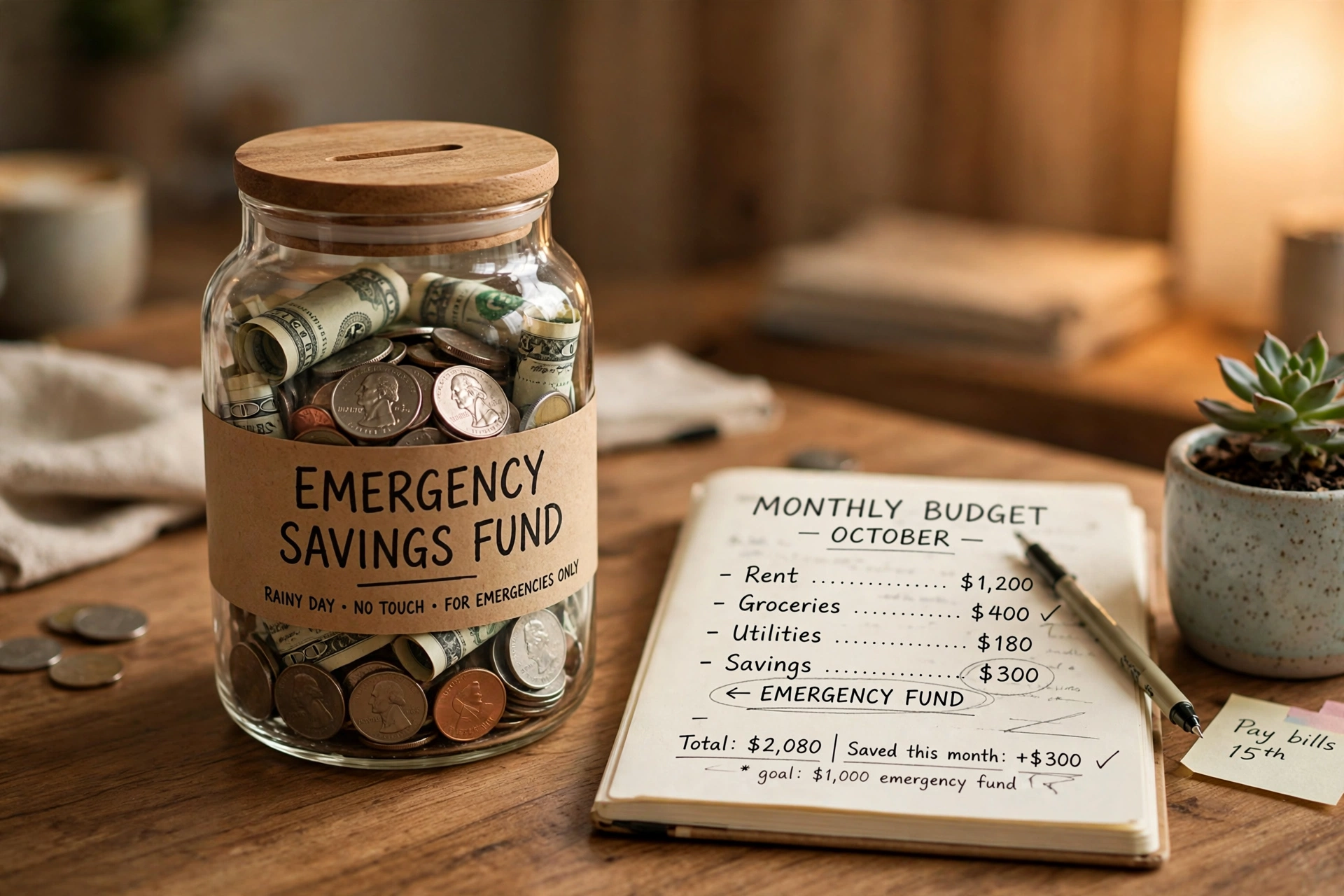
What an Emergency Fund Actually Is (and Isn’t)
An emergency fund is money set aside for genuine surprises: job loss, medical bills, urgent home or car repairs. It is not a vacation fund, not a “great deal I found online” fund, and not money you dip into because the month ran long. The whole point is that it sits untouched until real trouble arrives.
It also is not an investment. You are not trying to grow this money aggressively — you are trying to keep it safe and instantly available. That means a regular savings account, not stocks, crypto, or anything that can drop 20% the week you need it.
How Much Do You Really Need?
The classic advice is three to six months of essential expenses. That is the destination, but it is a terrible starting line — it sounds so big that most people never begin. Instead, work in stages:
Stage 1: $500–$1,000.
This starter fund covers the most common emergencies — a car repair, a phone replacement, an urgent vet bill. Research consistently shows that even a small buffer dramatically reduces the chance of falling into debt over a surprise expense.
Stage 2: One month of essential expenses.
Add up only the non-negotiables: rent, utilities, food, transport, minimum debt payments, insurance. One month of that buys you real breathing room.
Stage 3: Three to six months.
This is the full fund. Three months is reasonable if your income is stable and you have a partner’s income as backup; aim for six if you are self-employed, single-income, or in an unstable industry.
Do not let the final number paralyze you. Stage 1 alone puts you ahead of most people.
Step 1: Open a Separate Account
Your emergency fund needs its own home — a separate savings account, ideally at a different bank from your checking account. The small friction of transferring money between banks is a feature, not a bug: it stops impulse raids while keeping the money reachable within a day or two.
Look for a high-yield savings account if one is available to you. In 2026, many online banks still pay several percent, which means your safety net quietly earns while it waits. Just make sure there are no withdrawal penalties or lock-in periods.
Step 2: Find Your First $50
You do not need a windfall to start — you need a first deposit, however small. Sell something you do not use. Skip two takeout orders this week. Do a single odd job. The amount barely matters; the psychological shift from “$0 saved” to “I have started” matters enormously.
Set a concrete mini-goal: reach $100 in the first two weeks. Small, fast wins build the habit loop that carries you to the bigger stages.
Step 3: Automate a Fixed Transfer
Willpower is unreliable; automation is not. Set up an automatic transfer to your emergency account for the day after each payday — before you can spend it. Start with an amount so small it feels almost silly: $25 or $50 per paycheck.
Then increase it gradually. Every time you get a raise, a bonus, or pay off a bill, redirect at least half of the freed-up money to the fund before lifestyle inflation claims it. You will barely feel the increases, but the balance will compound surprisingly fast.
If you are still figuring out where your money goes each month, start with a simple beginner-friendly budget first — you cannot automate savings from money you cannot see.
Step 4: Cut One Expense Ruthlessly (Temporarily)
You do not need to overhaul your whole lifestyle, but one aggressive temporary cut can turbocharge your fund. Pick your biggest discretionary leak — dining out, subscriptions you barely use, impulse online shopping — and pause it for 60 to 90 days, directing every saved dollar to the fund.
Audit your subscriptions today: streaming services, apps, memberships. Most people find $30–$80 a month in things they forgot they were paying for. That alone can fund your starter emergency fund in a few months.
Step 5: Bank Windfalls Before You Feel Them
Tax refunds, cash gifts, bonuses, side-gig payouts — money you were not counting on is the fastest fuel for an emergency fund. Make a rule now: at least 50% of every windfall goes straight to the fund, no deliberation. The trick is deciding in advance, because in the moment, “deserved treat” logic always wins.
What Counts as a Real Emergency?
Write your rules down before you need them. Legitimate emergencies: losing income, essential medical or dental costs, critical home repairs (roof, heating, plumbing), car repairs you need to get to work. Not emergencies: sales, holidays, concert tickets, upgrading a phone that works fine.
After you use the fund, rebuilding it becomes your top financial priority — pause extra debt payments beyond minimums and pause investing until the fund is restored. A half-empty safety net is barely a net at all.
Common Mistakes That Kill Emergency Funds
Keeping it in checking.
Money in your everyday account gets spent. Separation is non-negotiable.
Investing it for “better returns.”
The stock market can fall 20% in a month. Your emergency fund must be boring and stable — that is its job.
Setting the goal too high at first.
“I need $15,000” leads to “why bother.” Start with $500, celebrate it, then climb.
Financing emergencies instead.
Every dollar of surprise expense put on a high-interest card or a no-credit-check financing deal costs far more than the emergency itself. Your fund exists precisely to break that cycle.
Frequently Asked Questions
Should I pay off debt or build an emergency fund first?
Do both in sequence: build the $500–$1,000 starter fund first, then attack high-interest debt aggressively, then finish the full three-to-six-month fund. Without the starter buffer, every surprise sends you back into debt.
Where exactly should I keep it?
A separate high-yield savings account with no withdrawal penalties. Not under the mattress (no growth, theft risk), not in investments (volatility), not in checking (temptation).
How long should it take?
A starter fund can take one to three months. The full three-to-six-month fund typically takes one to two years of steady automated saving. That sounds slow until you realize it protects every other financial goal you have.
The Bottom Line
Learning how to build an emergency fund from scratch is less about money and more about momentum: separate account, tiny automatic transfers, one ruthless temporary cut, and windfalls banked before you feel them. Start with $500, prove to yourself you can do it, and the rest follows. Future you — calmly handling the next surprise instead of panicking — will be very glad you started today.