
Online shopping is convenient right up until the moment you realize you overpaid by 40 percent, bought a counterfeit, or handed your card number to a store that does not exist. Smart online shopping is not about depriving yourself. It is a short checklist of habits that keep more money in your pocket and your information out of the wrong hands.
1. Track Prices Before You Buy
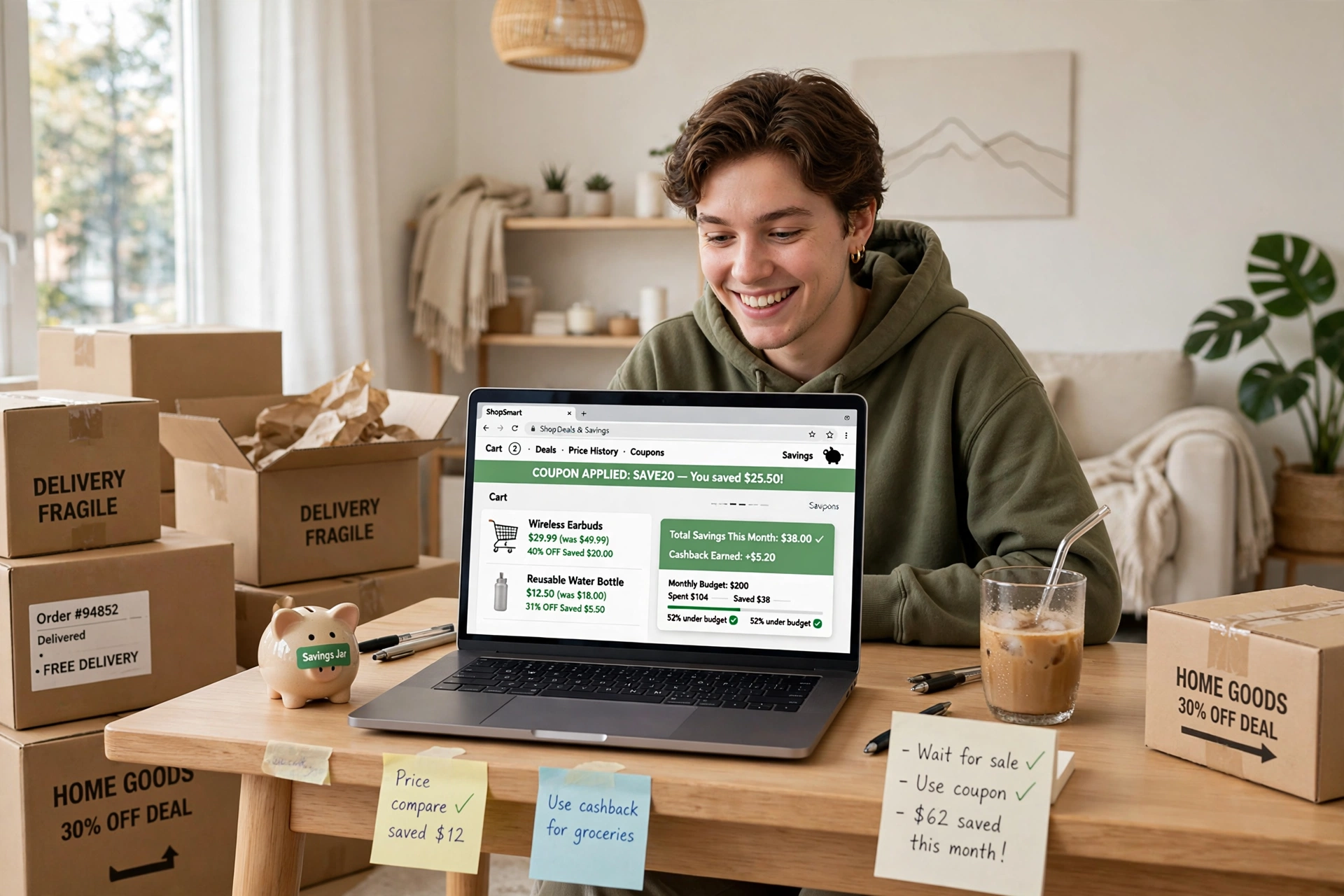
Prices on Amazon and most big retailers fluctuate constantly — the same item can swing 20 to 30 percent in a month. Use a price tracker like CamelCamelCamel (for Amazon) or Keepa to see a product’s price history before you click buy. If the current price is near the item’s historical high, wait. A two-minute history check is the highest-return habit on this list.
2. Let Coupon Extensions Do the Work
Browser extensions like Honey or Capital One Shopping automatically test coupon codes at checkout. They will not always find a working code, but when they do, the savings are pure profit for zero effort. Pair this with a retailer newsletter signup — most stores send a 10 to 15 percent welcome discount that stacks with extension-found codes.
3. Stack Cashback on Top of Discounts
Cashback portals like Rakuten or TopCashback pay you 2 to 10 percent of your purchase just for clicking through their link first. This stacks with sale prices and coupon codes, so a 20-percent-off item with 5 percent cashback is effectively 25 percent off. The money accumulates and pays out quarterly — set a reminder so small balances do not sit forgotten. Every dollar saved here is a dollar that can feed your build an emergency fund from scratch plan instead of vanishing into impulse buys.
4. Use the Abandoned-Cart Trick
Add items to your cart, create an account or enter your email, then close the tab. Many retailers send a 10 to 20 percent discount code within 24 to 72 hours to win you back. This works best at mid-size stores rather than Amazon. Bonus: the forced wait doubles as a cooling-off period for purchases you did not really need.
5. Apply the 30-Day Rule to Non-Essentials
Put any non-essential purchase on a wishlist and wait 30 days. If you still want it after a month, buy it. Roughly half of wishlist items lose their appeal within two weeks, which tells you everything about how much you actually wanted them. For smaller items, even a 48-hour wait filters out most impulse spending.
6. Always Compare Unit Prices
A “value pack” is not always the value. Check the unit price — per ounce, per count, per 100 ml — before assuming the bigger package wins. Retailers know shoppers equate bulk with savings, and the math often disagrees. This is especially true for household goods, where the mid-size package is frequently the cheapest per unit.
7. Read the Return Policy Before the Reviews
A generous return policy — free returns, 60 to 90 days, no restocking fee — is worth more than a hundred five-star reviews. It is your insurance against wrong sizes, misleading photos, and items that look nothing like the listing. If a store offers no returns or charges steep restocking fees, the price needs to be dramatically lower to justify the risk.
8. Spot Fake Reviews Before They Spot You
Roughly a third of online reviews on some platforms are estimated to be fake or incentivized. Red flags: a flood of five-star reviews posted within days of each other, vague praise with no specifics about the product, and nearly identical phrasing across reviews. Read the three-star reviews first — they are where honest buyers describe the real trade-offs. Tools like Fakespot can flag suspicious review patterns automatically.
9. Recognize Phishing Stores
Scam storefronts have a pattern: prices 50 percent below every competitor, no physical address or phone number, a recently registered domain, and payment only through wire transfer, gift cards, or sketchy processors. Before buying from an unfamiliar store, search its name plus “scam” or “reviews.” If the only results are the store’s own pages, walk away. Legitimate stores welcome scrutiny.
10. Pay Securely, Every Time
Use a credit card — not a debit card — for online purchases. Credit cards cap your fraud liability at $50 by law in the US, and most issuers offer zero liability, while debit fraud can drain your actual bank account while the dispute drags on. Check your statements monthly even when nothing looks wrong; small unauthorized test charges of a dollar or two often precede larger fraud. For extra protection on unfamiliar sites, use a virtual card number or a service like Privacy.com that generates single-use card numbers. Never save your card on a site you will buy from once.
Build the Habit Into Your Budget
Shopping smarter is a spending skill, and spending skills belong inside a spending plan. If you do not have one yet, this beginner’s guide to building a budget takes about an hour to work through and makes every tip above twice as effective — because savings you track are savings you keep.
The Bottom Line
Smart online shopping comes down to three habits: never pay the first price you see, never trust a store you have not verified, and never spend impulsively on non-essentials. Price trackers, cashback, and the 30-day rule handle the money side; review literacy, return policies, and secure payments handle the safety side. Put the checklist to work on your next purchase and watch the difference compound.