
A small living room is not a design failure. Apartments in major cities average under 1,000 square feet, and the living room is often the room where every compromise lands. The good news: a tiny space responds to good decisions faster than a big one does. These nine ideas are the highest-leverage moves, each one specific enough to do this weekend.
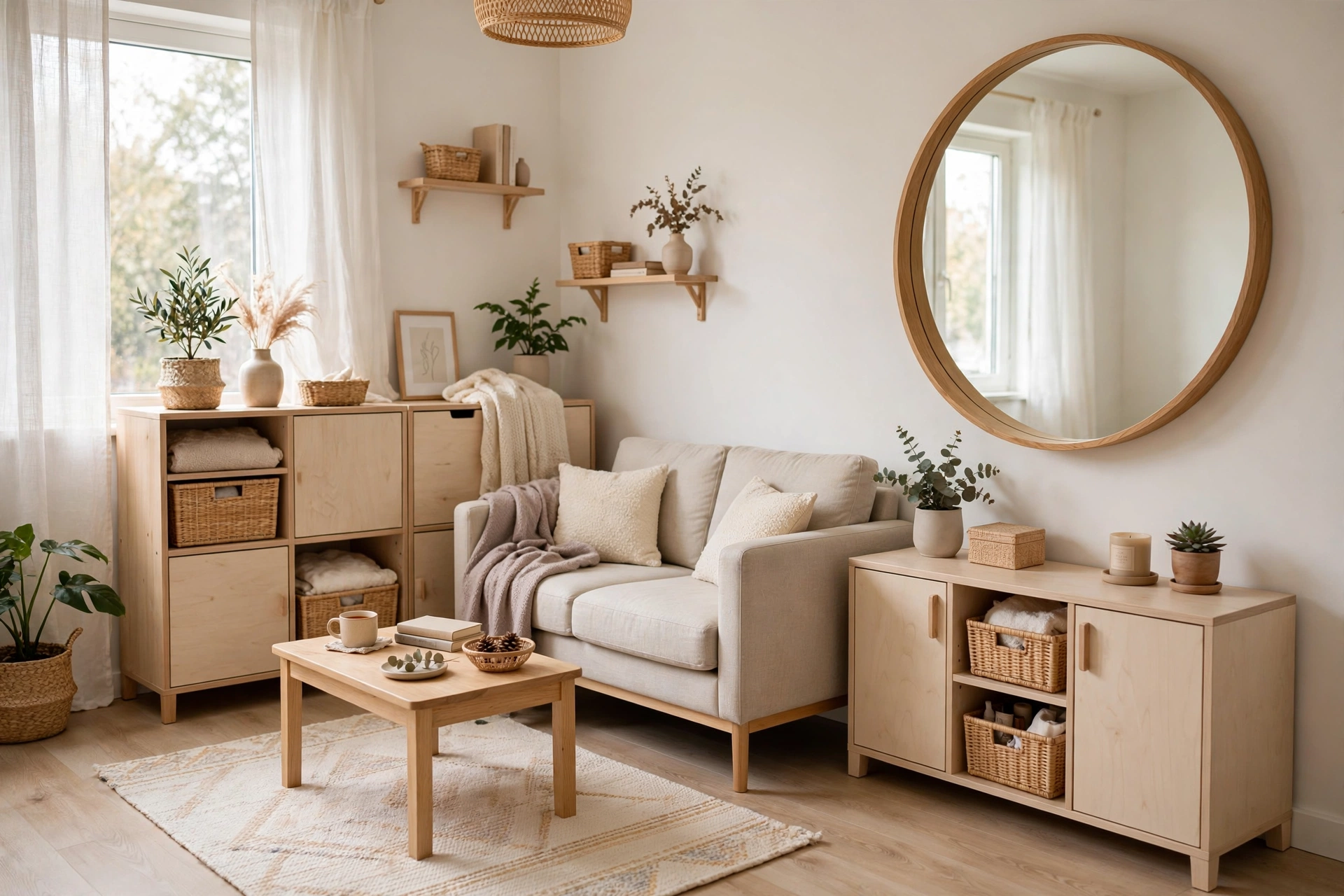
1. Zone the Layout Instead of Pushing Everything to the Walls
The instinct in a small room is to line every piece of furniture against the wall. Resist it. Pull the sofa even six inches off the wall and angle one chair slightly inward, and the room gains a sense of intentional zones rather than a waiting-room perimeter. Define one clear purpose per zone — conversation, reading, media — so the small footprint feels planned rather than cramped.
2. Choose Multi-Functional Furniture
Every piece in a tiny living room should do at least two jobs. An ottoman that opens for blanket storage and serves as extra seating. A nesting side table that expands when guests come. A sleeper sofa if the room ever hosts overnight visitors. Measure twice before buying: a 78-inch loveseat fits where a 96-inch sofa blocks the walkway, and that 18-inch difference is the one your shins will notice.
3. Keep the Palette Light and Limited
Light walls reflect more light, which the eye reads as more space. But the real trick is limiting the palette: two to three colors total, repeated across the room. A cream sofa, warm white walls, one accent color in the rug and two cushions — cohesion reads as calm, and calm reads as spacious. Dark furniture is fine as long as the surrounding palette stays light and consistent.
4. Use Mirrors With Intention
A large mirror opposite a window effectively doubles your natural light and your view, which is the closest thing to adding a window. Go big — one oversized mirror beats three small decorative ones, and small scattered mirrors just multiply visual noise. Lean a full-length mirror against the wall behind the sofa or hang one floor-to-nearly-ceiling beside the window.
5. Store Vertically, Not Horizontally
Floor space is the scarcest resource, so stop storing things at floor level. A tall, narrow bookcase (12 inches deep, 72 inches tall) holds as much as a wide low credenza while eating a fraction of the footprint. Floating shelves above the sofa, hooks on the inside of a closet door, and a wall-mounted TV instead of a media console all return square footage to the room. Before buying anything new, declutter your home in one weekend — every object you remove is space you get back for free.
6. Layer the Lighting
One overhead light flattens a small room and makes it feel like an office after hours. Three light sources at different heights — a floor lamp in a dark corner, a table lamp beside the sofa, and a small accent light on a shelf — create depth that the eye reads as dimension. Warm bulbs (2700K) keep the mood cozy; cool daylight bulbs make a small room feel clinical.
7. Get the Rug Size Right
The most common small-room mistake is a rug that is too small. A postage-stamp rug under a coffee table chops the floor into fragments and makes the room feel smaller. The rule: the rug should be large enough that at least the front legs of the sofa and all chair legs sit on it. For most small living rooms, that means 5×8 feet minimum. When in doubt, go one size up — a too-large rug is rarely the problem.
8. Keep Surfaces Mostly Clear
Visual clutter shrinks a room faster than any furniture choice. Limit each surface to one to three objects: a lamp and one book on the side table, not seven. Corral small items — remotes, chargers, coasters — into one tray or basket so they read as a single shape. Adopt a simple rule that nothing new enters the room without something old leaving, which keeps the clutter from creeping back month after month. This is the cheapest idea on the list and often the most transformative.
9. Show the Furniture Legs and Mind the Scale
Furniture that sits directly on the floor creates a visual wall at ground level. Pieces with visible legs — a mid-century sofa, a raised media bench — let the eye travel underneath, which reads as extra square footage. Glass and acrylic pieces work the same trick: a glass coffee table or ghost chairs nearly disappear, removing visual bulk without removing function. Equally important is scale: one properly sized loveseat beats a bulky sectional squeezed into a corner, and a pair of slim armchairs beats one oversized recliner. Small rooms reward restraint, not miniaturization — choose fewer, right-sized pieces.
A Note on the Rest of a Small Home
Living room tricks multiply when the whole apartment follows the same logic. The kitchen, in particular, benefits from the same vertical-storage thinking — these small kitchen organization ideas apply the same principles to cabinets and counters.
The Bottom Line
You do not need a bigger living room. You need lighter colors, visible floor, layered light, and furniture that earns its footprint. Start with decluttering and the rug — the two fastest wins — then work through the rest one weekend at a time. Small spaces reward good decisions disproportionately, which makes them the most satisfying rooms to fix.