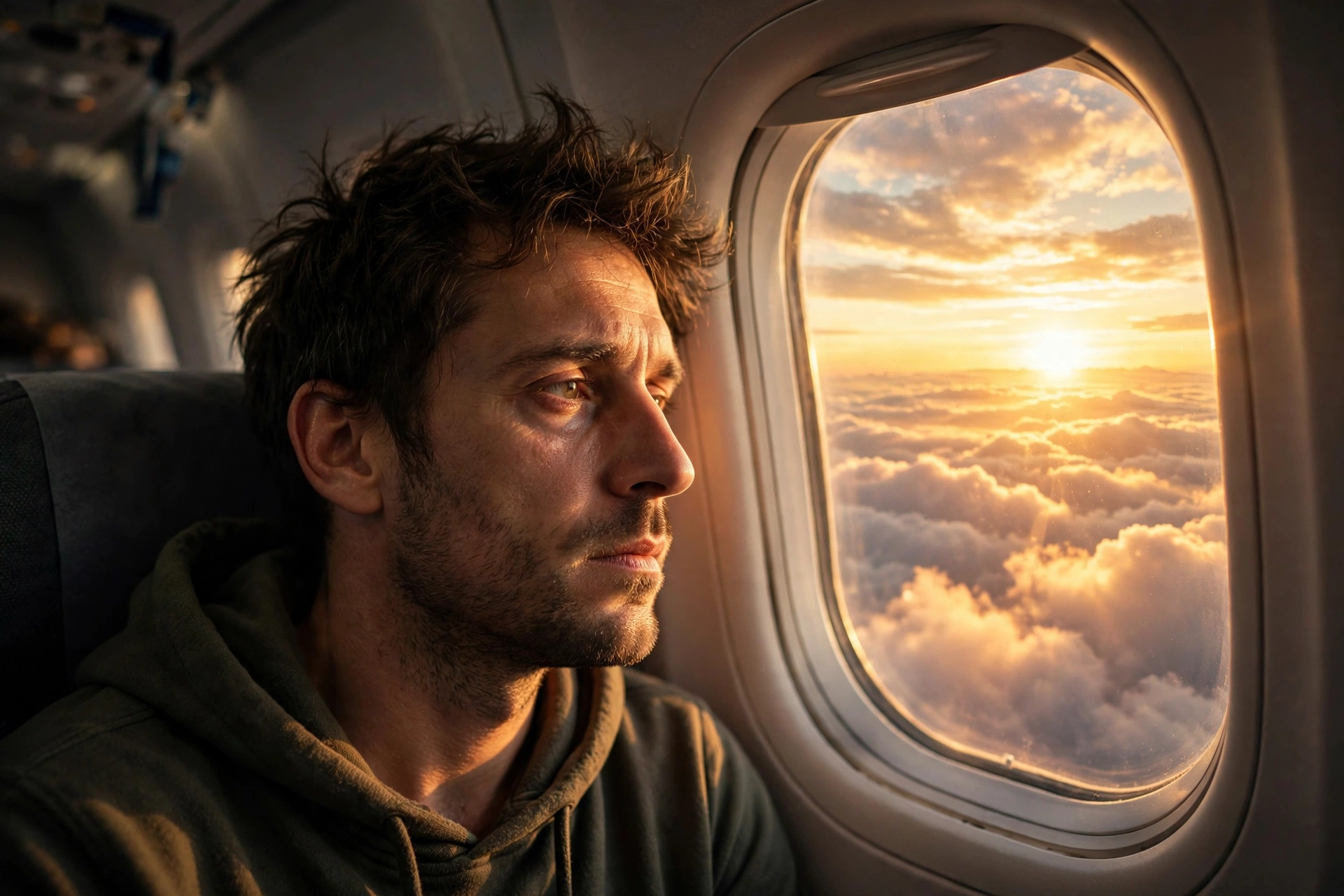
You land in a brand-new city, the sun is shining, and all you want to do is fall face-first onto the hotel bed. That is jet lag — your body’s internal clock still running on home time while the world around you has moved on. It can steal the first two or three days of any long-haul trip, leaving you foggy, irritable, and wide awake at 3 a.m.
The good news: jet lag is not random, and it is not unbeatable. Sleep scientists understand exactly what causes it and, more importantly, what speeds up recovery. This guide walks you through 12 practical, science-backed tips on how to beat jet lag so you can actually enjoy day one of your trip.
Why Flying East Feels Worse
Jet lag happens because your circadian rhythm — the roughly 24-hour cycle that controls sleep, hunger, and alertness — cannot instantly reset to a new time zone. Your body needs about one day to adjust for each hour of time difference, which is why a six-hour shift can take nearly a week to shake off naturally.
Direction matters. Flying east (for example, from New York to London) forces your body to fall asleep earlier and wake up earlier, which fights against your natural tendency to drift later. Most travelers find eastbound jet lag noticeably harder than westbound. Knowing this helps you plan: if you are flying east, start your counterattack earlier and take it more seriously.
Start Shifting Your Clock Before You Leave
The single most effective jet lag strategy begins days before your flight. Three to four days ahead, start moving your bedtime and wake time toward your destination’s schedule — by about one hour per day. Flying east? Go to bed an hour earlier each night. Flying west? Stay up an hour later.
Pair this with light exposure: get bright morning light if you are shifting earlier, or evening light if you are shifting later. It feels like a small change, but arriving with your body already partway adjusted can cut your recovery time in half.
Use Light Like a Tool
Light is the strongest signal your brain uses to set its clock, and you can use it deliberately. After an eastbound flight, seek bright morning sunlight and wear sunglasses in the late afternoon to avoid delaying your clock further. After a westbound flight, do the opposite: get late-afternoon and evening light, and avoid bright early-morning sun.
This sounds technical, but in practice it just means planning your first day’s outdoor time. A morning walk in the sunshine at your destination is genuinely one of the fastest ways to tell your brain that the new time zone is real.
Eat and Drink on Destination Time
Your digestive system has its own clock, and meal timing helps reset it. As soon as you board, start eating meals on your destination’s schedule — even if the airplane food arrives at odd hours for your stomach. A light meal at the new “dinnertime” and breakfast at the new “morning” give your body useful cues.
Hydration matters just as much. Cabin air is extremely dry, and dehydration worsens every jet lag symptom: fatigue, headaches, and that general foggy feeling. Drink water steadily through the flight, and keep a bottle with you on arrival day. Go easy on alcohol — it fragments sleep and dehydrates you — and cut off caffeine at least eight hours before you plan to sleep at your destination.
Traveling light also helps here: packing only a carry-on means you walk straight out of the airport instead of waiting at the carousel, getting you into daylight and onto local time faster.
Nap Smart, Not Long
On arrival day, the temptation to take a long nap is enormous. Resist it. A long afternoon nap pushes your clock in the wrong direction and guarantees a sleepless night. If you are truly fading, take one short nap of 20 to 30 minutes, ideally before 3 p.m. local time, and set an alarm.
Then power through to a normal local bedtime. It will feel rough for a few hours, but falling asleep at 9 or 10 p.m. local time is what finally anchors your new schedule.
Move Your Body on Arrival
Exercise is a proven circadian reset button. A brisk 20- to 30-minute walk, a light jog, or even exploring your new neighborhood on foot signals wakefulness to your brain far better than sitting in a hotel lobby scrolling your phone. Morning exercise is best after eastbound travel; late-afternoon movement works better after westbound flights.
Avoid intense late-night workouts, which raise your core body temperature and make sleep harder. Keep it moderate, keep it outdoors when possible, and let the combination of movement and daylight do the heavy lifting.
Consider Melatonin — With a Doctor’s OK
Melatonin is the hormone your brain releases to signal bedtime, and low-dose supplements can help shift your clock faster. Research suggests taking 0.5 to 3 mg about 30 minutes before your target bedtime at the destination for the first few nights can ease the transition, especially for eastbound travel.
It is not a sleeping pill — it will not knock you out — and it does not work for everyone. Talk to your doctor first, especially if you take other medications or have a health condition. Think of it as a nudge to your clock, not a cure.
Pick Your Flights Wisely
When you have a choice, flight timing can reduce jet lag before it starts. For eastbound trips, overnight flights that land in the morning let you stay awake through the day and sleep at a normal local bedtime. For westbound trips, daytime flights that land in the evening work similarly.
If you can afford the splurge, arriving a day early for important events (weddings, business meetings, tours) removes the pressure entirely. And whenever you travel far, it is worth reviewing what travel insurance actually covers — exhaustion-fueled mistakes and missed connections are more common when you are jet-lagged.
Make Your Hotel Room Sleep-Friendly
Your first nights in a new time zone are fragile, so protect them. Close the blackout curtains fully, set the room temperature cool (around 18–20°C / 65–68°F), and silence notifications. A simple sleep mask and earplugs weigh almost nothing and can rescue a night’s sleep in a noisy or light-leaky room.
Keep the room dark until your target wake time, then flood it with light — open the curtains wide or step outside. That contrast between dark nights and bright mornings is exactly the signal your brain needs.
Be Patient: The One-Day-Per-Time-Zone Rule
Even with every trick in this guide, your body needs time. Expect roughly one day of adjustment per hour of time difference, and plan your trip accordingly. Put your must-do activities on day three or later for big time-zone jumps, and keep day one light.
That is not failure — it is biology. The travelers who “never get jet lag” are usually just the ones who prepare for it.
Frequently Asked Questions
Does jet lag affect everyone equally?
No. Older adults often feel it more strongly, and some people are simply more sensitive to circadian disruption. Frequent travelers can also build partial tolerance, but nobody is immune.
Can I just sleep on the plane to avoid jet lag?
Sleeping on the plane helps you arrive rested, but it does not reset your clock by itself. Time your in-flight sleep to match nighttime at your destination, and combine it with light exposure on arrival for the real effect.
Are jet lag apps worth using?
Apps that build personalized light-exposure schedules can genuinely help, especially for very long trips. But the fundamentals — shifting your schedule early, managing light, and getting on local time fast — matter far more than any app.
The Bottom Line
Beating jet lag comes down to three things: start adjusting before you fly, use light and meal timing to push your clock toward the new time zone, and get onto local time the moment you land. Do those well, and the fog lifts in a day or two instead of a week. Your trip is too short to spend half of it exhausted — prepare for the time zones the way you prepare your itinerary, and day one will feel like day one.